
Scientific publications for BioPredictive non-invasive diagnostics
Peer-reviewed studies validating BioPredictive blood-test diagnostics for liver disease — from first-in-class development cohorts to long-term meta-analyses.
249/433 Publications
-
Non-invasive diagnosis and follow-up of chronic infection with Hepatitis C Virus.
-
Non-invasive diagnosis and follow-up of portal hypertension.
-
Concordance of non-invasive serology-based scoring indices and transient elastography for liver fibrosis and cirrhosis in chronic hepatitis C.
-
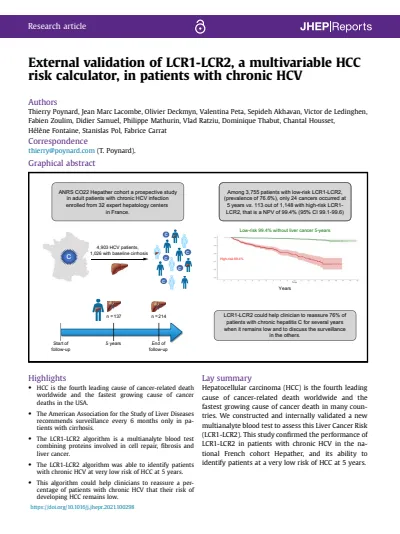
External validation of LCR1-LCR2, a multivariable HCC risk calculator, in patients with chronic HCV.
-
Prevalence of liver fibrosis and cirrhosis in 699 Moroccan patients with chronic hepatitis C.
-
The non-invasive assessment of hepatic fibrosis.
-

Non-invasive fibrosis tests to predict complications in compensated post-hepatitis C cirrhosis.
-
Phase 3, Multicenter Open-Label study to investigate the efficacy of elbasvir and grazoprevir fixed-dose combination for 8 weeks in treatment-naïve, HCV GT1b-infected patients, with non-severe fibrosis.
-
LCR1 and LCR2, two multi-analyte blood tests to assess liver cancer risk in patients without or with cirrhosis.
-
LCR1 and LCR2, two multi-analyte blood tests to assess liver cancer risk in patients without or with cirrhosis. Key publication
-
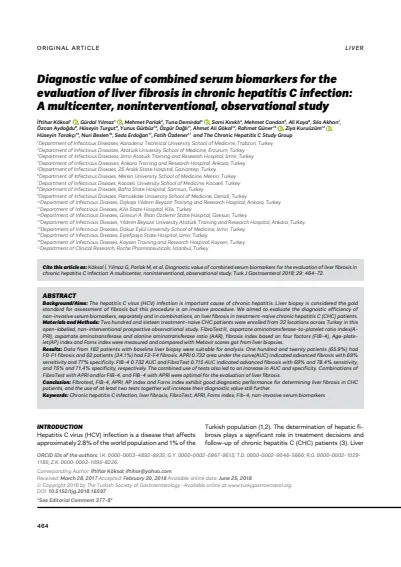
Diagnostic value of combined serum biomarkers for the evaluation of liver fibrosis in chronic hepatitis C infection: A multicenter, noninterventional, observational study.
-
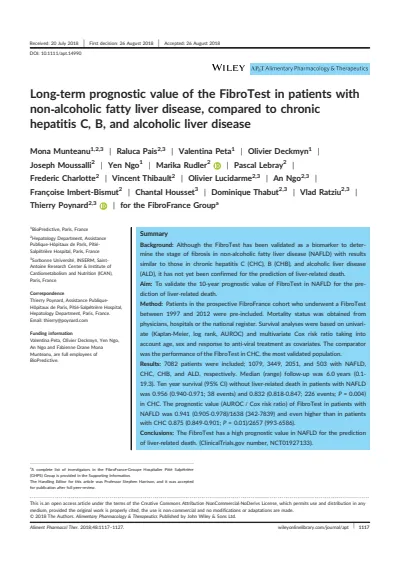
Long-term prognostic value of the FibroTest in patients with non-alcoholic fatty liver disease, compared to chronic hepatitis C, B, and alcoholic liver disease.
-
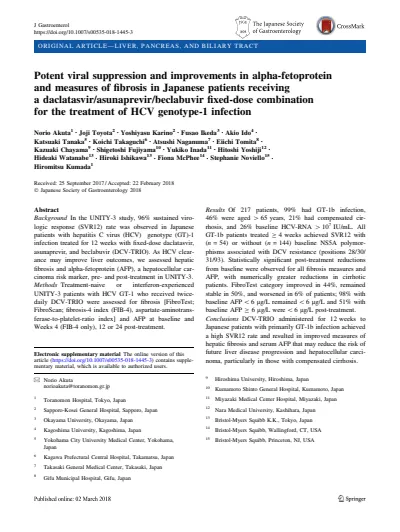
Potent viral suppression and improvements in alpha-fetoprotein and measures of fibrosis in Japanese patients receiving a daclatasvir/asunaprevir/beclabuvir fixed-dose combination for the treatment of HCV genotype-1 infection.
-
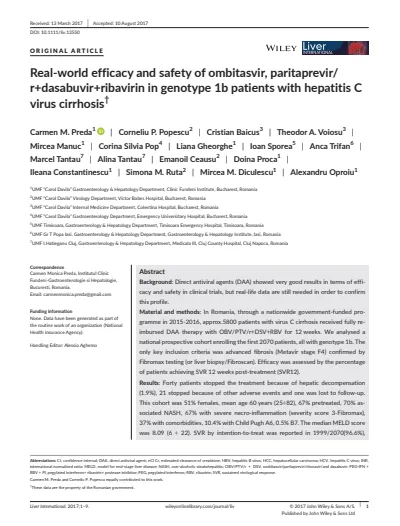
Real-world efficacy and safety of ombitasvir, paritaprevir/r+dasabuvir+ribavirin in genotype 1b patients with hepatitis C virus cirrhosis.
-
Sofosbuvir/velpatasvir in patients with hepatitis C virus genotypes 1-6 and compensated cirrhosis or advanced fibrosis.
-
A Single Test Combining Blood Markers and Elastography is More Accurate Than Other Fibrosis Tests in the Main Causes of Chronic Liver Diseases.
-
HIV-positive men who have sex with men are at high risk of development of significant liver fibrosis after an episode of acute hepatitis C.
-
Interferon-γ-inducible protein-10 in chronic hepatitis C: Correlations with insulin resistance, histological features & sustained virological response.
-
Late presentation of chronic viral hepatitis for medical care: a consensus definition.
-
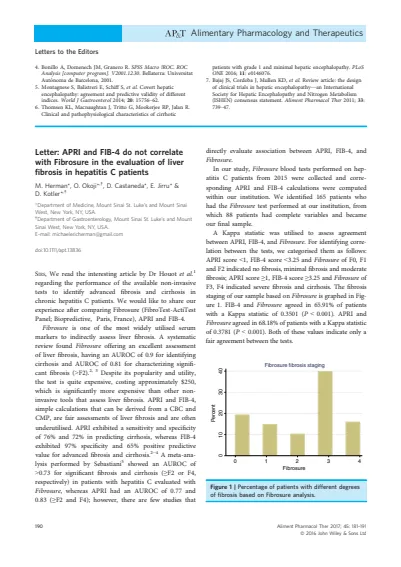
Letter: APRI and FIB-4 do not correlate with Fibrosure in the evaluation of liver fibrosis in hepatitis C patients.
-
Non-invasive evaluation of the liver disease severity in children with chronic viral hepatitis using FibroTest and ActiTest - comparison with histopathological assessment.
-
Role of Non-hepatic Medical Comorbidity and Functional Limitations in Predicting Mortality in Patients with HCV.
-
Stage of liver fibrosis in patients with congenital bleeding disorders and infected with hepatitis C virus.
-
Management of the patient with SVR. Review
-
Non-invasive assessment of liver fibrosis: Between prediction/prevention of outcomes and cost-effectiveness.
-
Real-Time Shear Wave versus Transient Elastography for Predicting Fibrosis: Applicability, and Impact of Inflammation and Steatosis. A Non-Invasive Comparison.
-
Systematic review with meta-analysis: direct comparisons of biomarkers for the diagnosis of fibrosis in chronic hepatitis C and B.
-
Use of Non-invasive Testing to Stage Liver Fibrosis in Patients with HIV.
-
Usefulness of acoustic radiation force impulse and fibrotest in liver fibrosis assessment after liver transplant.
-
Awareness of the severity of liver disease re-examined using software-combined biomarkers of liver fibrosis and necroinflammatory activity.
-
Coffee and Caffeine Are Associated With Decreased Risk of Advanced Hepatic Fibrosis Among Patients With Hepatitis C.
-
Comparison of liver biopsy and noninvasive techniques for liver fibrosis assessment in patients infected with HCV-genotype 4 in Egypt.
-
Current Possibilities to Assess the Degree of Liver Fibrosis in Patients with Haemophilia Infected with HCV--Review.
-
EASL-ALEH Clinical Practice Guidelines: Non-invasive tests for evaluation of liver disease severity and prognosis. Key publication
-
Hepatitis C guidance: AASLD-IDSA recommendations for testing, managing, and treating adults infected with hepatitis C virus. Key publication
-
Non-cirrhotic thrombocytopenic patients with hepatitis C virus: Characteristics and outcome of antiviral therapy.
-
Noninvasive Assessment of Liver Fibrosis.
-
Noninvasive biomarkers FibroTest and ActiTest versus liver biopsy in chronic hepatitis C patients: the Middle East experience.
-
Personalized management of cirrhosis by non-invasive tests of liver fibrosis.
-
Prevalence of steatosis and insulin resistance in patients with chronic hepatitis B compared with chronic hepatitis C and non-alcoholic fatty liver disease.
-
Progression of Liver Fibrosis in HIV/HCV Co-Infection: A Comparison between Non-Invasive Assessment Methods and Liver Biopsy.
-
Retracted: Executive functions in chronic hepatitis C virus infected elderly patients.
-
Study of FibroTest and hyaluronic acid biological variation in healthy volunteers and comparison of serum hyaluronic acid biological variation between chronic liver diseases of different etiology and fibrotic stage using confidence intervals.
-
Successful treatment with telaprevir-based regimens for chronic hepatitis C results in significant improvements to serum markers of liver fibrosis.
-
Transient Elastography for Assessment of Liver Fibrosis and Steatosis: An Evidence-Based Analysis.
-
[SWE elastography in assessment of liver fibrosis].
-
Combination of blood tests for significant fibrosis and cirrhosis improves the assessment of liver-prognosis in chronic hepatitis C.
-
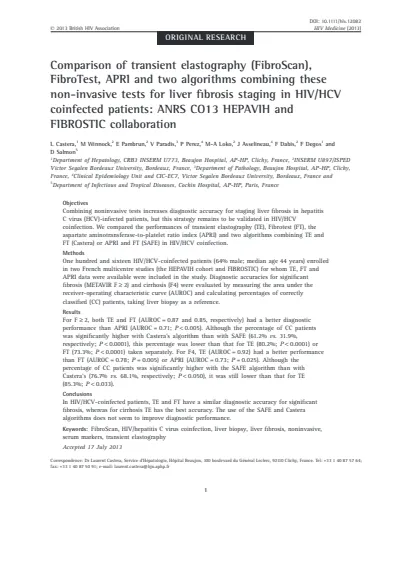
Comparison of transient elastography (FibroScan), FibroTest, APRI and two algorithms combining these non-invasive tests for liver fibrosis staging in HIV/HCV coinfected patients: ANRS CO13 HEPAVIH and FIBROSTIC collaboration.
-
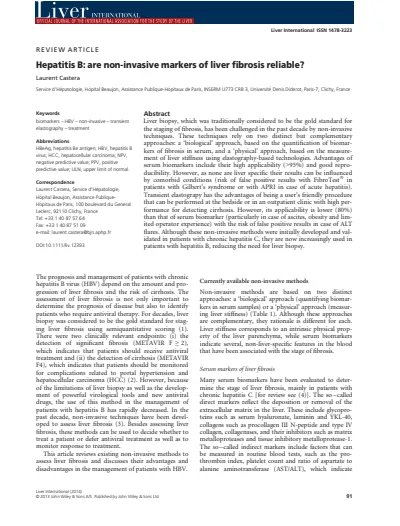
Hepatitis B: are non-invasive markers of liver fibrosis reliable?
-
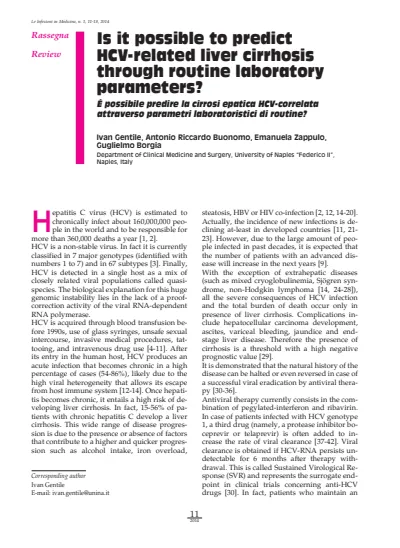
Is it possible to predict HCV-related liver cirrhosis non-invasively through routine laboratory parameters?
-
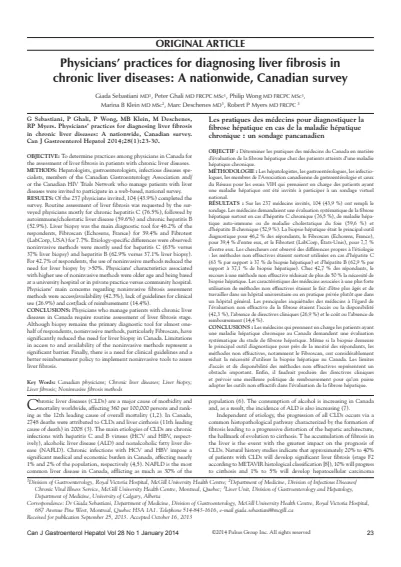
Physicians' practices for diagnosing liver fibrosis in chronic liver diseases: a nationwide, Canadian survey.
-
Prospective evaluation of FibroTest®, FibroMeter®, and HepaScore® for staging liver fibrosis in chronic hepatitis B: comparison with hepatitis C.
-

Staging chronic hepatitis C in seven categories using fibrosis biomarker (FibroTest™) and transient elastography (FibroScan®).
-
Variability in definitions of transaminase upper limit of the normal impacts the APRI performance as a biomarker of fibrosis in patients with chronic hepatitis C: "APRI c'est fini ?".
-
[Biomarkers for liver fibrosis: advances, advantages and disadvantages].
-
Blood tests to diagnose fibrosis or cirrhosis in patients with chronic hepatitis C virus infection.
-
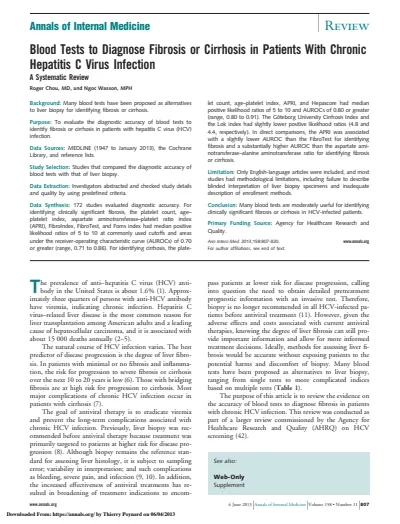
Blood tests to diagnose fibrosis or cirrhosis in patients with chronic hepatitis C virus infection: a systematic review.
-
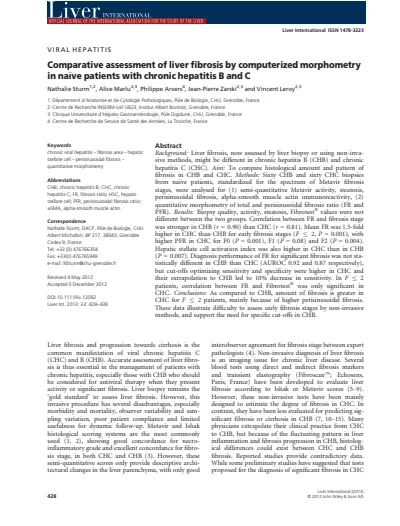
Comparative assessment of liver fibrosis by computerized morphometry in naïve patients with chronic hepatitis B and C.
-
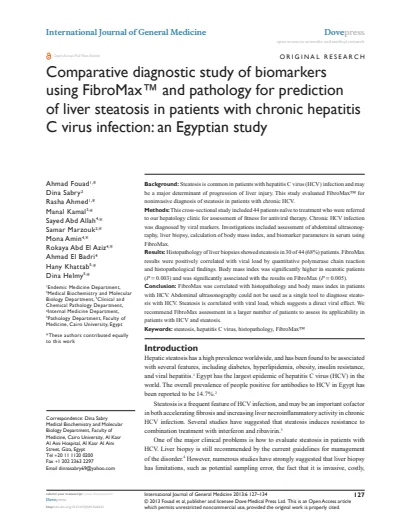
Comparative diagnostic study of biomarkers using FibroMax™ and pathology for prediction of liver steatosis in patients with chronic hepatitis C virus infection: an Egyptian study.
-
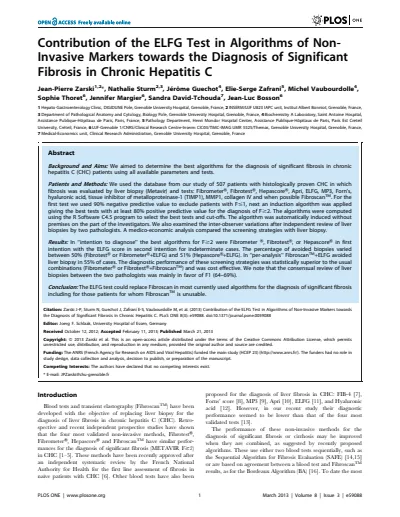
Contribution of the ELFG test in algorithms of non-invasive markers towards the diagnosis of significant fibrosis in chronic hepatitis C.
-
Contribution of the ELFG test in algorithms of non-invasive markers towards the diagnosis of significant fibrosis in chronic hepatitis C.
-
Development and validation of a nomogram based on clinical factors and standard laboratory tests for prediction of clinically significant liver fibrosis in chronic hepatitis C virus infection.
-
Evaluation of liver stiffness measurement by fibroscan as compared to liver biopsy for assessment of hepatic fibrosis in children with chronic hepatitis C.
-
Including osteoprotegerin and collagen IV in a score-based blood test for liver fibrosis increases diagnostic accuracy.
-
Liver fibrosis evaluation using real-time shear wave elastography: applicability and diagnostic performance using methods without a gold standard.
-
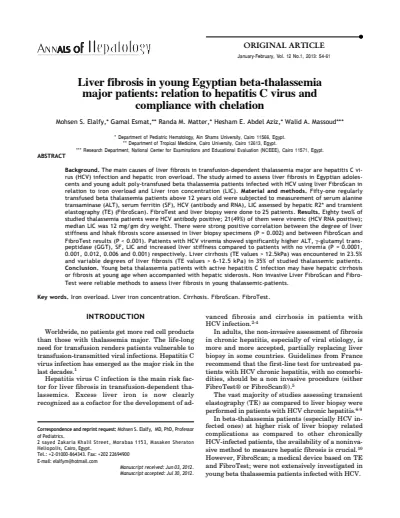
Liver fibrosis in young Egyptian beta-thalassemia major patients: relation to hepatitis C virus and compliance with chelation.
-
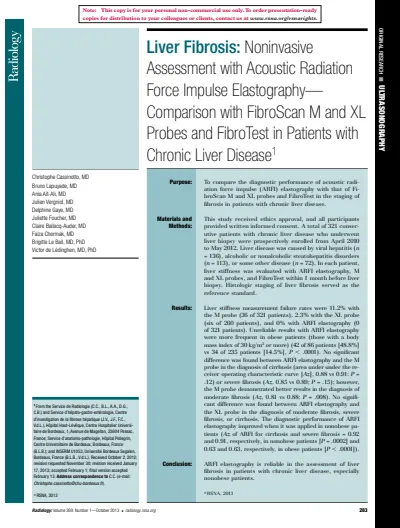
Liver fibrosis: noninvasive assessment with acoustic radiation force impulse elastography--comparison with FibroScan M and XL probes and FibroTest in patients with chronic liver disease.
-
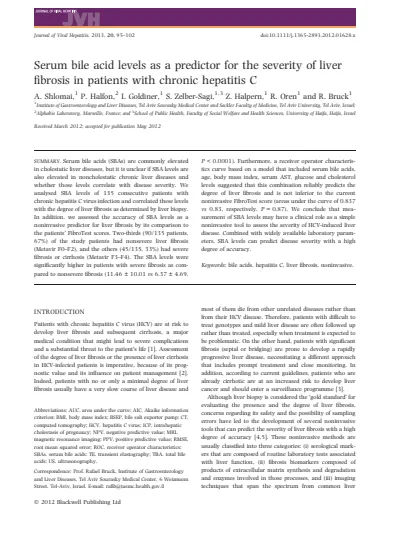
Serum bile acid levels as a predictor for the severity of liver fibrosis in patients with chronic hepatitis C.
-
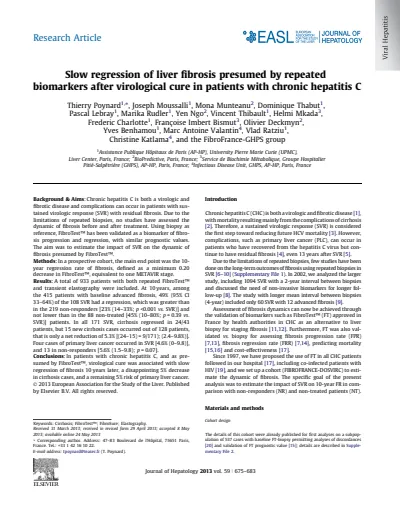
Slow regression of liver fibrosis presumed by repeated biomarkers after virological cure in patients with chronic hepatitis C.
-
The new paradigm of hepatitis C therapy: integration of oral therapies into best practices.
-
An update on the management of hepatitis C: consensus guidelines from the Canadian Association for the Study of the Liver. Key publication
-
Assessment of liver fibrosis and associated risk factors in HIV-infected individuals using transient elastography and serum biomarkers.
-
Comparison of acoustic radiation force impulse imaging with transient elastography for the detection of complications in patients with cirrhosis.
-
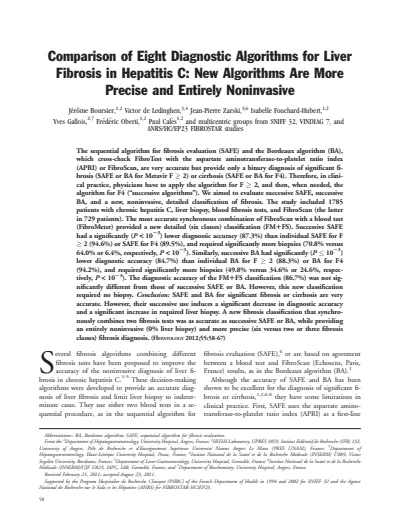
Comparison of eight diagnostic algorithms for liver fibrosis in hepatitis C: new algorithms are more precise and entirely noninvasive.
-
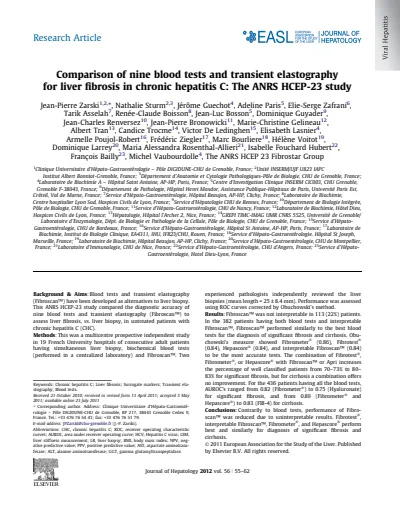
Comparison of nine blood tests and transient elastography for liver fibrosis in chronic hepatitis C: the ANRS HCEP-23 study.
-
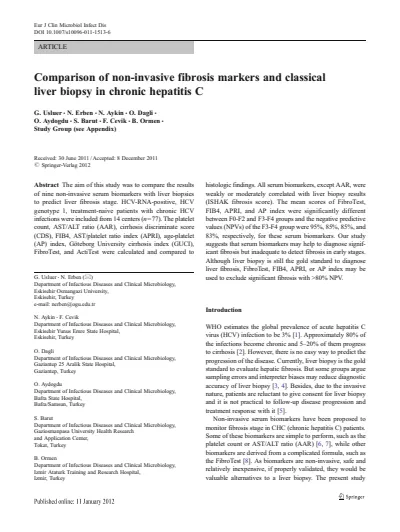
Comparison of non-invasive fibrosis markers and classical liver biopsy in chronic hepatitis C.
-
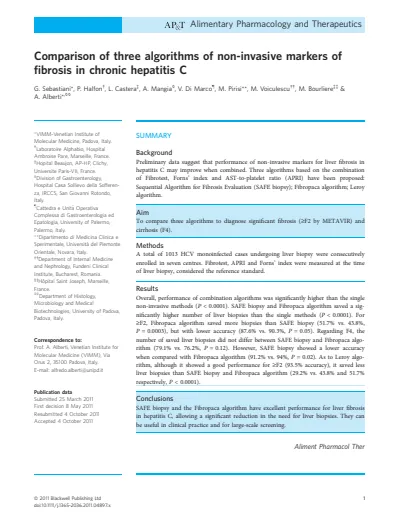
Comparison of three algorithms of non-invasive markers of fibrosis in chronic hepatitis C.
-
Diagnostic algorithms for liver fibrosis in hepatitis C: are they ready to avoid liver biopsy?
-
Discovery of novel biomarker candidates for liver fibrosis in hepatitis C patients: a preliminary study.
-
Effects of patient factors on noninvasive liver stiffness measurement using acoustic radiation force impulse elastography in patients with chronic hepatitis C.
-
Evolution of biomarkers of liver fibrosis and liver insufficiency in hepatitis C virus-infected patients treated with pegylated interferon plus ribavirin and rituximab.
-
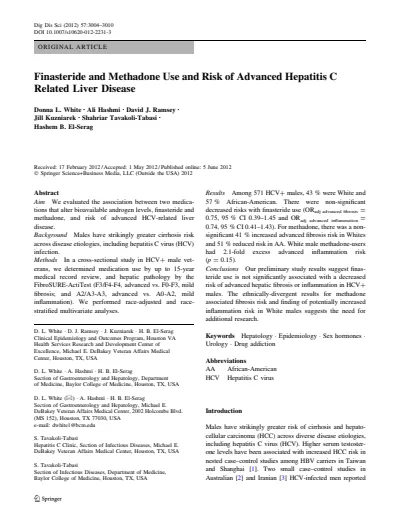
Finasteride and methadone use and risk of advanced hepatitis C related liver disease.
-
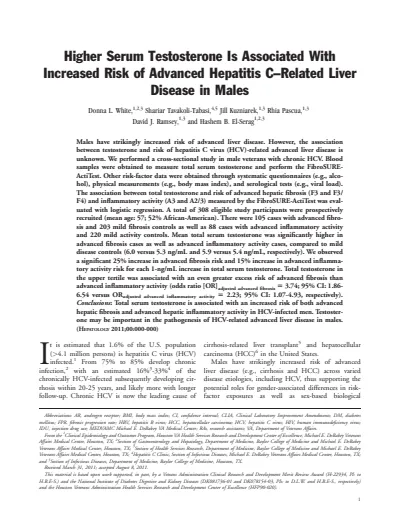
Higher serum testosterone is associated with increased risk of advanced hepatitis C-related liver disease in males.
-
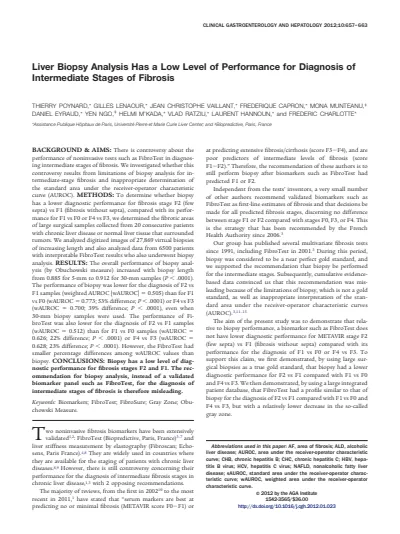
Liver biopsy analysis has a low level of performance for diagnosis of intermediate stages of fibrosis.
-
Non-invasive evaluation of liver fibrosis in chronic hepatitis C.
-
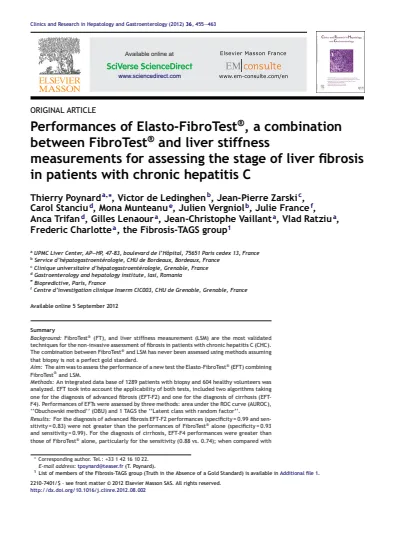
Performances of Elasto-FibroTest(®), a combination between FibroTest(®) and liver stiffness measurements for assessing the stage of liver fibrosis in patients with chronic hepatitis C.
-
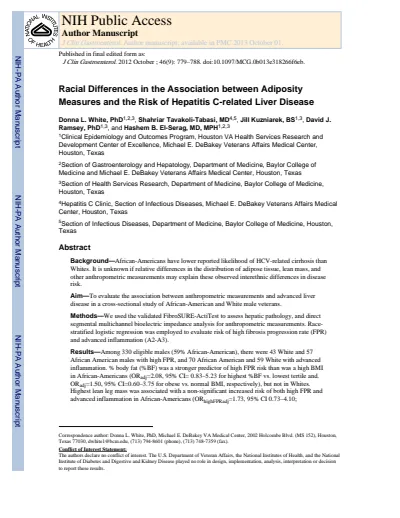
Racial differences in the association between adiposity measures and the risk of hepatitis C-related liver disease.
-
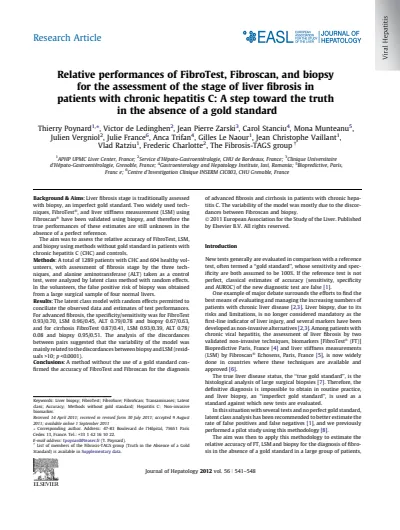
Relative performances of FibroTest, Fibroscan, and biopsy for the assessment of the stage of liver fibrosis in patients with chronic hepatitis C: a step toward the truth in the absence of a gold standard.
-
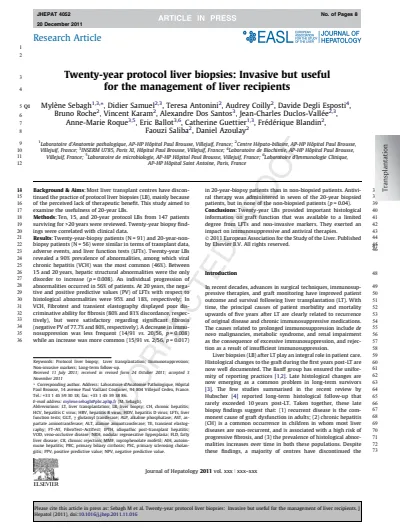
Twenty-year protocol liver biopsies: Invasive but useful for the management of liver recipients.
-
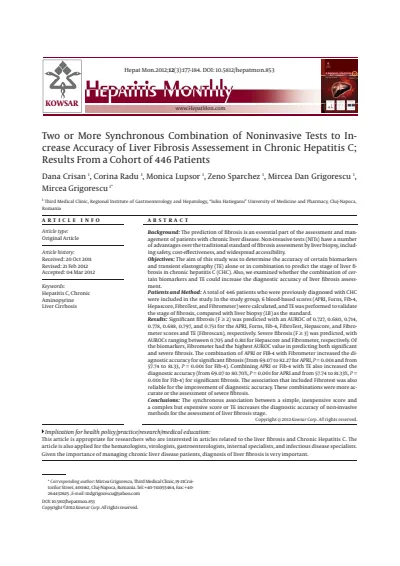
Two or more synchronous combination of noninvasive tests to increase accuracy of liver fibrosis assessement in chronic hepatitis C; results from a cohort of 446 patients.
-

Validation of liver fibrosis biomarker (FibroTest) for assessing liver fibrosis progression: proof of concept and first application in a large population.
-
A brief review on molecular, genetic and imaging techniques for HCV fibrosis evaluation.
-
A new combination of blood test and fibroscan for accurate non-invasive diagnosis of liver fibrosis stages in chronic hepatitis C.
-
Applicability and precautions of use of liver injury biomarker FibroTest. A reappraisal at 7 years of age.
-
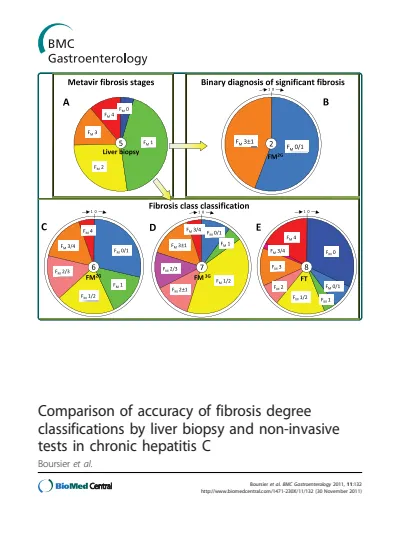
Comparison of accuracy of fibrosis degree classifications by liver biopsy and non-invasive tests in chronic hepatitis C.
-
Comparison of non-invasive assessment to diagnose liver fibrosis in chronic hepatitis B and C patients.
-
Cost effectiveness of fibrosis assessment prior to treatment for chronic hepatitis C patients.
-
EASL Clinical Practice Guidelines: management of hepatitis C virus infection.
-
FibroSURE and FibroScan in relation to treatment response in chronic hepatitis C virus.
-
FibroStic: a large confirmatory study for non-invasive biomarkers accuracy, if correctly interpreted.
-
FibroTest and Fibroscan performances revisited in patients with chronic hepatitis C. Impact of the spectrum effect and the applicability rate.
-

FibroTest is an independent predictor of virologic response in chronic hepatitis C patients retreated with pegylated interferon alfa-2b and ribavirin in the EPIC³ program.
-
First-line assessment of patients with chronic liver disease with non-invasive techniques and without recourse to liver biopsy.
-
HCV-GenoFibrotest: a combination of viral, liver and genomic (IL28b, ITPA, UGT1A1) biomarkers for predicting treatment response in patients with chronic hepatitis C.
-

Low 25-OH vitamin D serum levels correlate with severe fibrosis in HIV-HCV co-infected patients with chronic hepatitis.
-

Non-invasive markers for hepatic fibrosis.
-
Noninvasive assessment of portal hypertension in patients with cirrhosis.
-
Noninvasive tests for fibrosis and liver stiffness predict 5-year outcomes of patients with chronic hepatitis C.
-
Performance of the FibroTest cannot be accurately estimated in nine paediatric patients with advanced fibrosis.
-
Predicting significant fibrosis in hepatitis C patients in Luxembourg using serological markers.
-
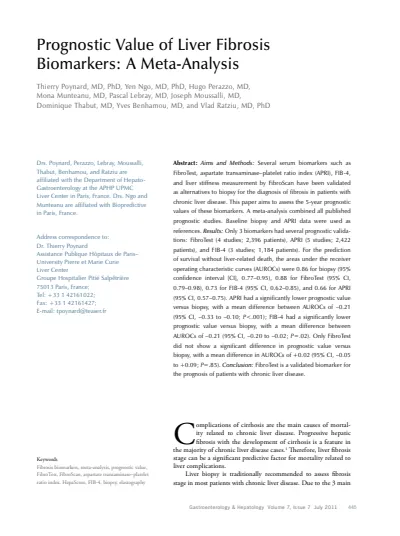
Prognostic value of liver fibrosis biomarkers: a meta-analysis.
-
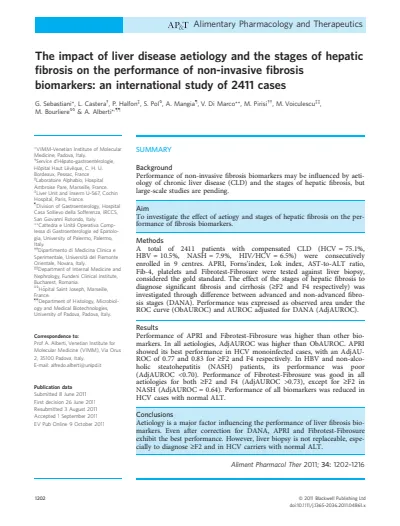
The impact of liver disease aetiology and the stages of hepatic fibrosis on the performance of non-invasive fibrosis biomarkers: an international study of 2411 cases.
-
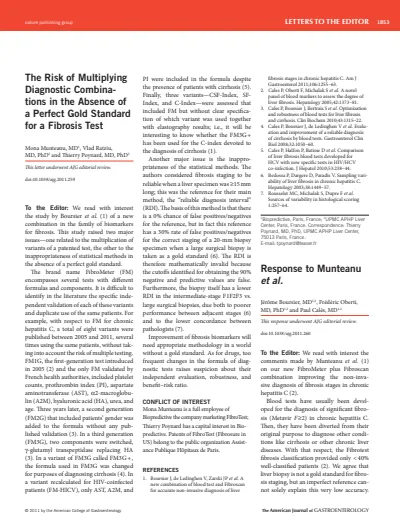
The risk of multiplying diagnostic combinations in the absence of a perfect gold standard for a fibrosis test.
-
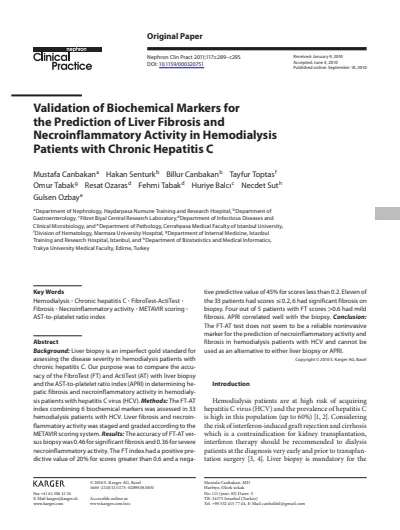
Validation of biochemical markers for the prediction of liver fibrosis and necroinflammatory activity in hemodialysis patients with chronic hepatitis C.
-
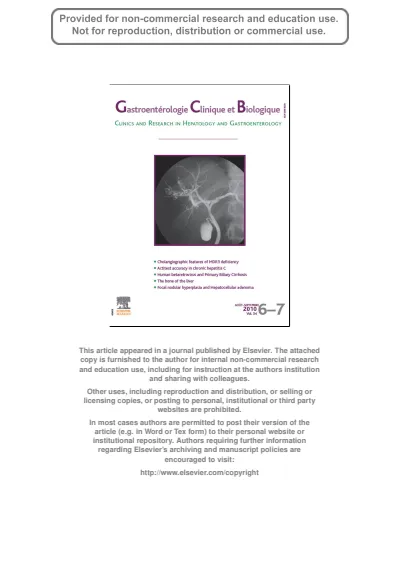
ActiTest accuracy for the assessment of histological activity grades in patients with chronic hepatitis C, an overview using Obuchowski measure.
-
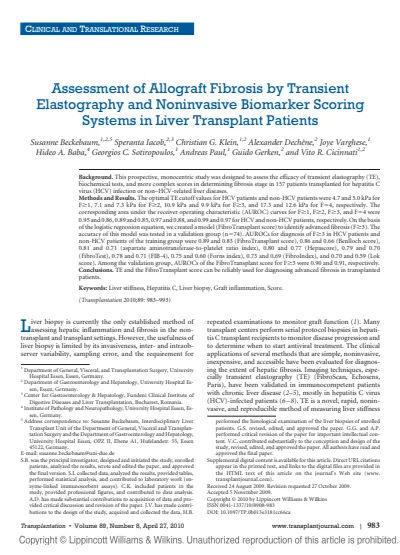
Assessment of allograft fibrosis by transient elastography and noninvasive biomarker scoring systems in liver transplant patients.
-
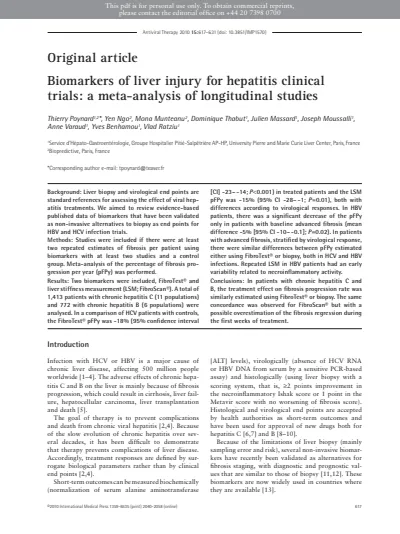
Biomarkers of liver injury for hepatitis clinical trials: a meta-analysis of longitudinal studies.
-
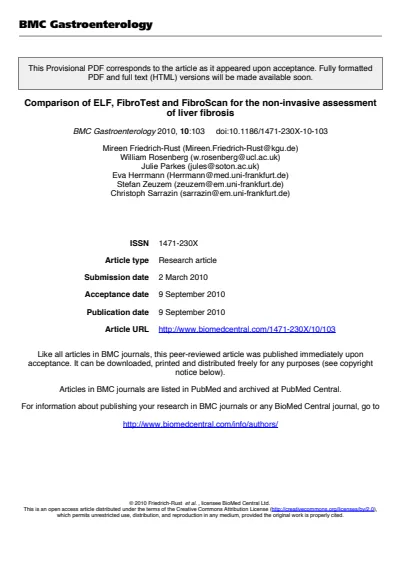
Comparison of ELF, FibroTest and FibroScan for the non-invasive assessment of liver fibrosis.
-
Comparison of FibroTest-ActiTest with histopathology in demonstrating fibrosis and necroinflammatory activity in chronic hepatitis B and C.
-
Comparison of liver fibrosis blood tests developed for HCV with new specific tests in HIV/HCV co-infection.
-
Correlation between liver biopsy and fibrotest in the evaluation of hepatic fibrosis in patients with chronic hepatitis C.
-
Diagnosis of fibrosis and cirrhosis. Liver biopsy is not always necessary.
-
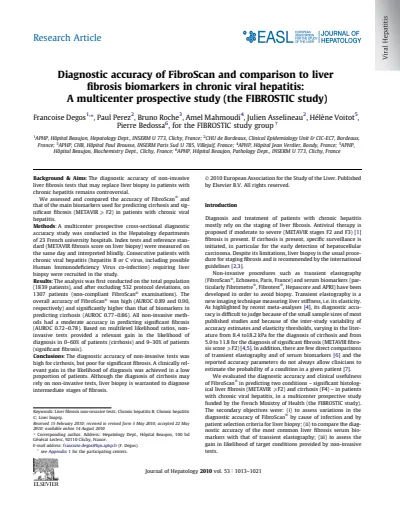
Diagnostic accuracy of FibroScan and comparison to liver fibrosis biomarkers in chronic viral hepatitis: a multicenter prospective study (the FIBROSTIC study).
-
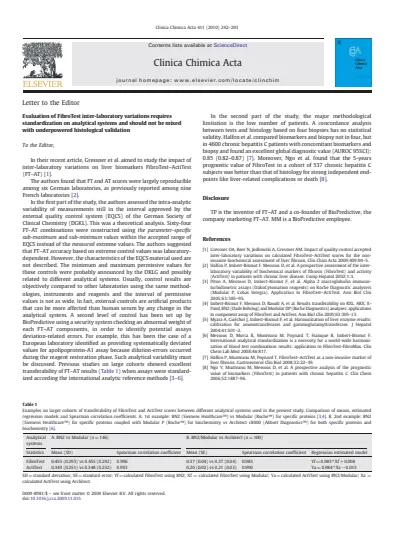
Evaluation of FibroTest inter-laboratory variations requires standardization on analytical systems and should not be mixed with underpowered histological validation.
-
Evaluation of FibroTest-ActiTest in children with chronic hepatitis C virus infection.
-
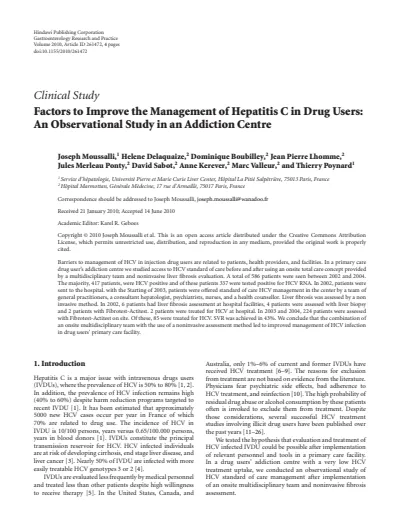
Factors to improve the management of hepatitis C in drug users: an observational study in an addiction centre.
-
Fibrotest or Fibroscan for evaluation of liver fibrosis in haemophilia patients infected with hepatitis C.
-
Hepatitis C virus viremia and low platelet count: a study in a hepatitis B & C endemic area in Taiwan.
-
Impact of hepatitis C and liver fibrosis on antiretroviral plasma drug concentrations in HIV-HCV co-infected patients: the HEPADOSE study.
-
Non-invasive assessment of liver fibrosis progression in hepatitis C patients retreated for 96 weeks with antiviral therapy: a randomized study.
-
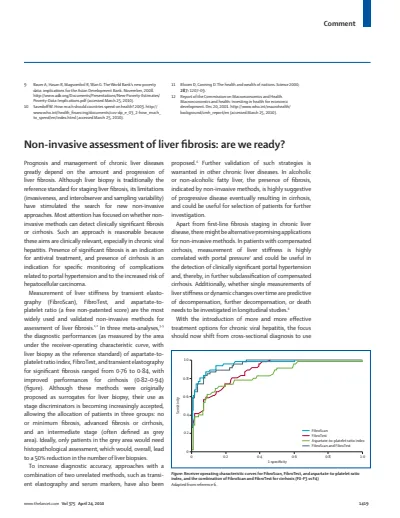
Non-invasive assessment of liver fibrosis: are we ready?
-
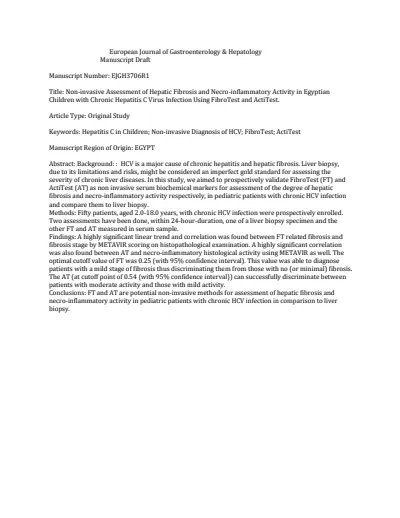
Noninvasive assessment of hepatic fibrosis and necroinflammatory activity in Egyptian children with chronic hepatitis C virus infection using FibroTest and ActiTest.
-
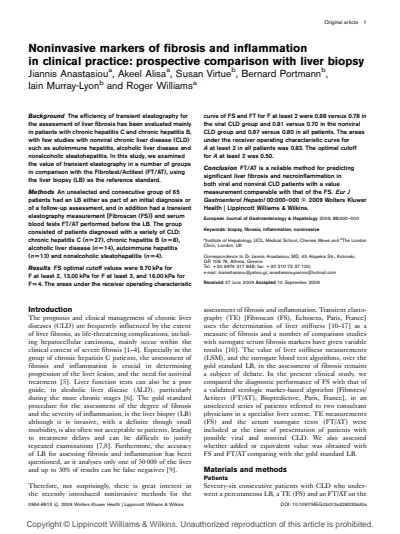
Noninvasive markers of fibrosis and inflammation in clinical practice: prospective comparison with liver biopsy.
-
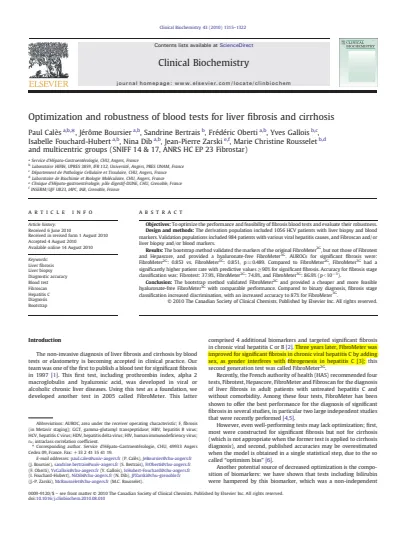
Optimization and robustness of blood tests for liver fibrosis and cirrhosis.
-
Prevalence of liver fibrosis and risk factors in a general population using non-invasive biomarkers (FibroTest).
-
Prospective comparison of two algorithms combining non-invasive methods for staging liver fibrosis in chronic hepatitis C.
-
Acoustic radiation force imaging sonoelastography for noninvasive staging of liver fibrosis.
-
An independent and prospective comparison of two commercial fibrosis marker panels (HCV FibroSURE and FIBROSpect II) during albinterferon alfa-2b combination therapy for chronic hepatitis C.
-
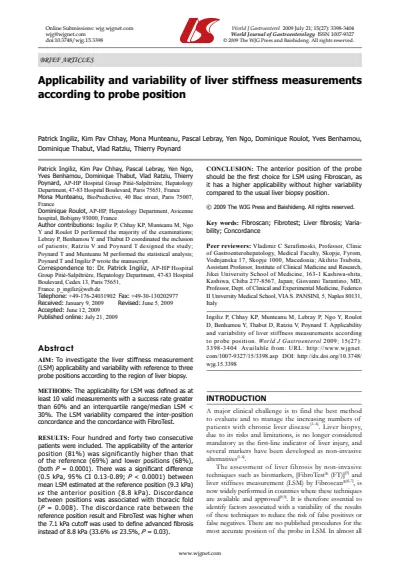
Applicability and variability of liver stiffness measurements according to probe position.
-
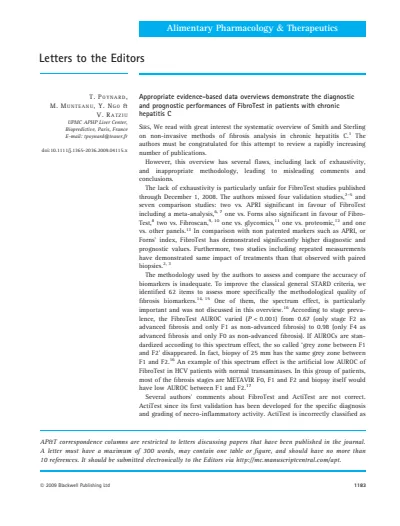
Appropriate evidence-based data overviews demonstrate the diagnostic and prognostic performances of FibroTest in patients with chronic hepatitis C.
-
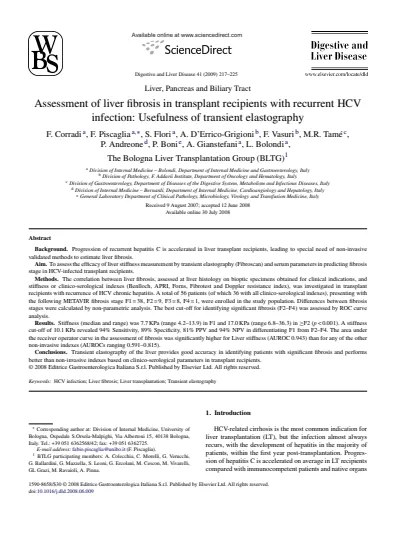
Assessment of liver fibrosis in transplant recipients with recurrent HCV infection: usefulness of transient elastography.
-
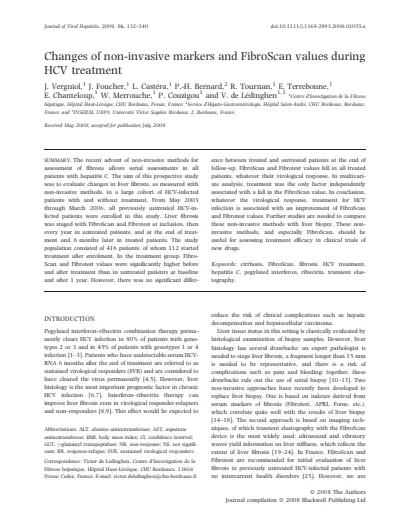
Changes of non-invasive markers and FibroScan values during HCV treatment.
-
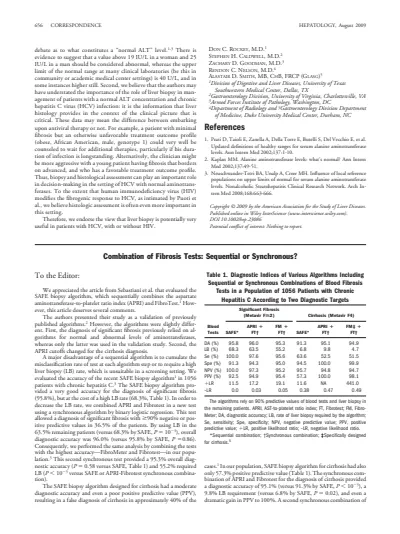
Combination of fibrosis tests: sequential or synchronous?
-
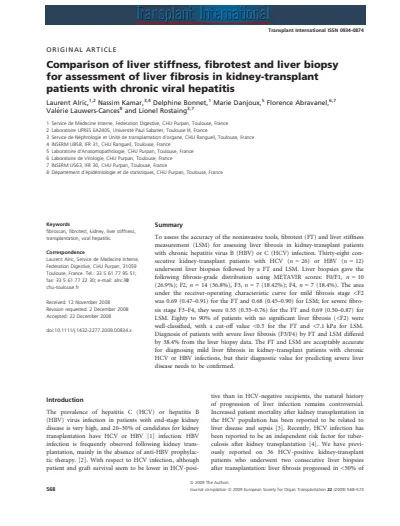
Comparison of liver stiffness, fibrotest and liver biopsy for assessment of liver fibrosis in kidney-transplant patients with chronic viral hepatitis.
-
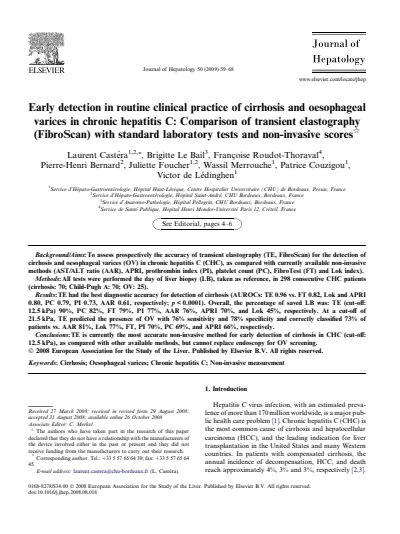
Early detection in routine clinical practice of cirrhosis and oesophageal varices in chronic hepatitis C: comparison of transient elastography (FibroScan) with standard laboratory tests and non-invasive scores.
-
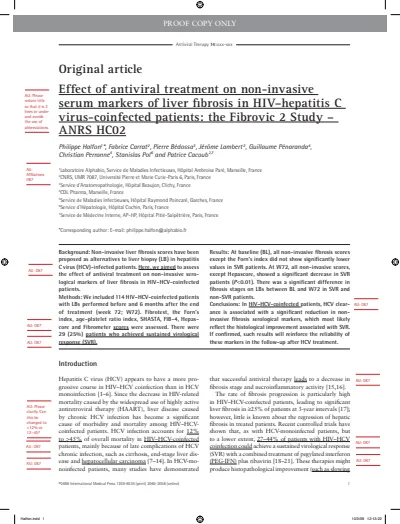
Effect of antiviral treatment on serum markers of liver fibrosis in HIV-hepatitis C virus-coinfected patients: the Fibrovic 2 Study - ANRS HC02.
-
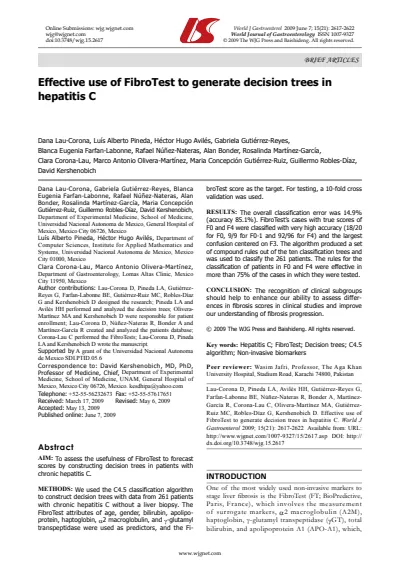
Effective use of FibroTest to generate decision trees in hepatitis C.
-
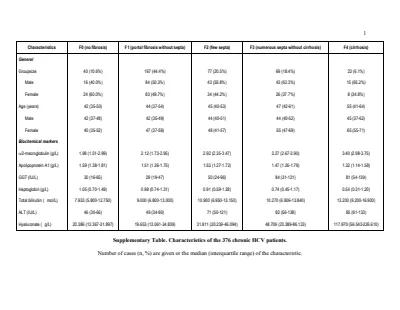
GlycoFibroTest is a highly performant liver fibrosis biomarker derived from DNA sequencer-based serum protein glycomics.
-
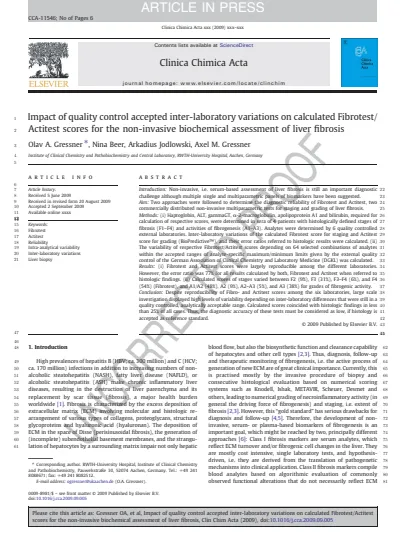
Impact of quality control accepted inter-laboratory variations on calculated Fibrotest/Actitest scores for the non-invasive biochemical assessment of liver fibrosis.
-
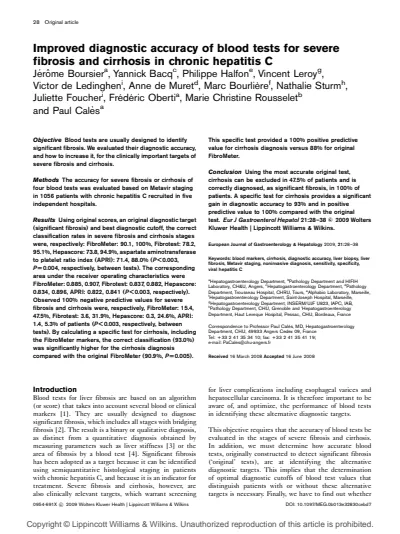
Improved diagnostic accuracy of blood tests for severe fibrosis and cirrhosis in chronic hepatitis C.
-
Liver biopsy: the best standard...when everything else fails.
-
Liver fibrosis: consensus recommendations of the Asian Pacific Association for the Study of the Liver (APASL). Key publication
-

Real-time tissue elastography versus FibroScan for noninvasive assessment of liver fibrosis in chronic liver disease.
-
SAFE biopsy: a validated method for large-scale staging of liver fibrosis in chronic hepatitis C.
-
The combination of a blood test and Fibroscan improves the non-invasive diagnosis of liver fibrosis.
-

The risks of changing the rules for previously validated biomarkers and using the same patients several times. Response letter to Calès et al. Gastroenterol Clin Biol 2008;32:1050-60: "Evaluation and improvement of a reliable diagnosis of cirrhosis by blood tests".
-
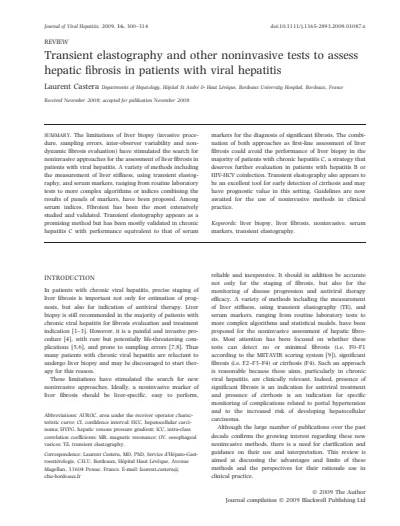
Transient elastography and other noninvasive tests to assess hepatic fibrosis in patients with viral hepatitis.
-
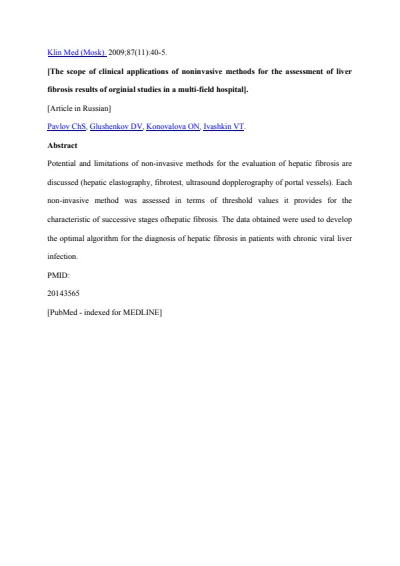
[The scope of clinical applications of noninvasive methods for the assessment of liver fibrosis results of orginial studies in a multi-field hospital].
-
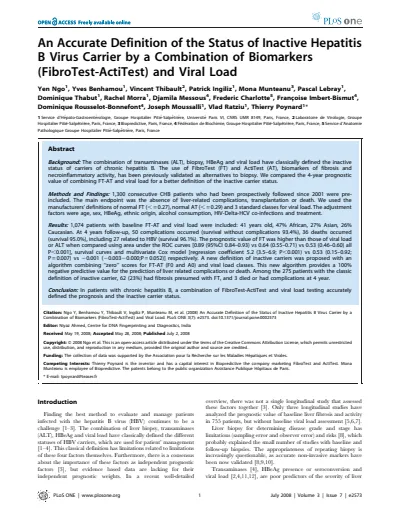
An accurate definition of the status of inactive hepatitis B virus carrier by a combination of biomarkers (FibroTest-ActiTest) and viral load. Key publication
-
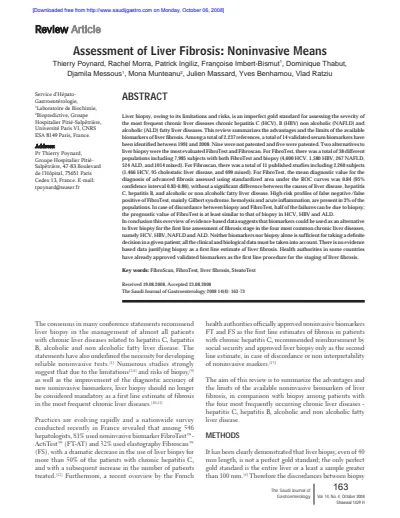
Assessment of liver fibrosis: noninvasive means.
-
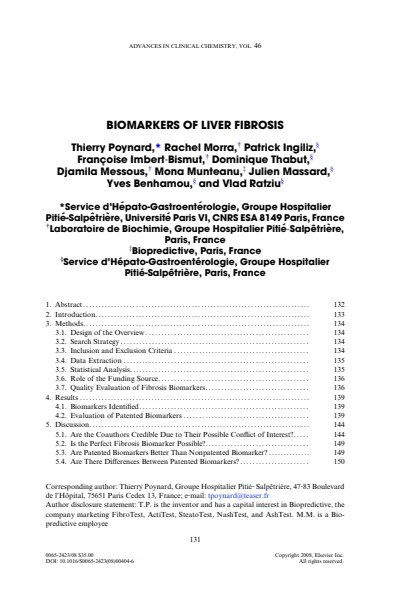
Biomarkers of liver fibrosis.
-
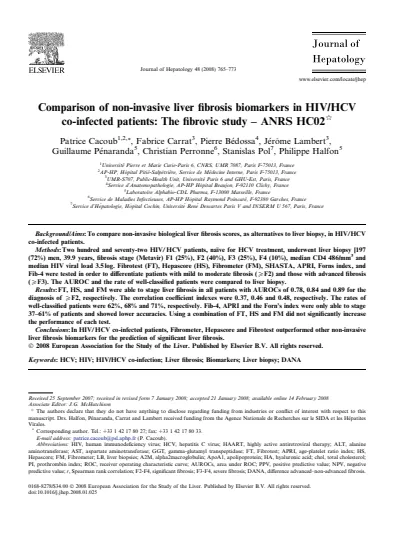
Comparison of non-invasive liver fibrosis biomarkers in HIV/HCV co-infected patients: the fibrovic study--ANRS HC02.
-
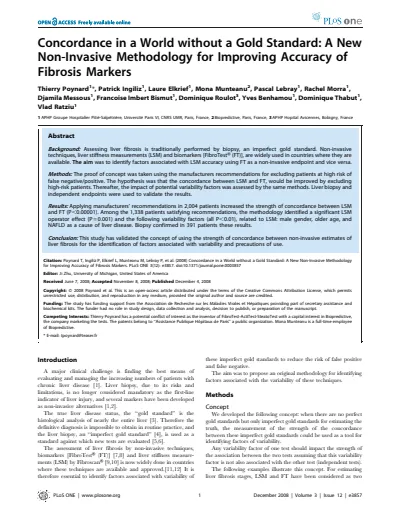
Concordance in a world without a gold standard: a new non-invasive methodology for improving accuracy of fibrosis markers.
-
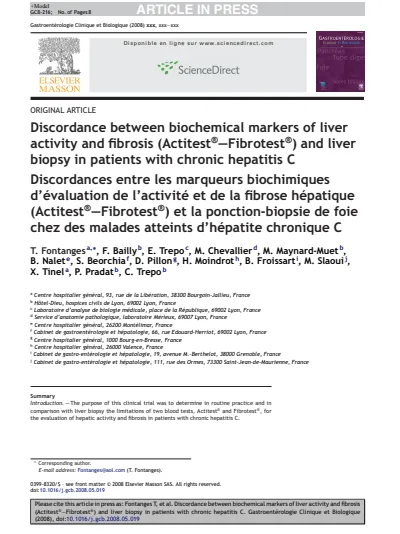
Discordance between biochemical markers of liver activity and fibrosis (Actitest-Fibrotest) and liver biopsy in patients with chronic hepatitis C.
-
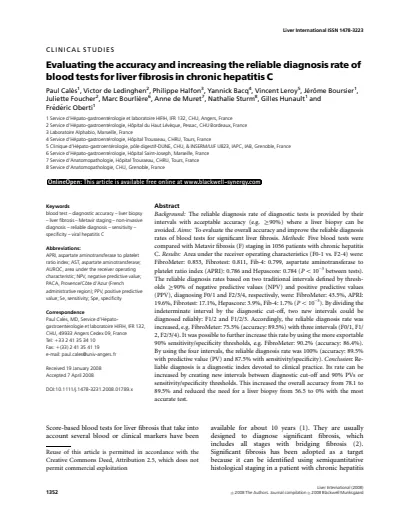
Evaluating the accuracy and increasing the reliable diagnosis rate of blood tests for liver fibrosis in chronic hepatitis C.
-
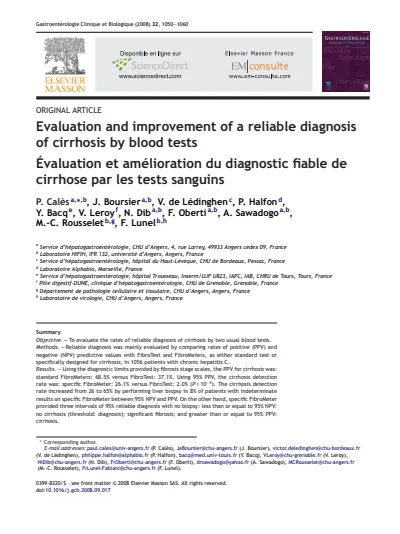
Evaluation and improvement of a reliable diagnosis of cirrhosis by blood tests.
-
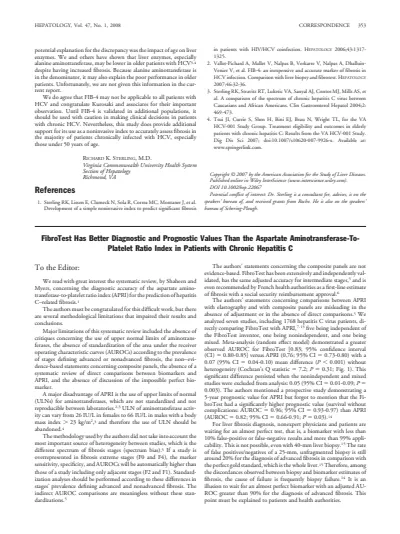
FibroTest has better diagnostic and prognostic values than the aspartate aminotransferase-to-platelet ratio index in patients with chronic hepatitis C.
-
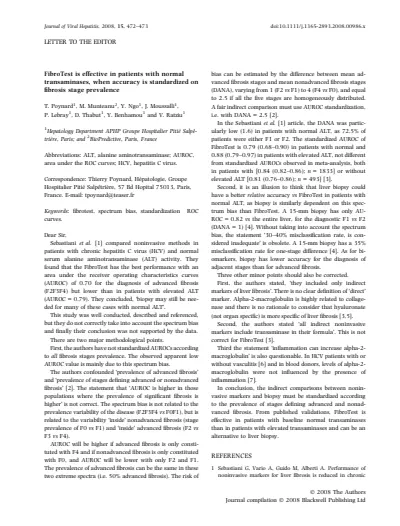
FibroTest is effective in patients with normal transaminases, when accuracy is standardized on fibrosis stage prevalence.
-
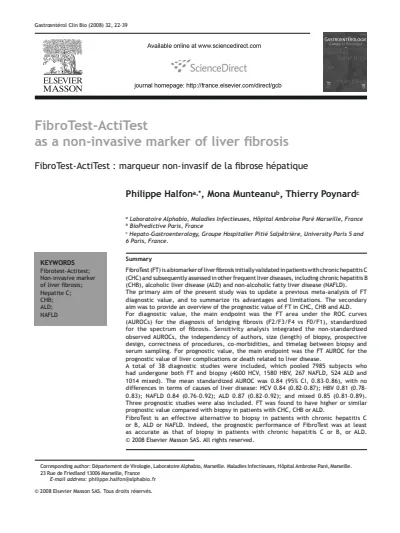
FibroTest-ActiTest as a non-invasive marker of liver fibrosis. Key publication
-
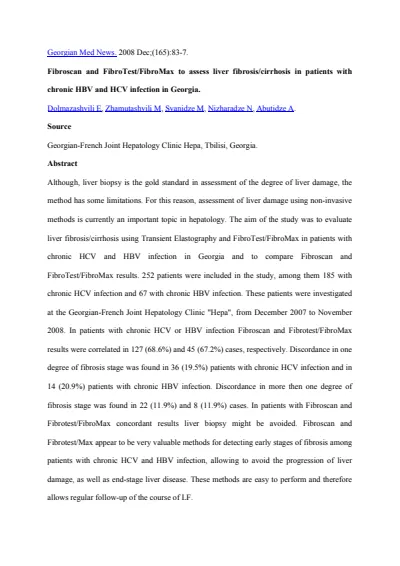
Fibroscan and FibroTest/FibroMax to assess liver fibrosis/cirrhosis in patients with chronic HBV and HCV infection in Georgia.
-
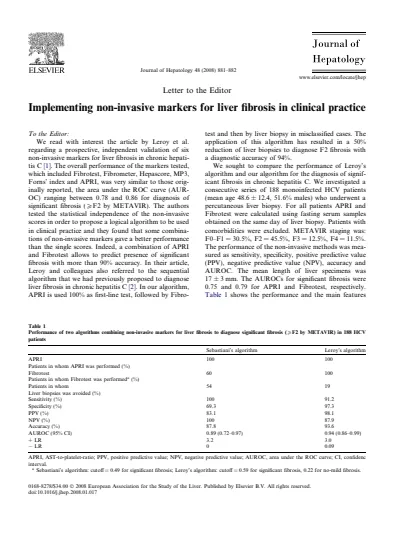
Implementing non-invasive markers for liver fibrosis in clinical practice.
-
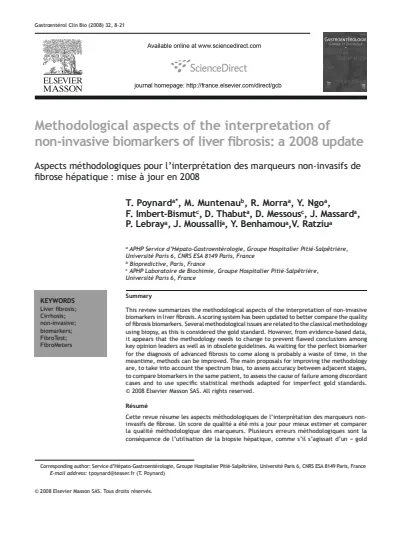
Methodological aspects of the interpretation of non-invasive biomarkers of liver fibrosis: a 2008 update. Key publication
-
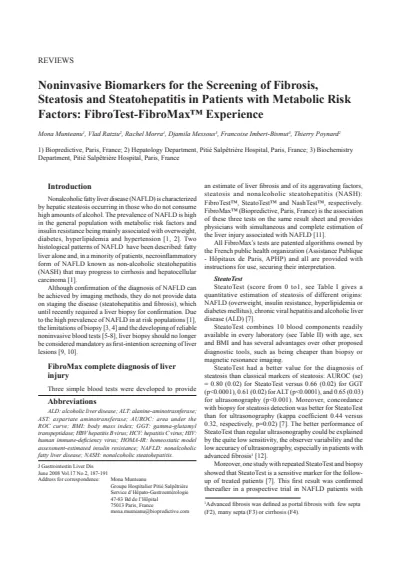
Noninvasive biomarkers for the screening of fibrosis, steatosis and steatohepatitis in patients with metabolic risk factors: FibroTest-FibroMax experience. Key publication
-
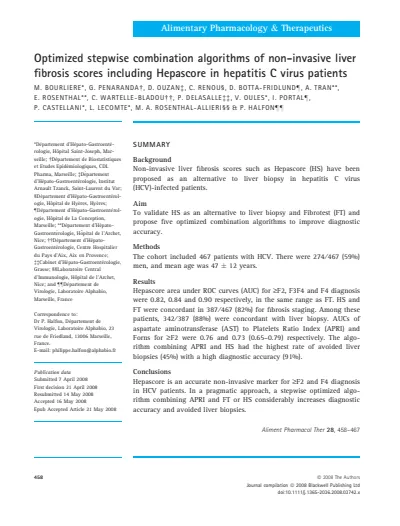
Optimized stepwise combination algorithms of non-invasive liver fibrosis scores including Hepascore in hepatitis C virus patients.
-
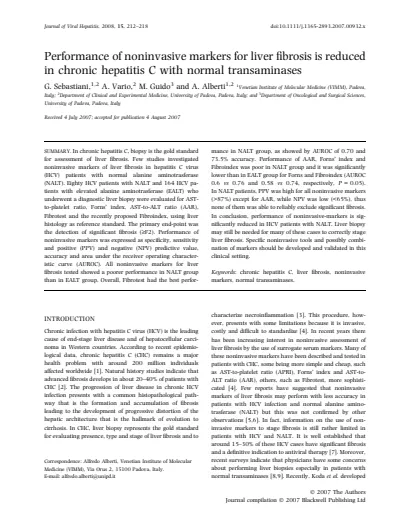
Performance of noninvasive markers for liver fibrosis is reduced in chronic hepatitis C with normal transaminases.
-
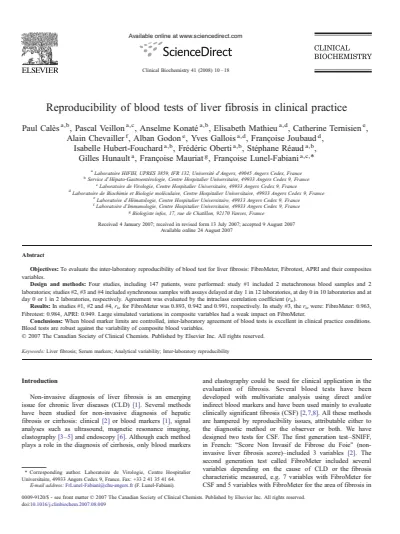
Reproducibility of blood tests of liver fibrosis in clinical practice.
-

Reproducibility of non-invasive fibrosis biomarkers, FibroMeter and FibroTest, could be improved by respecting the analytical standardizations.
-
Systematic review and meta-analysis of the diagnostic accuracy of fibrosis marker panels in patients with HIV/hepatitis C coinfection.
-
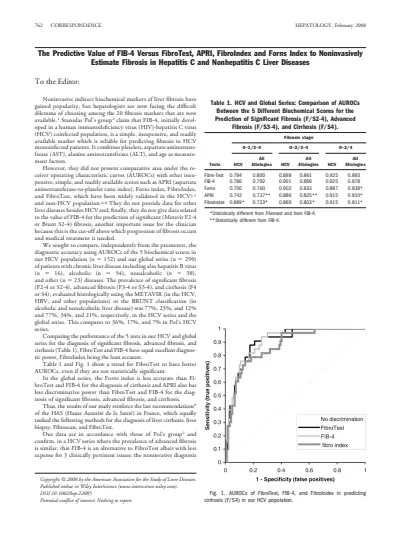
The predictive value of FIB-4 versus FibroTest, APRI, FibroIndex and Forns index to noninvasively estimate fibrosis in hepatitis C and nonhepatitis C liver diseases.
-
The use of enzyme results for liver fibrosis evaluation neccessitates standardization.
-
Comparison of test performance profile for blood tests of liver fibrosis in chronic hepatitis C.
-
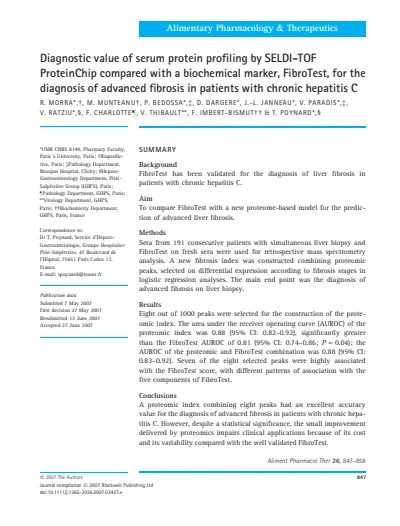
Diagnostic value of serum protein profiling by SELDI-TOF ProteinChip compared with a biochemical marker, FibroTest, for the diagnosis of advanced fibrosis in patients with chronic hepatitis C.
-
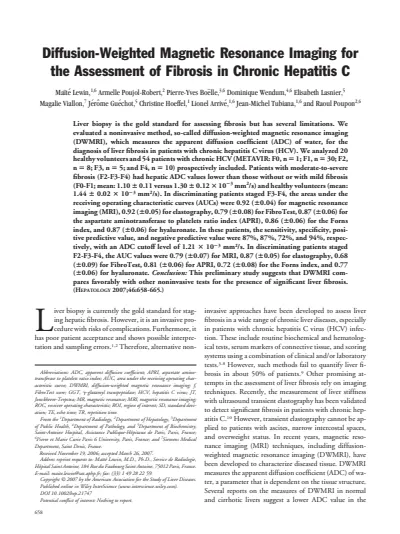
Diffusion-weighted magnetic resonance imaging for the assessment of fibrosis in chronic hepatitis C.
-
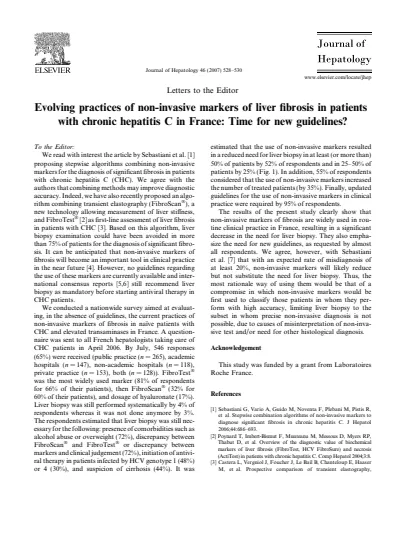
Evolving practices of non-invasive markers of liver fibrosis in patients with chronic hepatitis C in France: time for new guidelines?
-
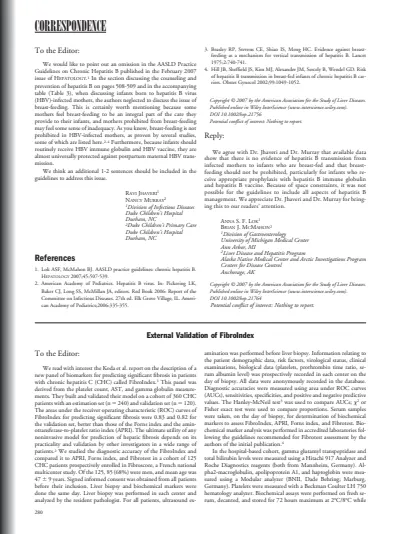
External validation of FibroIndex.
-
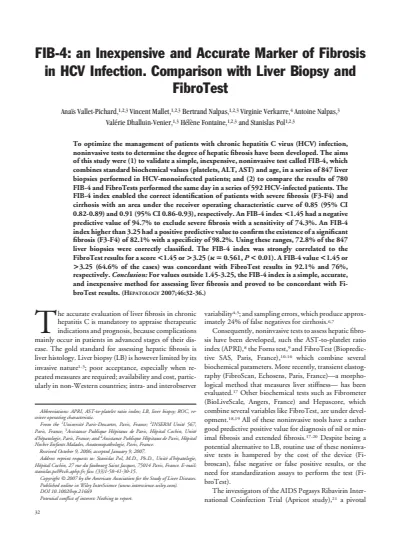
FIB-4: an inexpensive and accurate marker of fibrosis in HCV infection. comparison with liver biopsy and fibrotest.
-
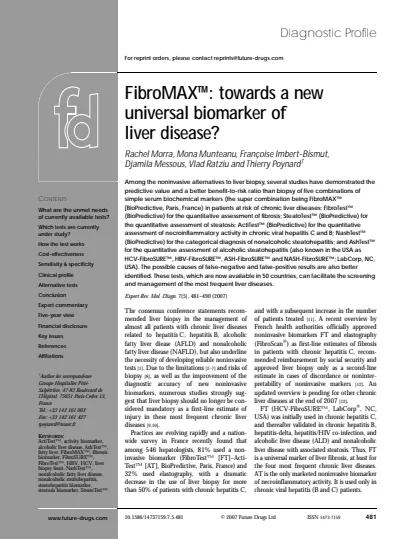
FibroMAX: towards a new universal biomarker of liver disease?
-
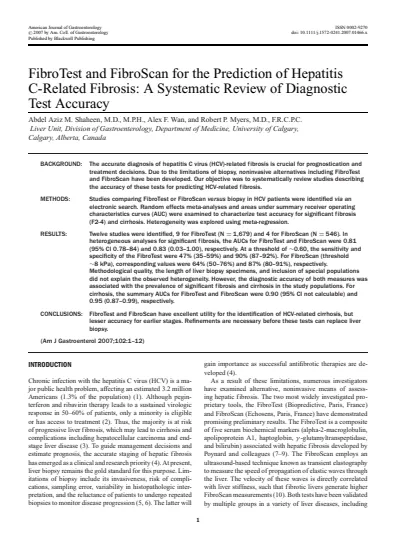
FibroTest and FibroScan for the prediction of hepatitis C-related fibrosis: a systematic review of diagnostic test accuracy.
-
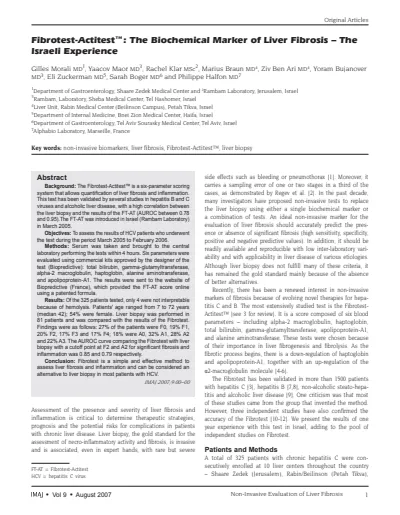
Fibrotest-Actitest: the biochemical marker of liver fibrosis--the Israeli experience.
-
Guidelines for the diagnosis of uncomplicated cirrhosis.
-
Improving estimation of liver fibrosis using combination and newer noninvasive biomarker scoring systems in hepatitis C-infected haemophilia patients.
-
Liver stiffness measurement in children using FibroScan: feasibility study and comparison with Fibrotest, aspartate transaminase to platelets ratio index, and liver biopsy.
-
Meta-analyses of FibroTest diagnostic value in chronic liver disease.
-
Optimal correlation between different instruments for Fibrotest-Actitest protein measurement in patients with chronic hepatitis C.
-
Prospective comparison of six non-invasive scores for the diagnosis of liver fibrosis in chronic hepatitis C.
-
Relationship between the Fibrotest and portal hypertension in patients with liver disease.
-
Standardization of ROC curve areas for diagnostic evaluation of liver fibrosis markers based on prevalences of fibrosis stages. Key publication
-
The FibroTest value in discriminating between insignificant and significant fibrosis in chronic hepatitis C patients. The Romanian experience.
-
Transient elastography: a new surrogate marker of liver fibrosis influenced by major changes of transaminases.
-
Variability of the area under the receiver operating characteristic curves in the diagnostic evaluation of liver fibrosis markers: impact of biopsy length and fragmentation.
-
A prospective analysis of the prognostic value of biomarkers (FibroTest) in patients with chronic hepatitis C. Key publication
-
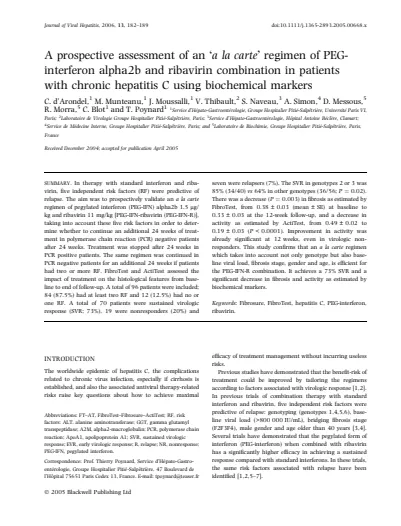
A prospective assessment of an 'a la carte' regimen of PEG-interferon alpha2b and ribavirin combination in patients with chronic hepatitis C using biochemical markers.
-
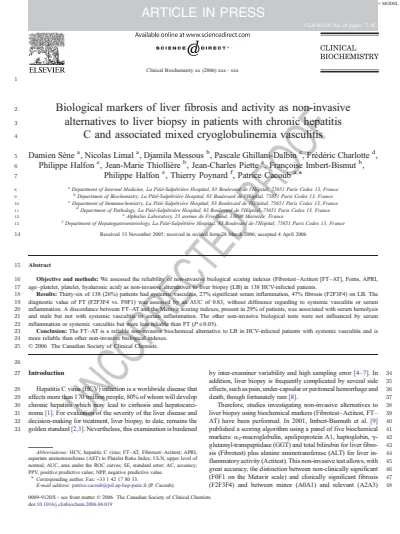
Biological markers of liver fibrosis and activity as non-invasive alternatives to liver biopsy in patients with chronic hepatitis C and associated mixed cryoglobulinemia vasculitis.
-

Diagnostic value of FibroTest with normal serum aminotransferases.
-
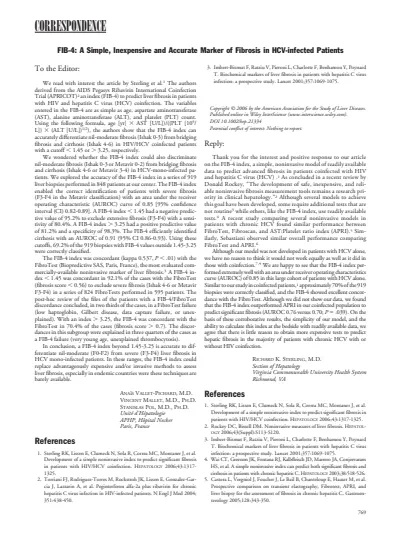
FIB-4: a simple, inexpensive and accurate marker of fibrosis in HCV-infected patients.
-
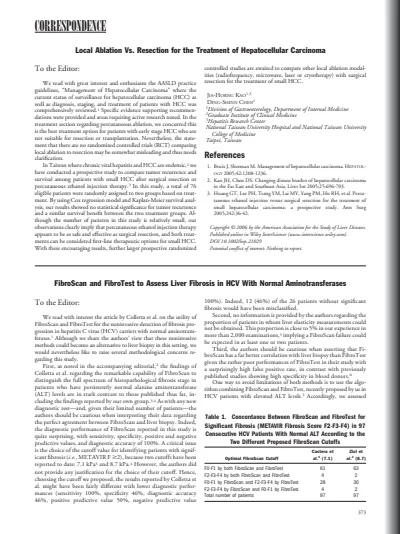
FibroScan and FibroTest to assess liver fibrosis in HCV with normal aminotransferases.
-
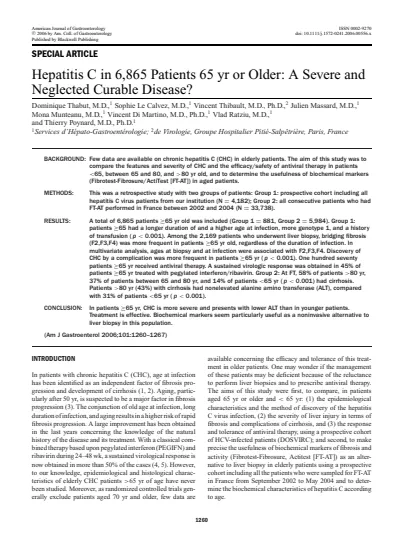
Hepatitis C in 6,865 patients 65 yr or older: a severe and neglected curable disease?
-
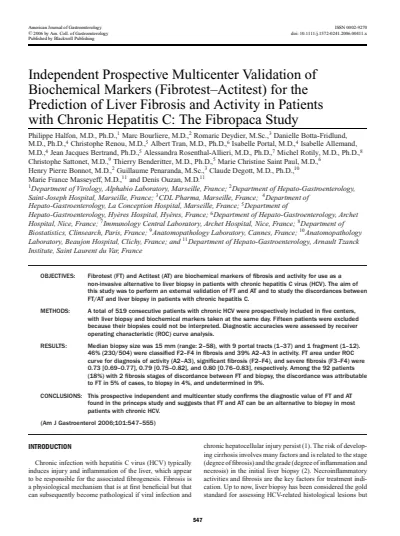
Independent prospective multicenter validation of biochemical markers (fibrotest-actitest) for the prediction of liver fibrosis and activity in patients with chronic hepatitis C: the fibropaca study.
-
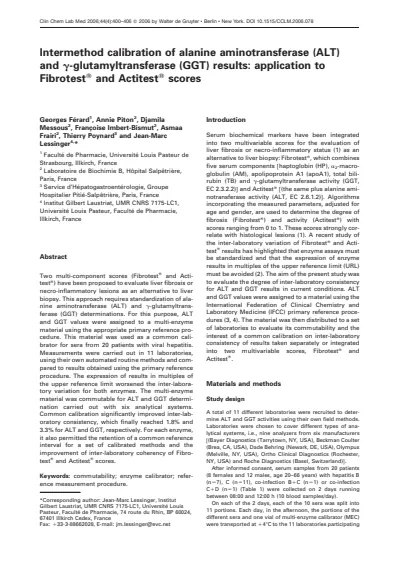
Intermethod calibration of alanine aminotransferase (ALT) and gamma-glutamyltransferase (GGT) results: application to Fibrotest and Actitest scores.
-
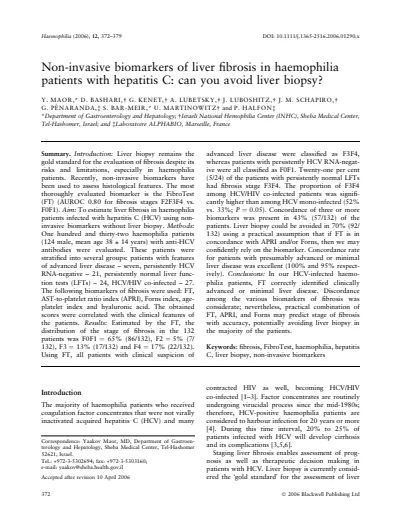
Non-invasive biomarkers of liver fibrosis in haemophilia patients with hepatitis C: can you avoid liver biopsy?
-
Non-invasive diagnosis of large oesophageal varices with FibroTest in patients with cirrhosis: a preliminary retrospective study.
-
Stepwise combination algorithms of non-invasive markers to diagnose significant fibrosis in chronic hepatitis C.
-
Validation and comparison of indexes for fibrosis and cirrhosis prediction in chronic hepatitis C patients: proposal for a pragmatic approach classification without liver biopsies.
-
A novel panel of blood markers to assess the degree of liver fibrosis.
-
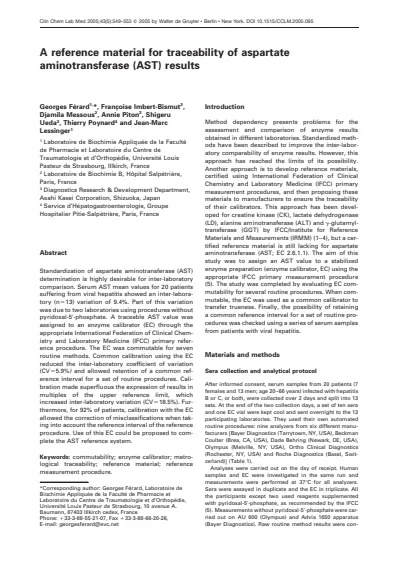
A reference material for traceability of aspartate aminotransferase (AST) results.
-
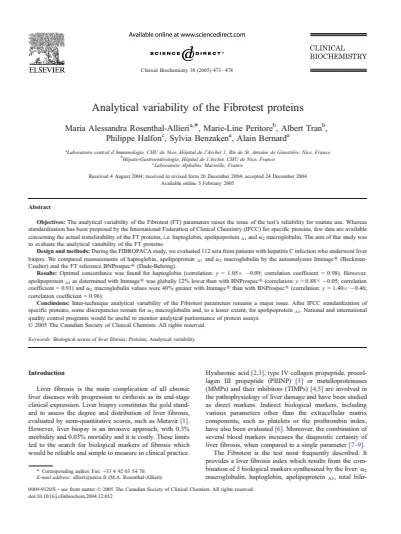
Analytical variability of the Fibrotest proteins.
-
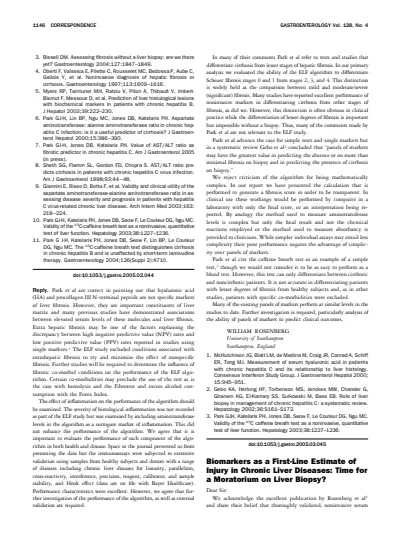
Biomarkers as a first-line estimate of injury in chronic liver diseases: time for a moratorium on liver biopsy?
-
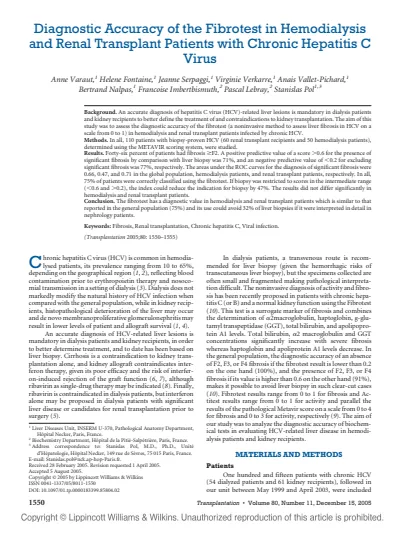
Diagnostic accuracy of the fibrotest in hemodialysis and renal transplant patients with chronic hepatitis C virus.
-
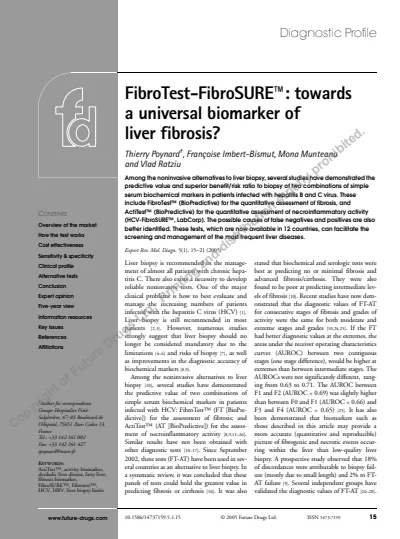
FibroTest-FibroSURE: towards a universal biomarker of liver fibrosis?
-
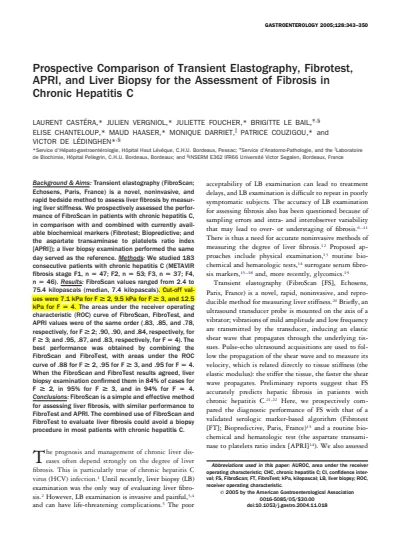
Prospective comparison of transient elastography, Fibrotest, APRI, and liver biopsy for the assessment of fibrosis in chronic hepatitis C.
-
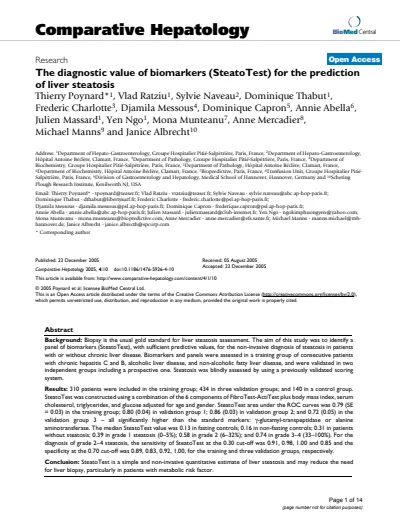
The diagnostic value of biomarkers (SteatoTest) for the prediction of liver steatosis. Key publication
-
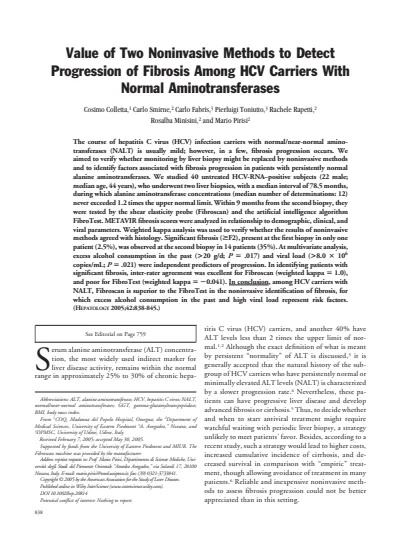
Value of two noninvasive methods to detect progression of fibrosis among HCV carriers with normal aminotransferases.
-
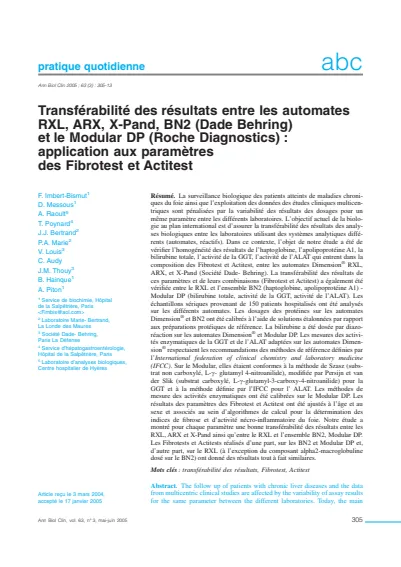
[Results transferability on RXL, ARX, X-Pand, BN2 (Dade Behring) and modular DP (Roche Diagnostics) analysers: application to component assays of fibrotest and Actitest].
-
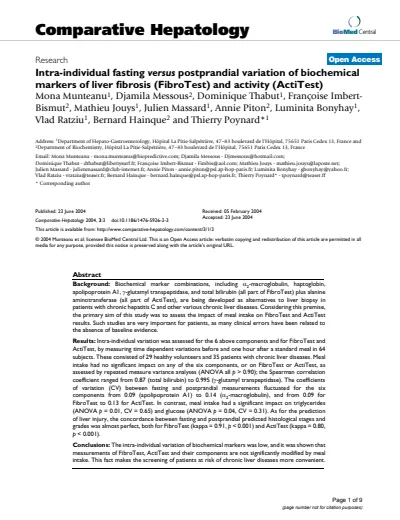
Intra-individual fasting versus postprandial variation of biochemical markers of liver fibrosis (FibroTest) and activity (ActiTest).
-
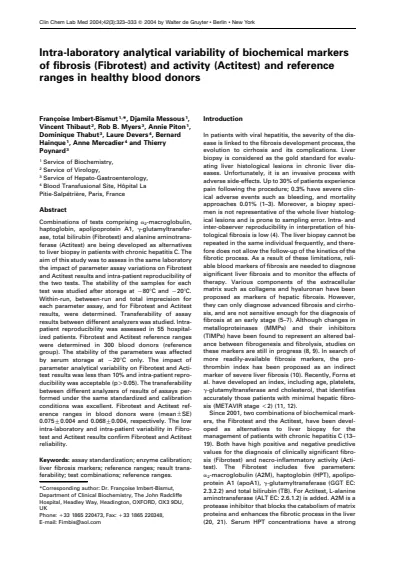
Intra-laboratory analytical variability of biochemical markers of fibrosis (Fibrotest) and activity (Actitest) and reference ranges in healthy blood donors.
-
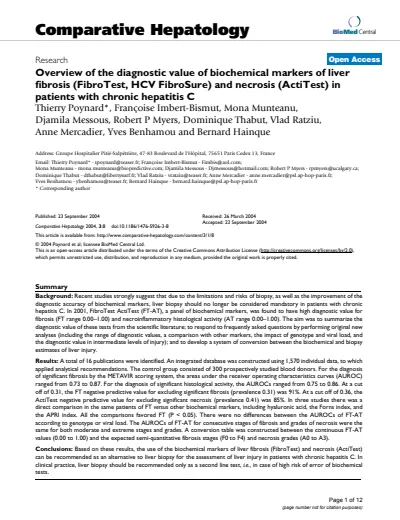
Overview of the diagnostic value of biochemical markers of liver fibrosis (FibroTest, HCV FibroSure) and necrosis (ActiTest) in patients with chronic hepatitis C.
-
Prospective analysis of discordant results between biochemical markers and biopsy in patients with chronic hepatitis C.
-
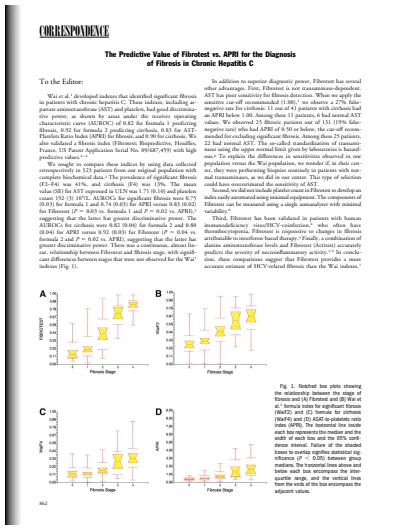
The predictive value of Fibrotest vs. APRI for the diagnosis of fibrosis in chronic hepatitis C.
-
Biochemical markers of fibrosis in patients with chronic hepatitis C: a comparison with prothrombin time, platelet count, and age-platelet index.
-
Biochemical surrogate markers of liver fibrosis and activity in a randomized trial of peginterferon alfa-2b and ribavirin.
-
Cost effectiveness of pegylated interferon alpha 2b and ribavirin combination in chronic hepatitis C.
-
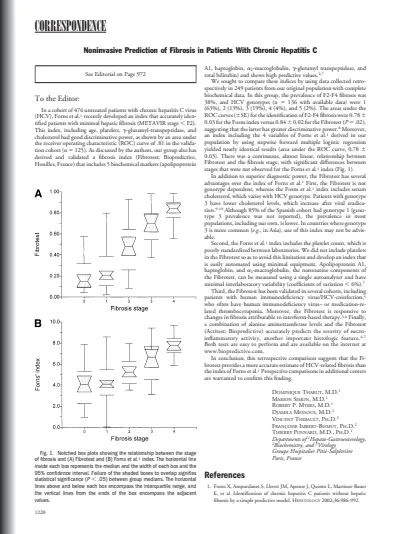
Noninvasive prediction of fibrosis in patients with chronic hepatitis C.
-
Serum biochemical markers accurately predict liver fibrosis in HIV and hepatitis C virus co-infected patients.
-
Validation of the FibroTest biochemical markers score in assessing liver fibrosis in hepatitis C patients.
-
A prospective assessment of the inter-laboratory variability of biochemical markers of fibrosis (FibroTest) and activity (ActiTest) in patients with chronic liver disease.
-
Biochemical markers of liver fibrosis in patients infected by hepatitis C virus: longitudinal validation in a randomized trial.
-
Biochemical markers of liver fibrosis: a comparison with historical features in patients with chronic hepatitis C.
-
Biochemical markers of liver fibrosis in patients with hepatitis C virus infection: a prospective study. Key publication
-
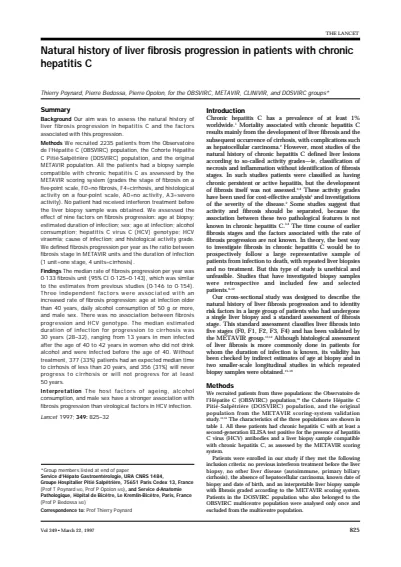
Natural history of liver fibrosis progression in patients with chronic hepatitis C. The OBSVIRC, METAVIR, CLINIVIR, and DOSVIRC groups.
-
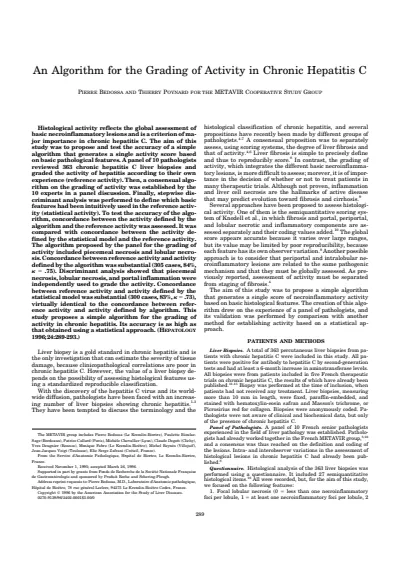
An algorithm for the grading of activity in chronic hepatitis C. The METAVIR Cooperative Study Group.
-
Acoustic Radiation Force Impulse Imaging for Diagnosis and Monitoring of Liver Fibrosis in Patients with Hepatitis C: A review of diagnostic accuracy, clinical effectiveness,…
-
American Association for the Study of the Liver
-
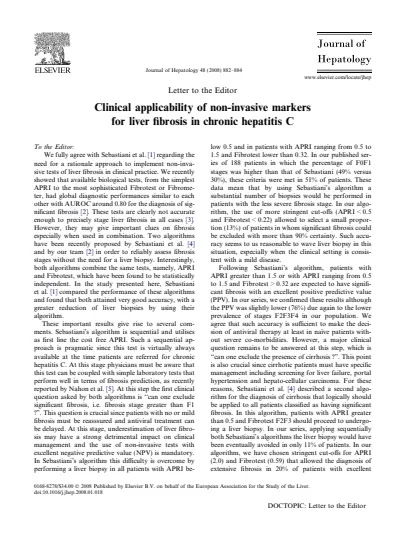
Clinical applicability of non-invasive markers for liver fibrosis in chronic hepatitis C (Letter)
-

Guidelines for the screening, care and treatment of persons with hepatitis C infection Key publication
-
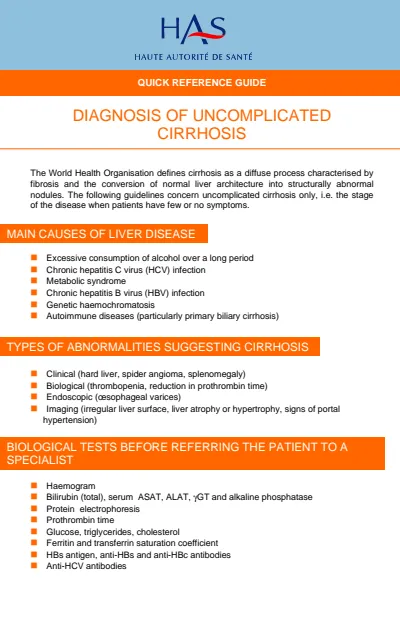
La Haute Autorite de Sante (HAS) in France— Diagnosis of uncomplicated cirrhosis (Accessed December 2011)
-

Ministère des Affaires Sociales et de la Santé Key publication
-
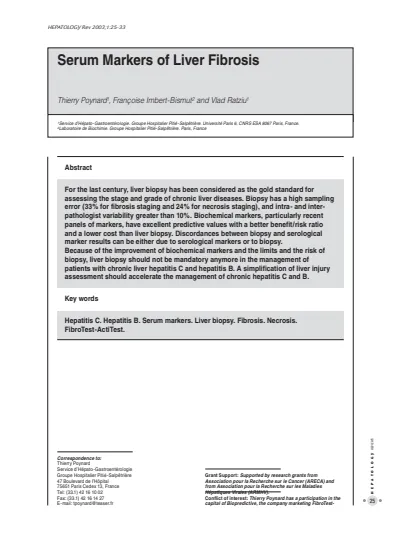
Poynard T, Imbert-Bismut F, Ratziu V
-
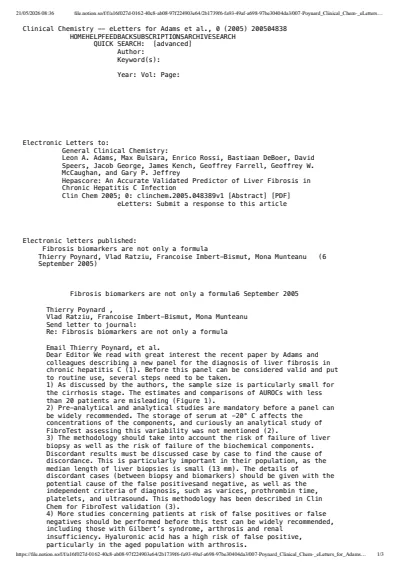
Poynard T, Imbert-Bismut F, Ratziu V, Myers RP, Di Martino V, Thabut D, Moussalli J, Benhamou Y
-
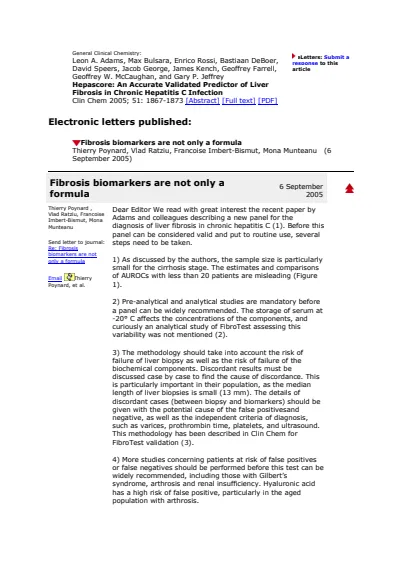
Poynard T, Ratziu V, Imbert-Bismut F, Munteanu M
Showing the full result list. The page is server-rendered and not paginated.