Applicability and precautions of use of liver injury biomarker FibroTest. A reappraisal at 7 years of age.
Abstract
Background
FibroTest (FT) is a validated biomarker of fibrosis. To assess the applicability rate and to reduce the risk of false positives/negatives (RFPN), security algorithms were developed. The aims were to estimate the prevalence of RFPN and of proven failures, and to identify factors associated with their occurrences.
Methods
Four populations were studied: 954 blood donors (P1), 7,494 healthy volunteers (P2), 345,695 consecutive worldwide sera (P3), including 24,872 sera analyzed in a tertiary care centre (GHPS) (P4). Analytical procedures of laboratories with RFPN > 5% and charts of P4 patients in with RFPN were reviewed.
Results
The prevalence of RFPN was 0.52% (5/954; 95%CI 0.17-1.22) in P1, 0.51% (38/7494; 0.36-0.70) in P2, and 0.97% (3349/345695; 0.94-1.00) in P3. Three a priori high-risk populations were confirmed: 1.97% in P4, 1.77% in HIV centre and 2.61% in Sub-Saharan origin subjects. RFPN was mostly associated with low haptoglobin (0.46%), and high apolipoproteinA1 (0.21%). A traceability study of a P3 laboratory with RFPFN > 5% permitted to correct analytical procedures.
Conclusion
The mean applicability rate of Fibrotest was 99.03%. Independent factors associated with the high risk of false positives/negatives were HIV center, subSaharan origin, and a tertiary care reference centre, although the applicability rate remained above 97%.
Three Neglected STARD Criteria Reduce the Uncertainty of the Liver Fibrosis Biomarker FibroTest-T2D in Metabolic Dysfunction-Associated Steatotic Liver Disease (MASLD).
Clinical and genetic definition of serum bilirubin levels for the diagnosis of Gilbert syndrome and hypobilirubinemia.
Prospective direct comparison of non-invasive liver tests in outpatients with type 2 diabetes using intention-to-diagnose analysis.
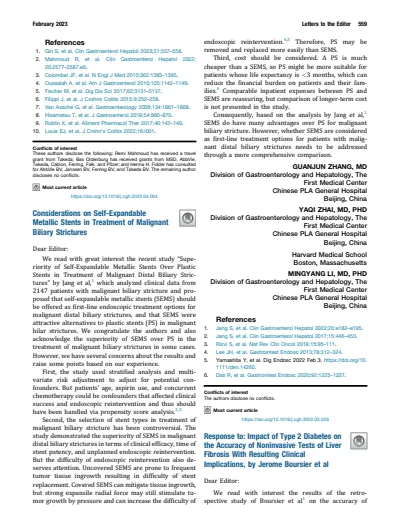
Response to: Impact of Type 2 Diabetes on the Accuracy of Noninvasive Tests of Liver Fibrosis With Resulting Clinical Implications, by Jerome Boursier et al.
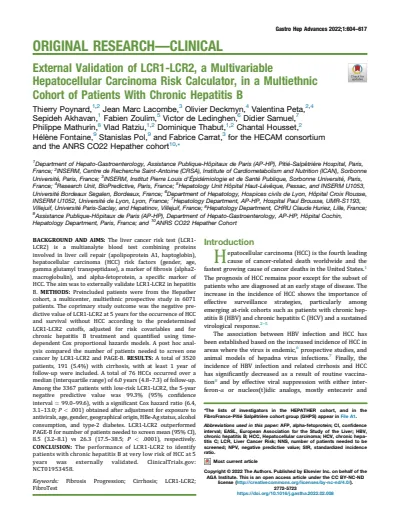
External Validation of LCR1-LCR2, a Multivariable Hepatocellular Carcinoma Risk Calculator, in a Multiethnic Cohort of Patients With Chronic Hepatitis B.
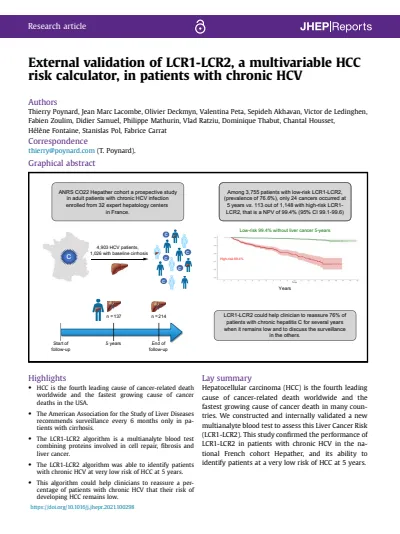
External validation of LCR1-LCR2, a multivariable HCC risk calculator, in patients with chronic HCV.
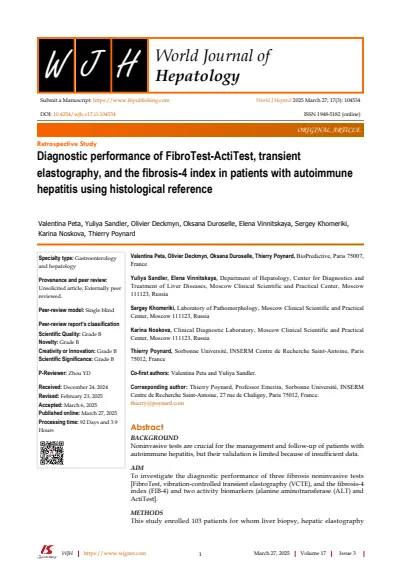
Diagnostic performance of FibroTest-ActiTest, transient elastography, and the fibrosis-4 index in patients with autoimmune hepatitis using histological reference.
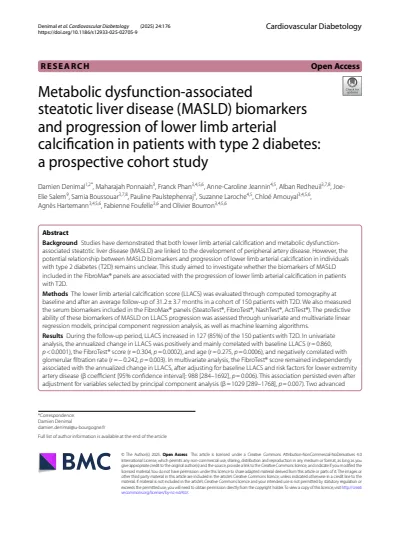
Metabolic dysfunction-associated steatotic liver disease (MASLD) biomarkers and progression of lower limb arterial calcification in patients with type 2 diabetes: a prospective cohort study.
Three Neglected STARD Criteria Reduce the Uncertainty of the Liver Fibrosis Biomarker FibroTest-T2D in Metabolic Dysfunction-Associated Steatotic Liver Disease (MASLD).
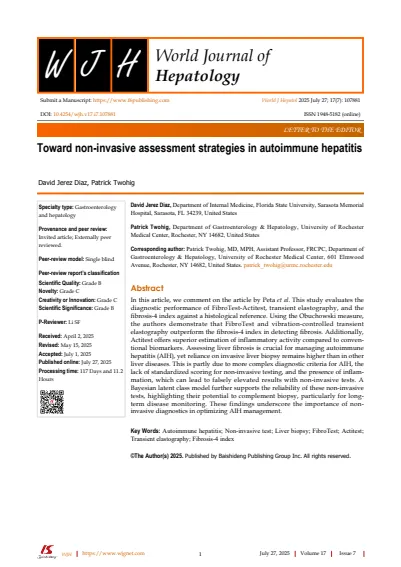
Toward non-invasive assessment strategies in autoimmune hepatitis.
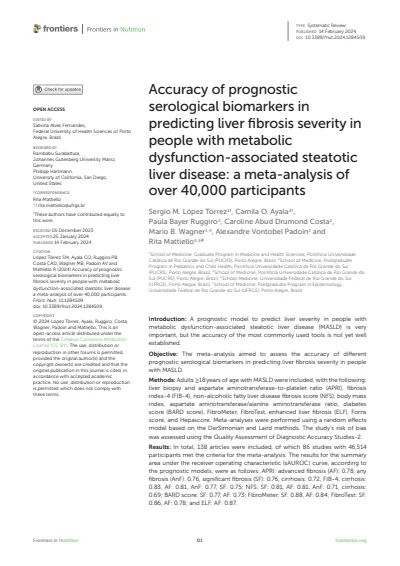
Accuracy of prognostic serological biomarkers in predicting liver fibrosis severity in people with metabolic dysfunction-associated steatotic liver disease: a meta-analysis of over 40,000 participants.