
Scientific publications for BioPredictive non-invasive diagnostics
Peer-reviewed studies validating BioPredictive blood-test diagnostics for liver disease — from first-in-class development cohorts to long-term meta-analyses.
53/433 Publications
-
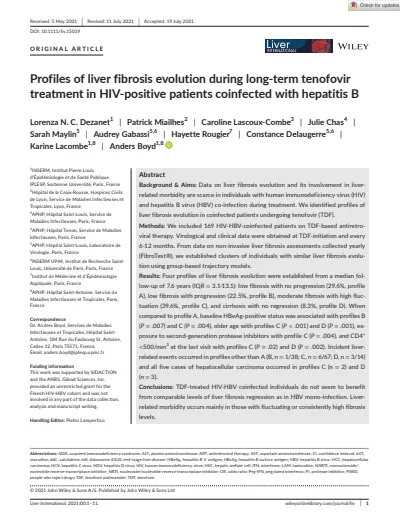
Profiles of liver fibrosis evolution during long-term tenofovir treatment in HIV-positive patients coinfected with hepatitis B.
-
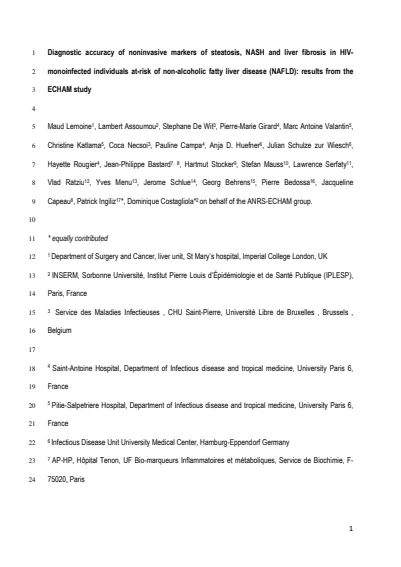
Diagnostic Accuracy of Noninvasive Markers of Steatosis, NASH, and Liver Fibrosis in HIV-Monoinfected Individuals at Risk of Nonalcoholic Fatty Liver Disease (NAFLD): Results From the ECHAM Study.
-

Hepatitis B virus genotype G and liver fibrosis progression in chronic hepatitis B and human immunodeficiency virus coinfection.
-
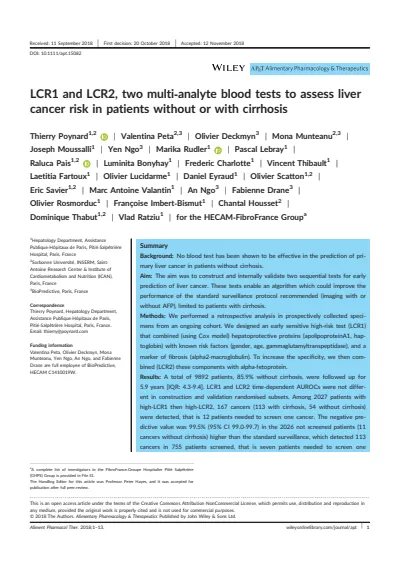
LCR1 and LCR2, two multi-analyte blood tests to assess liver cancer risk in patients without or with cirrhosis. Key publication
-
Diagnostic accuracy of the Coopscore© to predict liver fibrosis in human immunodeficiency virus/hepatitis B virus co-infection.
-
A Single Test Combining Blood Markers and Elastography is More Accurate Than Other Fibrosis Tests in the Main Causes of Chronic Liver Diseases.
-
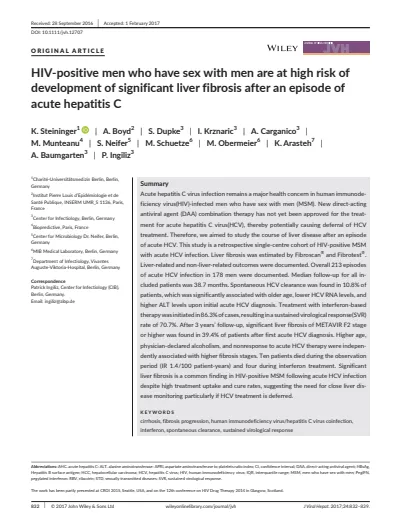
HIV-positive men who have sex with men are at high risk of development of significant liver fibrosis after an episode of acute hepatitis C.
-
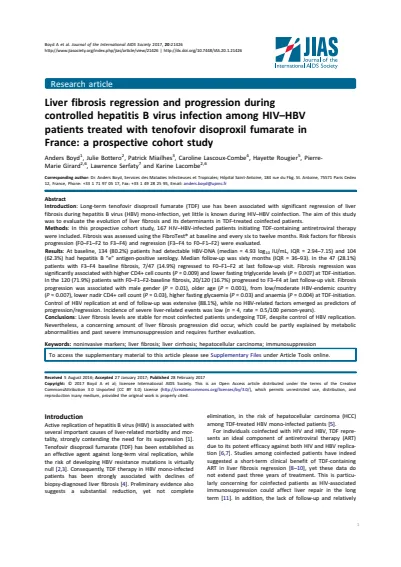
Liver fibrosis regression and progression during controlled hepatitis B virus infection among HIV-HBV patients treated with tenofovir disoproxil fumarate in France: a prospective cohort study.
-
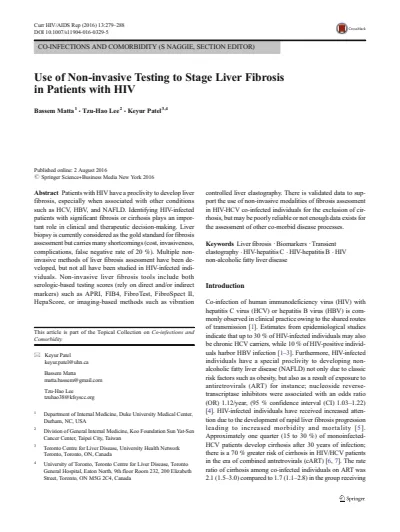
Use of Non-invasive Testing to Stage Liver Fibrosis in Patients with HIV.
-
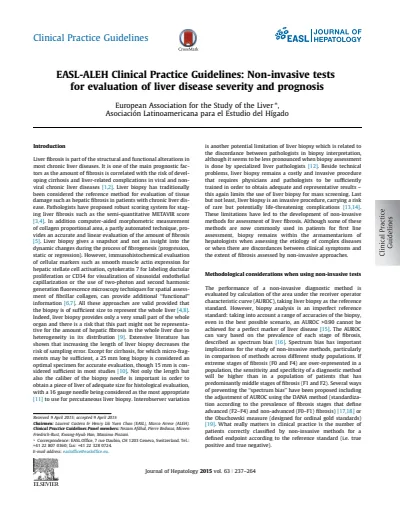
EASL-ALEH Clinical Practice Guidelines: Non-invasive tests for evaluation of liver disease severity and prognosis. Key publication
-
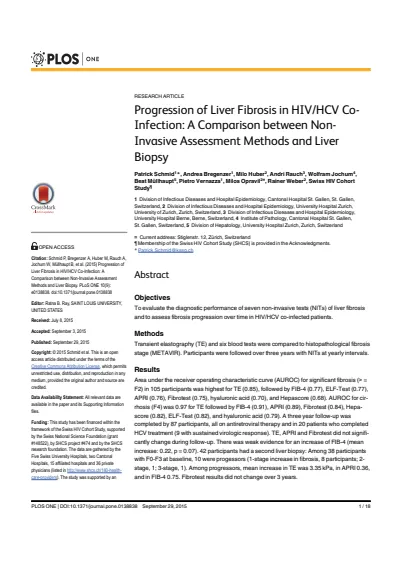
Progression of Liver Fibrosis in HIV/HCV Co-Infection: A Comparison between Non-Invasive Assessment Methods and Liver Biopsy.
-
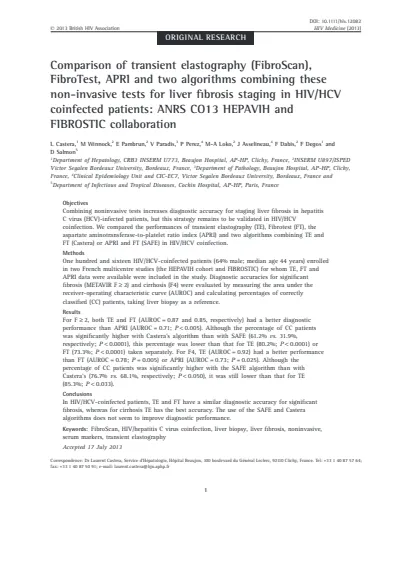
Comparison of transient elastography (FibroScan), FibroTest, APRI and two algorithms combining these non-invasive tests for liver fibrosis staging in HIV/HCV coinfected patients: ANRS CO13 HEPAVIH and FIBROSTIC collaboration.
-
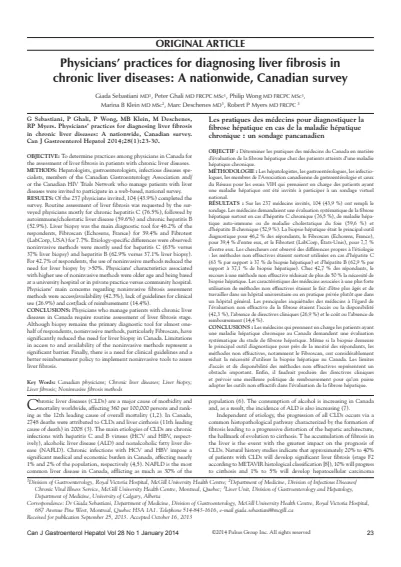
Physicians' practices for diagnosing liver fibrosis in chronic liver diseases: a nationwide, Canadian survey.
-
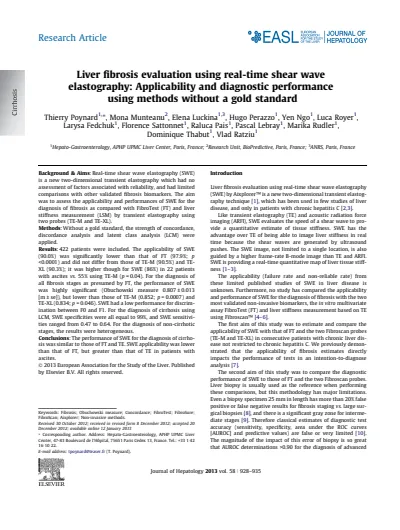
Liver fibrosis evaluation using real-time shear wave elastography: applicability and diagnostic performance using methods without a gold standard.
-
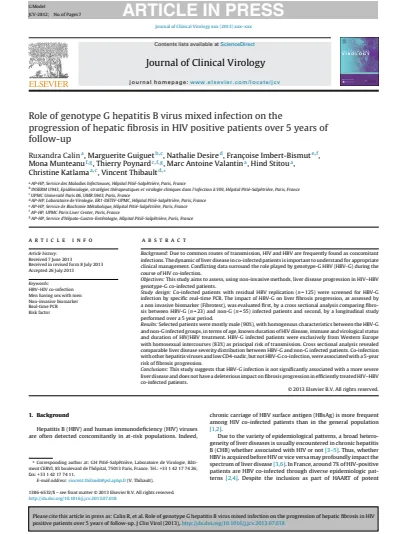
Role of genotype G hepatitis B virus mixed infection on the progression of hepatic fibrosis in HIV positive patients over 5 years of follow-up.
-
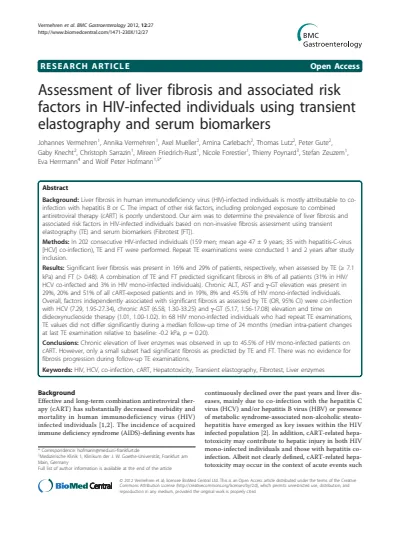
Assessment of liver fibrosis and associated risk factors in HIV-infected individuals using transient elastography and serum biomarkers.
-
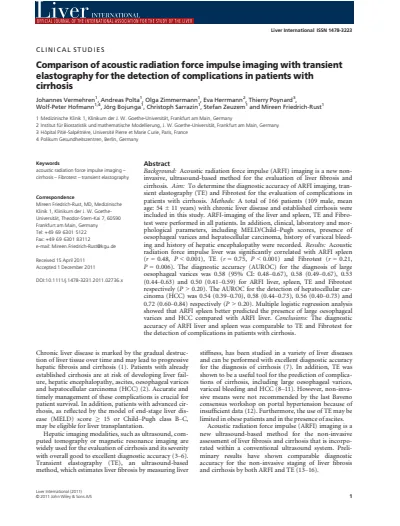
Comparison of acoustic radiation force impulse imaging with transient elastography for the detection of complications in patients with cirrhosis.
-
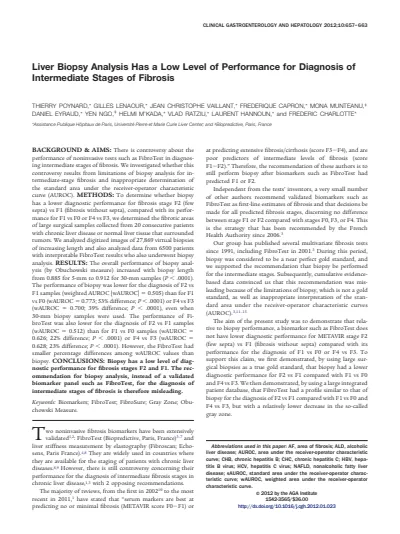
Liver biopsy analysis has a low level of performance for diagnosis of intermediate stages of fibrosis.
-
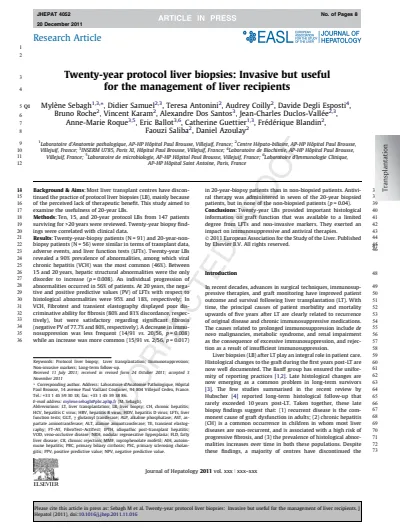
Twenty-year protocol liver biopsies: Invasive but useful for the management of liver recipients.
-
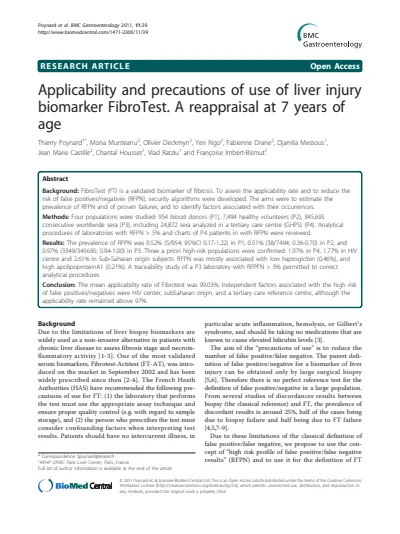
Applicability and precautions of use of liver injury biomarker FibroTest. A reappraisal at 7 years of age.
-
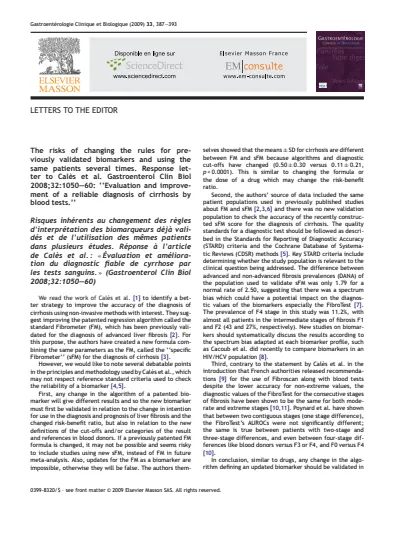
FibroStic: a large confirmatory study for non-invasive biomarkers accuracy, if correctly interpreted.
-
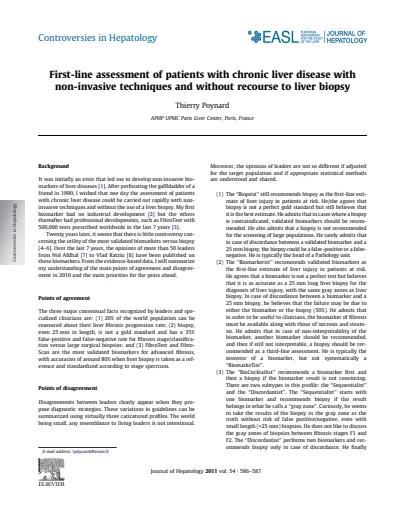
First-line assessment of patients with chronic liver disease with non-invasive techniques and without recourse to liver biopsy.
-

Low 25-OH vitamin D serum levels correlate with severe fibrosis in HIV-HCV co-infected patients with chronic hepatitis.
-

Non-invasive markers for hepatic fibrosis.
-
Noninvasive assessment of portal hypertension in patients with cirrhosis.
-
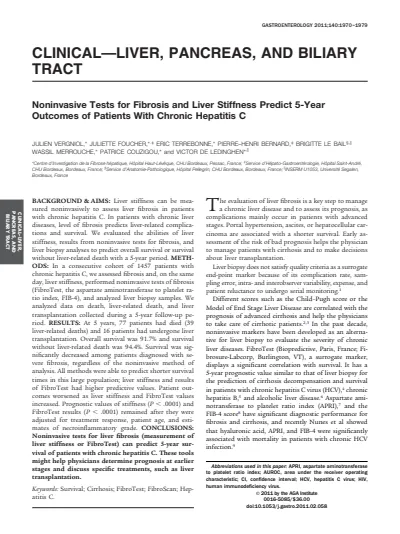
Noninvasive tests for fibrosis and liver stiffness predict 5-year outcomes of patients with chronic hepatitis C.
-
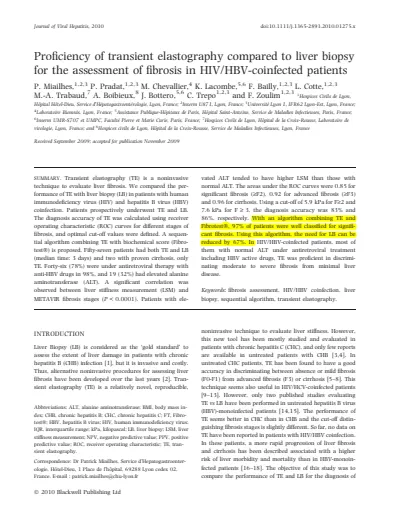
Proficiency of transient elastography compared to liver biopsy for the assessment of fibrosis in HIV/HBV-coinfected patients.
-
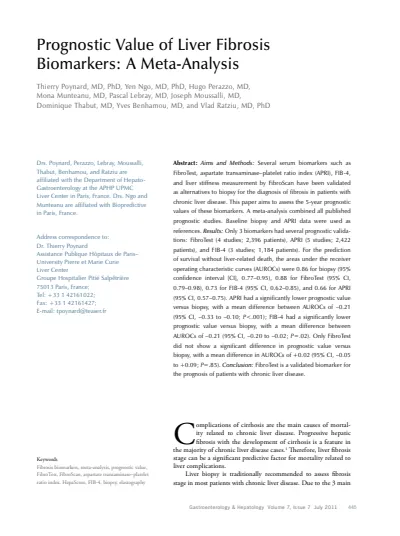
Prognostic value of liver fibrosis biomarkers: a meta-analysis.
-
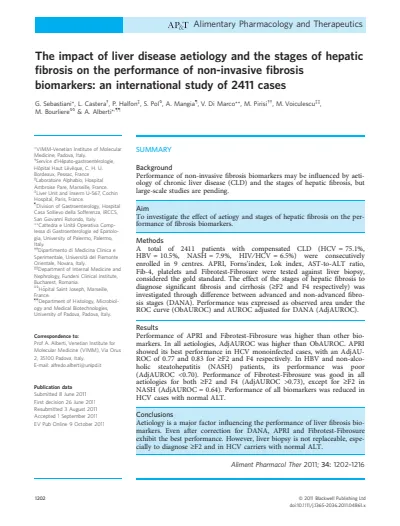
The impact of liver disease aetiology and the stages of hepatic fibrosis on the performance of non-invasive fibrosis biomarkers: an international study of 2411 cases.
-
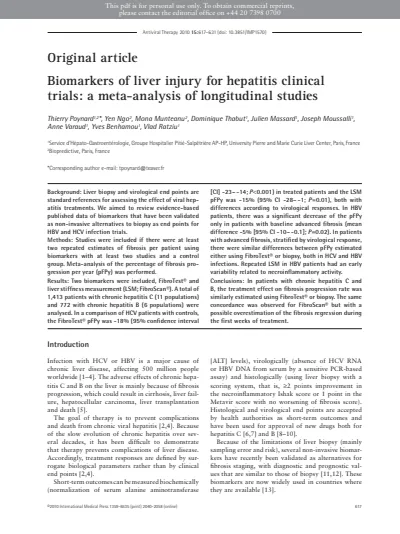
Biomarkers of liver injury for hepatitis clinical trials: a meta-analysis of longitudinal studies.
-
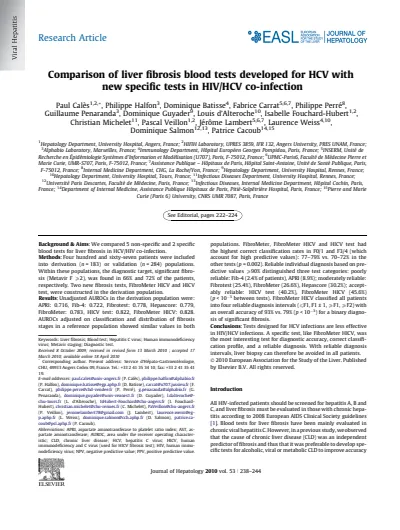
Comparison of liver fibrosis blood tests developed for HCV with new specific tests in HIV/HCV co-infection.
-
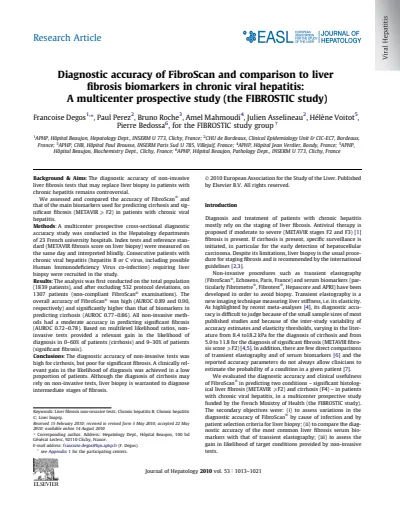
Diagnostic accuracy of FibroScan and comparison to liver fibrosis biomarkers in chronic viral hepatitis: a multicenter prospective study (the FIBROSTIC study).
-
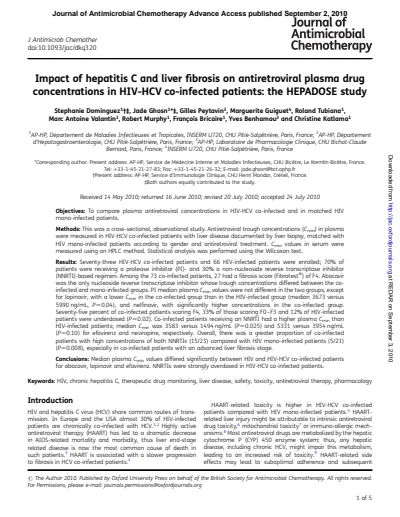
Impact of hepatitis C and liver fibrosis on antiretroviral plasma drug concentrations in HIV-HCV co-infected patients: the HEPADOSE study.
-
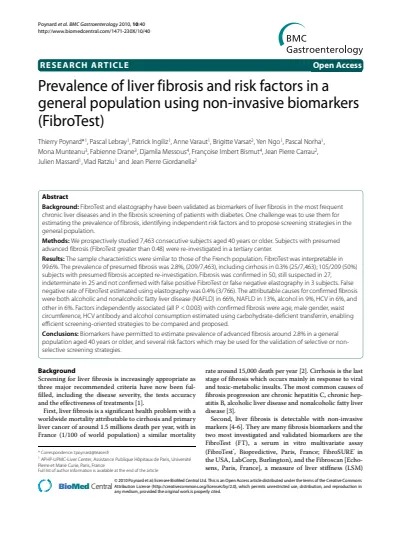
Prevalence of liver fibrosis and risk factors in a general population using non-invasive biomarkers (FibroTest).
-
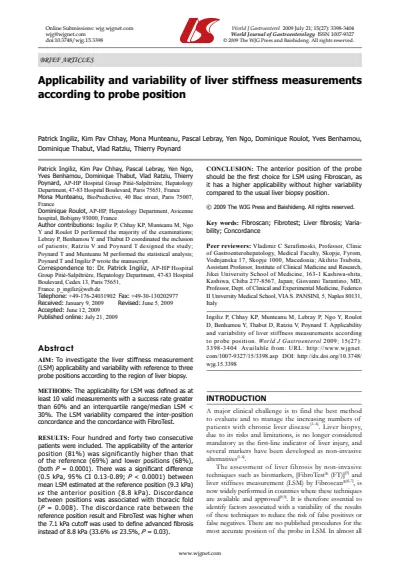
Applicability and variability of liver stiffness measurements according to probe position.
-
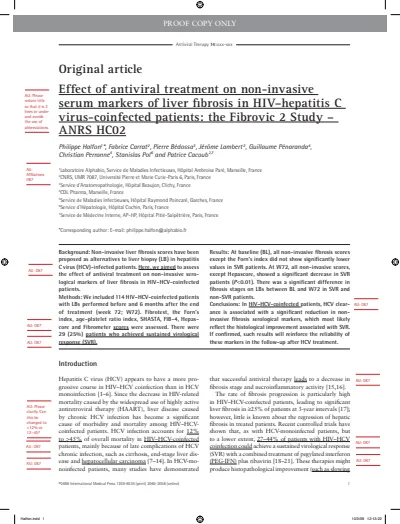
Effect of antiviral treatment on serum markers of liver fibrosis in HIV-hepatitis C virus-coinfected patients: the Fibrovic 2 Study - ANRS HC02.
-
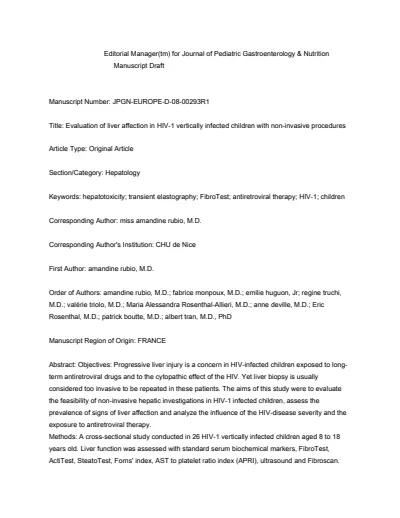
Noninvasive procedures to evaluate liver involvement in HIV-1 vertically infected children.
-
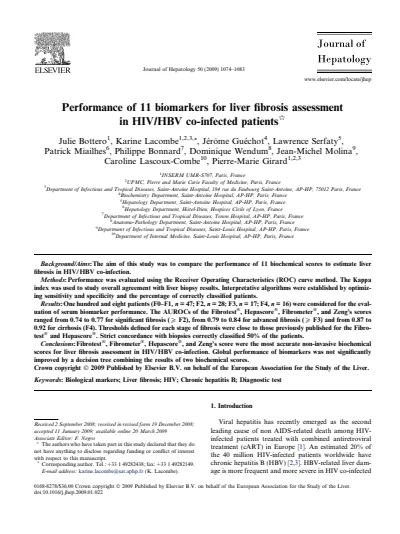
Performance of 11 biomarkers for liver fibrosis assessment in HIV/HBV co-infected patients.
-
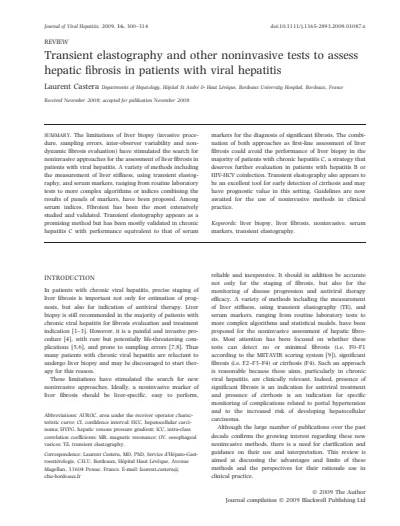
Transient elastography and other noninvasive tests to assess hepatic fibrosis in patients with viral hepatitis.
-
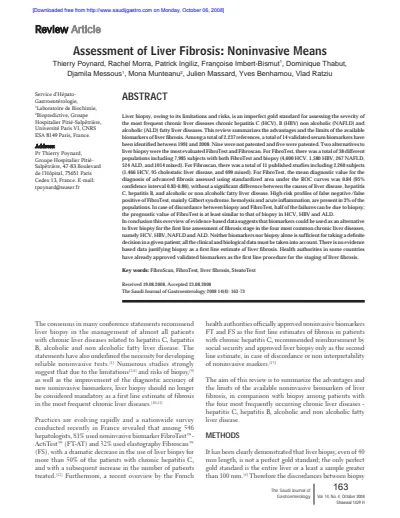
Assessment of liver fibrosis: noninvasive means.
-
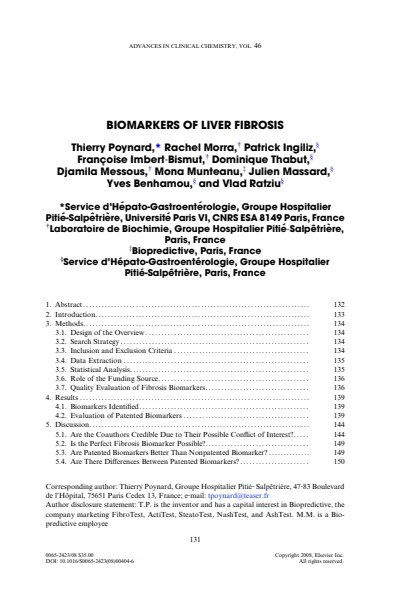
Biomarkers of liver fibrosis.
-
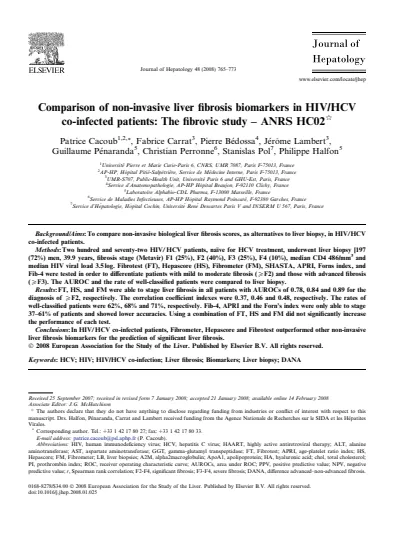
Comparison of non-invasive liver fibrosis biomarkers in HIV/HCV co-infected patients: the fibrovic study--ANRS HC02.
-
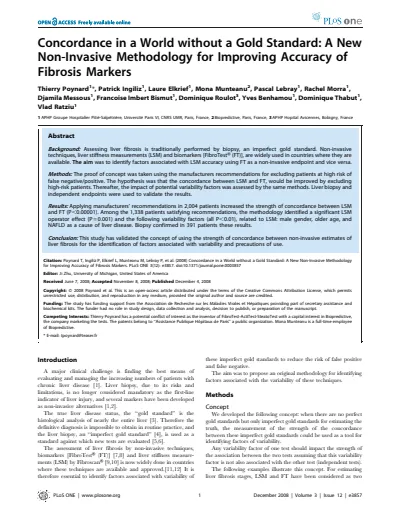
Concordance in a world without a gold standard: a new non-invasive methodology for improving accuracy of fibrosis markers.
-
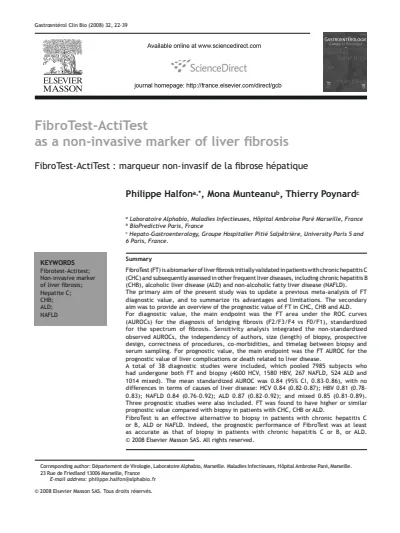
FibroTest-ActiTest as a non-invasive marker of liver fibrosis. Key publication
-
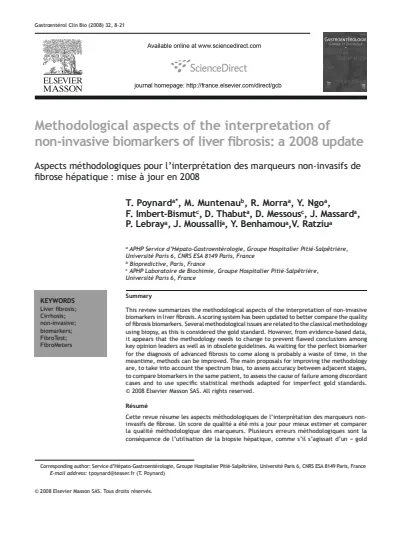
Methodological aspects of the interpretation of non-invasive biomarkers of liver fibrosis: a 2008 update. Key publication
-
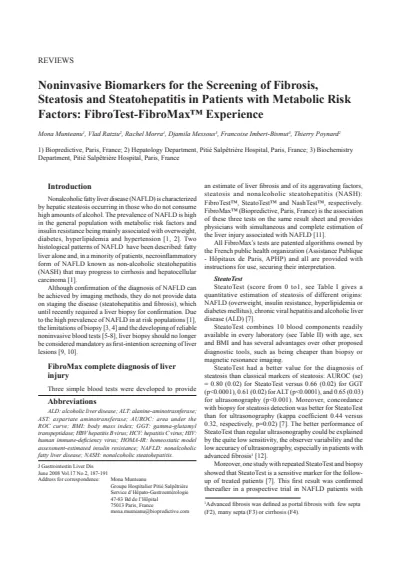
Noninvasive biomarkers for the screening of fibrosis, steatosis and steatohepatitis in patients with metabolic risk factors: FibroTest-FibroMax experience. Key publication
-
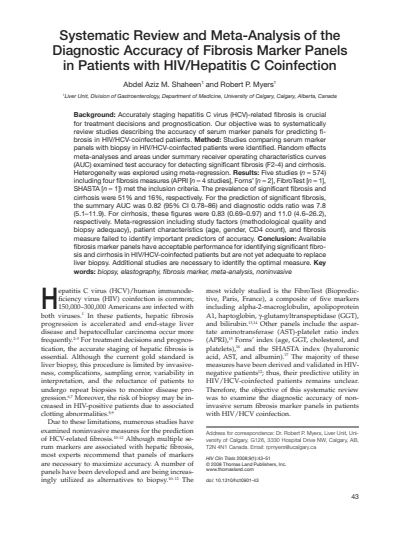
Systematic review and meta-analysis of the diagnostic accuracy of fibrosis marker panels in patients with HIV/hepatitis C coinfection.
-
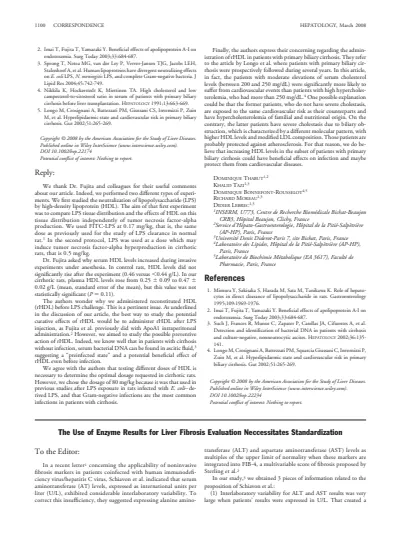
The use of enzyme results for liver fibrosis evaluation neccessitates standardization.
-
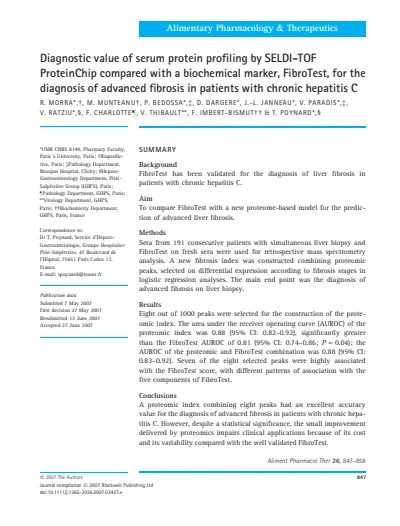
Diagnostic value of serum protein profiling by SELDI-TOF ProteinChip compared with a biochemical marker, FibroTest, for the diagnosis of advanced fibrosis in patients with chronic hepatitis C.
-
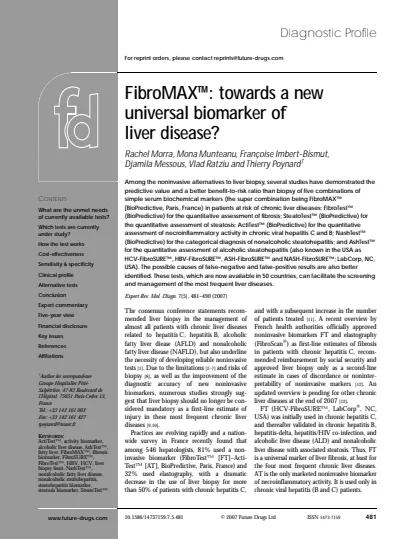
FibroMAX: towards a new universal biomarker of liver disease?
-
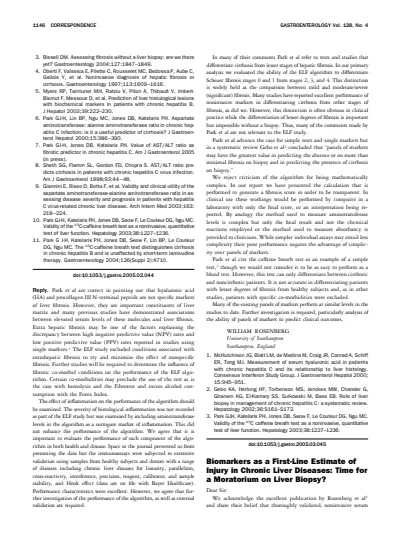
Biomarkers as a first-line estimate of injury in chronic liver diseases: time for a moratorium on liver biopsy?
-
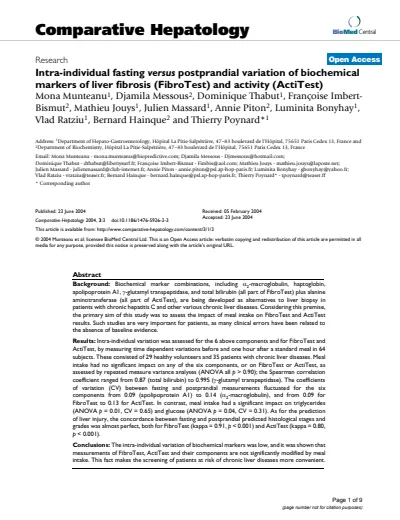
Intra-individual fasting versus postprandial variation of biochemical markers of liver fibrosis (FibroTest) and activity (ActiTest).
-
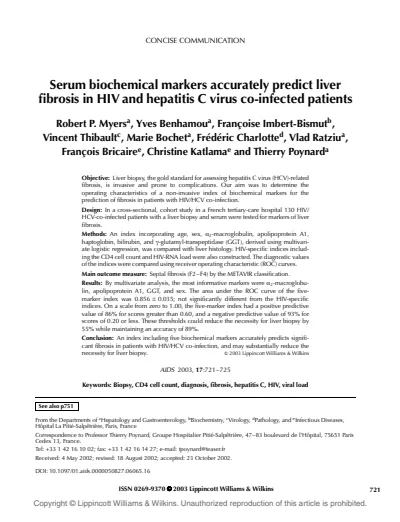
Serum biochemical markers accurately predict liver fibrosis in HIV and hepatitis C virus co-infected patients.
Showing the full result list. The page is server-rendered and not paginated.