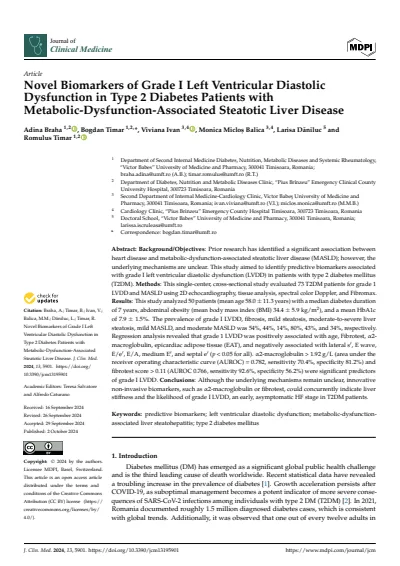
Metabolic dysfunction-associated steatotic liver disease (MASLD) biomarkers and progression of lower limb arterial calcification in patients with type 2 diabetes: a prospective cohort study.
Abstract
Background
Studies have demonstrated that both lower limb arterial calcification and metabolic dysfunction-associated steatotic liver disease (MASLD) are linked to the development of peripheral artery disease. However, the potential relationship between MASLD biomarkers and progression of lower limb arterial calcification in individuals with type 2 diabetes (T2D) remains unclear. This study aimed to investigate whether the biomarkers of MASLD included in the FibroMax® panels are associated with the progression of lower limb arterial calcification in patients with T2D.
Methods
The lower limb arterial calcification score (LLACS) was evaluated through computed tomography at baseline and after an average follow-up of 31.2 ± 3.7 months in a cohort of 150 patients with T2D. We also measured the serum biomarkers included in the FibroMax® panels (SteatoTest®, FibroTest®, NashTest®, ActiTest®). The predictive ability of these biomarkers of MASLD on LLACS progression was assessed through univariate and multivariate linear regression models, principal component regression analysis, as well as machine learning algorithms.
Results
During the follow-up period, LLACS increased in 127 (85%) of the 150 patients with T2D. In univariate analysis, the annualized change in LLACS was positively and mainly correlated with baseline LLACS (r = 0.860, p < 0.0001), the FibroTest® score (r = 0.304, p = 0.0002), and age (r = 0.275, p = 0.0006), and negatively correlated with glomerular filtration rate (r = - 0.242, p = 0.003). In multivariate analysis, the FibroTest® score remained independently associated with the annualized change in LLACS, after adjusting for baseline LLACS and risk factors for lower extremity artery disease (β coefficient [95% confidence interval]: 988 [284-1692], p = 0.006). This association persisted even after adjustment for variables selected by principal component analysis (β = 1029 [289-1768], p = 0.007). Two advanced machine learning models identified the FibroTest® score as the second most important predictor of annualized change in LLACS, following baseline LLACS.
Conclusions
This study represents the first demonstration of an independent relationship between a non-invasive liver fibrosis test and the progression of lower limb arterial calcification in patients with T2D. Beyond its utility in assessing liver fibrosis, the FibroTest® could be a valuable and easy-to-use biomarker for predicting the risk of worsening lower limb arterial calcification.
Trial Registration
ClinicalTrials.gov identifier NCT02431234.
Keywords — author-chosen Liver fibrosis, Nonalcoholic fatty liver disease, Peripheral arterial disease, Type 2 diabetes mellitus
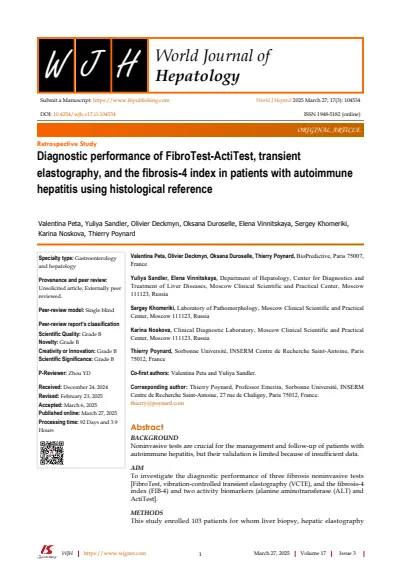
Diagnostic performance of FibroTest-ActiTest, transient elastography, and the fibrosis-4 index in patients with autoimmune hepatitis using histological reference.
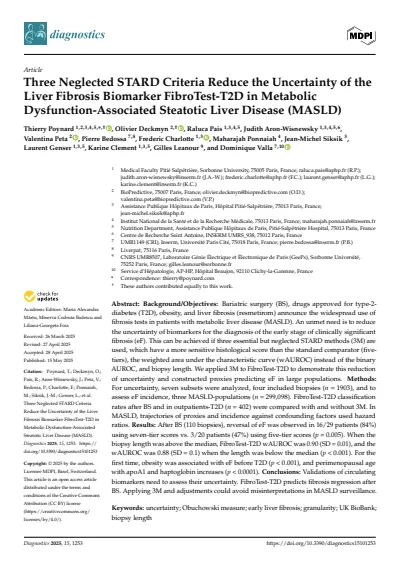
Three Neglected STARD Criteria Reduce the Uncertainty of the Liver Fibrosis Biomarker FibroTest-T2D in Metabolic Dysfunction-Associated Steatotic Liver Disease (MASLD).
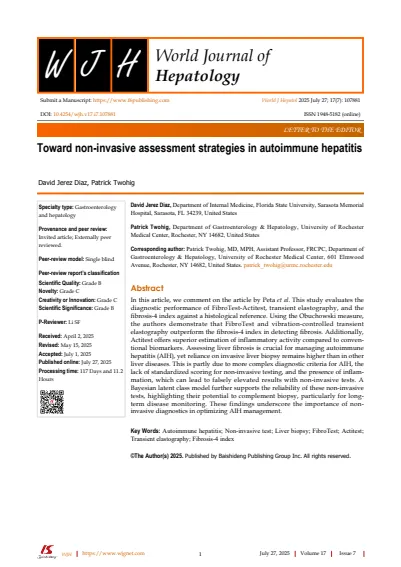
Toward non-invasive assessment strategies in autoimmune hepatitis.
Accuracy of prognostic serological biomarkers in predicting liver fibrosis severity in people with metabolic dysfunction-associated steatotic liver disease: a meta-analysis of over 40,000 participants.
Non-alcoholic fatty liver disease biomarkers estimate cardiovascular risk based on coronary artery calcium score in type 2 diabetes: a cross-sectional study with two independent cohorts.