Non-invasive evaluation of liver fibrosis in chronic hepatitis C.
Abstract
Chronic hepatitis C (CHC) is a major public health concern, with around 180 million individuals affected worldwide. Liver fibrosis and its end-point cirrhosis are the main causes of morbidity and mortality in patients with CHC. Liver biopsy (LB) has traditionally been considered the "gold standard" for pre-treatment evaluation of liver fibrossis in patients with CHC. However, LB is an invasive procedure with several shortcomings (intra- and interobserver variability, sampling errors, expensive) and the risk of rare but potentially life-threatening complications (biliary peritonitis, hemo-peritoneum, and death in 1/10,000). The aforementioned shortcomings of LB have led to development of several non-invasive methods for the assessment of liver fibrosis in CHC. Among the non-invasive methods, Fibrotest and Fibroscan are the most widely used in our country and offer a viable alternative to LB for pre-treatment assessment of liver fibrosis in patients with CHC. This review aims to discuss the advantages and usefulness of non-invasive methods of liver fibrosis in CHC.
Diagnostic performance of FibroTest-ActiTest, transient elastography, and the fibrosis-4 index in patients with autoimmune hepatitis using histological reference.
Metabolic dysfunction-associated steatotic liver disease (MASLD) biomarkers and progression of lower limb arterial calcification in patients with type 2 diabetes: a prospective cohort study.
Toward non-invasive assessment strategies in autoimmune hepatitis.
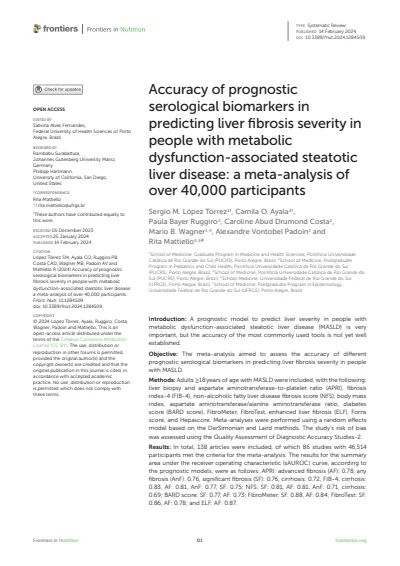
Accuracy of prognostic serological biomarkers in predicting liver fibrosis severity in people with metabolic dysfunction-associated steatotic liver disease: a meta-analysis of over 40,000 participants.
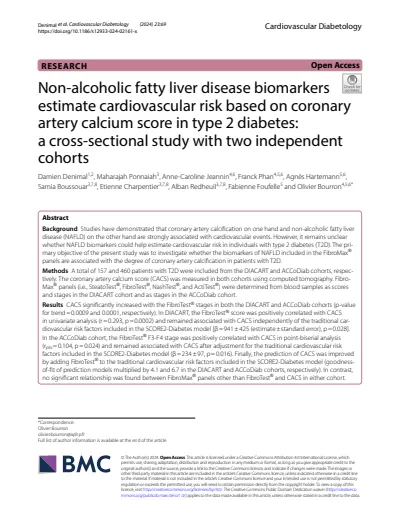
Non-alcoholic fatty liver disease biomarkers estimate cardiovascular risk based on coronary artery calcium score in type 2 diabetes: a cross-sectional study with two independent cohorts.