Non-invasive diagnosis of large oesophageal varices with FibroTest in patients with cirrhosis: a preliminary retrospective study.
Abstract
Background And Aims
Primary prevention of variceal bleeding with beta-blockers improves survival in patients with large oesophageal varices (LOV). Therefore, cirrhotic patients frequently undergo screening endoscopy. As portal hypertension is related to liver fibrosis, this study aimed to assess the predictive value of FibroTest, a non-invasive marker of liver fibrosis, for the diagnosis of LOV in cirrhotic patients.
Methods
Ninety-nine cirrhotic patients had clinical examination, blood sample (liver function tests, platelet count, FibroTest) and upper endoscopy. Measurements of endoscopic and biochemical parameters were made blindly. Sensitivity, specificity, predictive values and area under the receiver operating characteristic curves were assessed for FibroTest, platelet count and Child-Pugh score. The main endpoint was the presence of LOV.
Results
Platelet count, prothrombin time, ascites, FibroTest and Child-Pugh class were significantly different among patients with or without LOV. FibroTest had the highest discriminative power with an area under receiver operating characteristics curves of 0.77 (SE=0.06), compared with 0.64 (0.08) and 0.68 (0.08) for platelet count and Child-Pugh score, respectively (P=0.08). A cut-off at 0.80 had a 86% negative predictive value for the diagnosis of LOV (Se=92%, Sp=21%).
Conclusion
FibroTest could aid in the diagnosis of LOV and may therefore reduce the indication of endoscopic screening in cirrhotic patients.
Non-invasive diagnosis and follow-up of portal hypertension.
Noninvasive assessment of portal hypertension in patients with cirrhosis.
Relationship between the Fibrotest and portal hypertension in patients with liver disease.
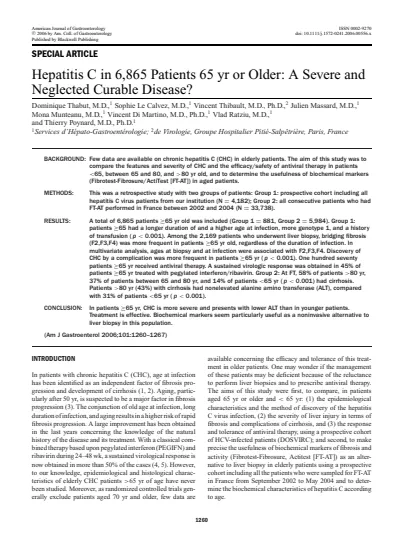
Hepatitis C in 6,865 patients 65 yr or older: a severe and neglected curable disease?
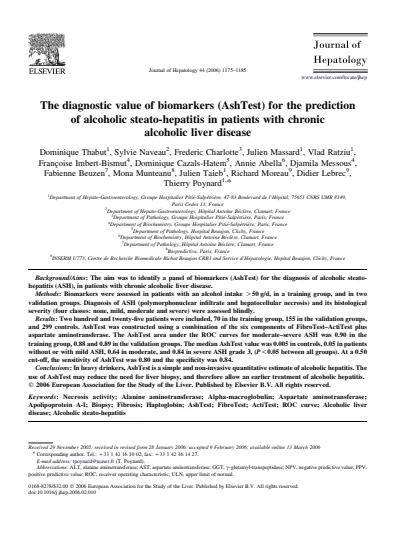
The diagnostic value of biomarkers (AshTest) for the prediction of alcoholic steato-hepatitis in patients with chronic alcoholic liver disease.
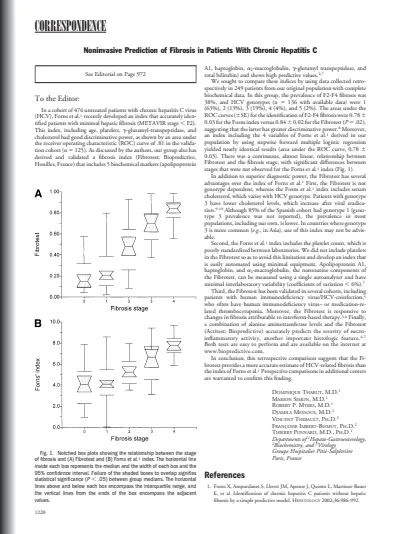
Noninvasive prediction of fibrosis in patients with chronic hepatitis C.
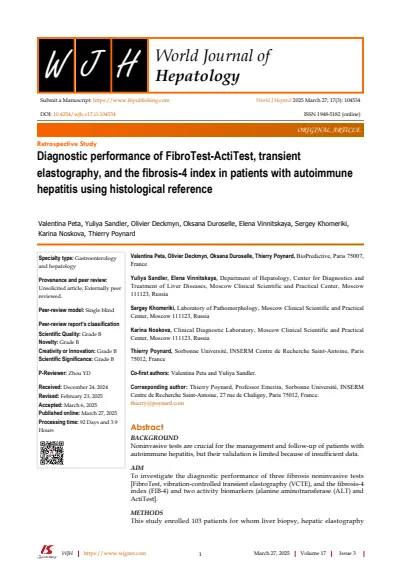
Diagnostic performance of FibroTest-ActiTest, transient elastography, and the fibrosis-4 index in patients with autoimmune hepatitis using histological reference.
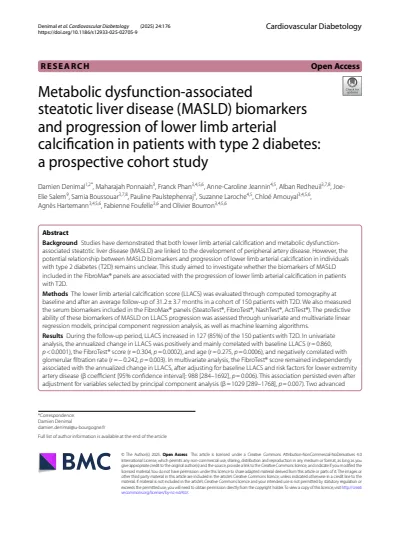
Metabolic dysfunction-associated steatotic liver disease (MASLD) biomarkers and progression of lower limb arterial calcification in patients with type 2 diabetes: a prospective cohort study.
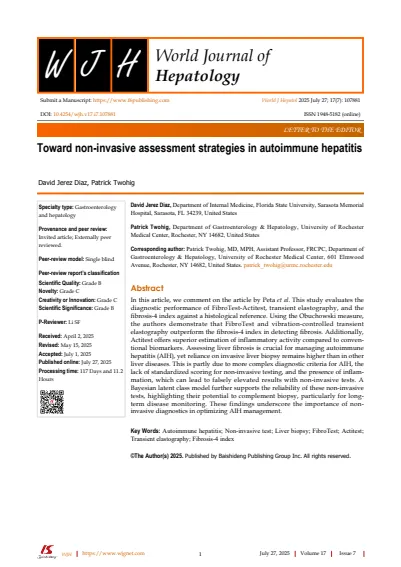
Toward non-invasive assessment strategies in autoimmune hepatitis.
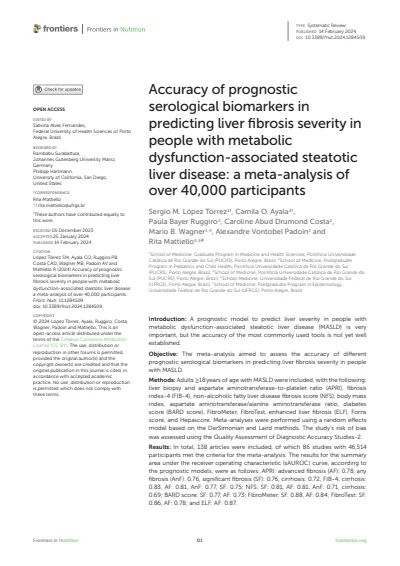
Accuracy of prognostic serological biomarkers in predicting liver fibrosis severity in people with metabolic dysfunction-associated steatotic liver disease: a meta-analysis of over 40,000 participants.
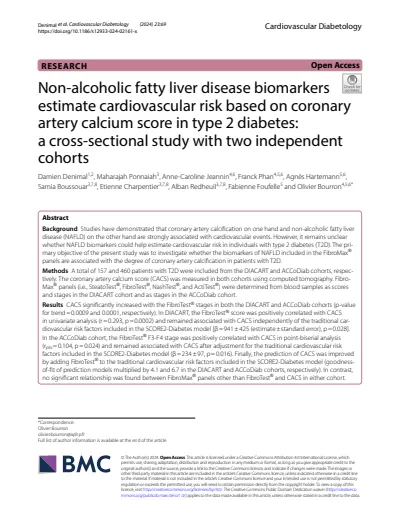
Non-alcoholic fatty liver disease biomarkers estimate cardiovascular risk based on coronary artery calcium score in type 2 diabetes: a cross-sectional study with two independent cohorts.