Current Possibilities to Assess the Degree of Liver Fibrosis in Patients with Haemophilia Infected with HCV--Review.
Abstract
Haemophilia is an entity, wherein the HCV infection rate is greater than in the general population and ranges between 70-90%. The majority of HCV infections were acquired by hemophiliacs in the 1980s, by the use of infected cryoprecipitate or fresh frozen plasma preparations. It is therefore highly likely that many of them, more than twenty years after the infection, have developed advanced liver disease. Until recently, in order to assess its severity, it was necessary to perform a liver biopsy. Currently, we observe rapid developments of non-invasive methods that are particularly useful in patients with bleeding disorders. The most popular include elastography (Fibroscan, SWE) and the algorithms based on measurements of the relevant blood parameters (e.g. FibroTest, Fibrometer, APRI index). Ease of implementation of these studies, no need for hospitalization of the patient or specific preparation for surgery, allow for quick and minimally invasive assessment of liver disease progression and classification of the patient to the appropriate antiviral therapy.
Diagnostic performance of FibroTest-ActiTest, transient elastography, and the fibrosis-4 index in patients with autoimmune hepatitis using histological reference.
Metabolic dysfunction-associated steatotic liver disease (MASLD) biomarkers and progression of lower limb arterial calcification in patients with type 2 diabetes: a prospective cohort study.
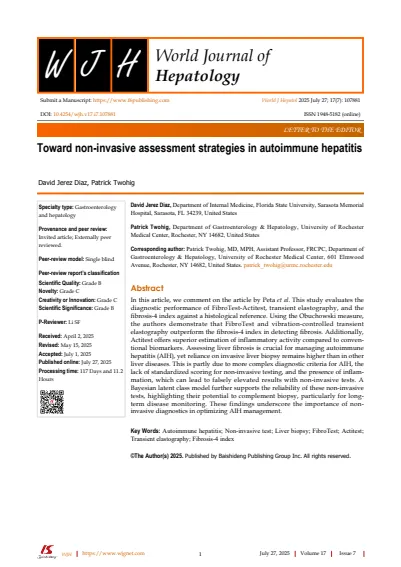
Toward non-invasive assessment strategies in autoimmune hepatitis.
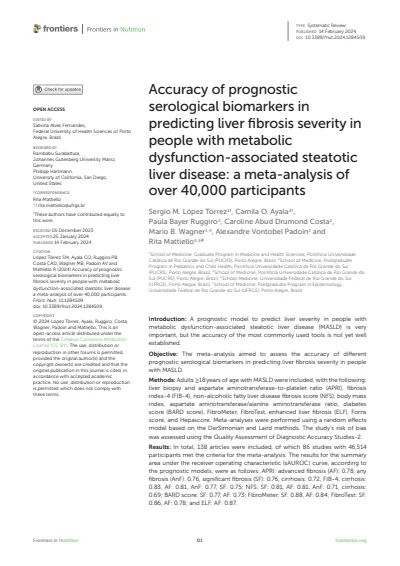
Accuracy of prognostic serological biomarkers in predicting liver fibrosis severity in people with metabolic dysfunction-associated steatotic liver disease: a meta-analysis of over 40,000 participants.
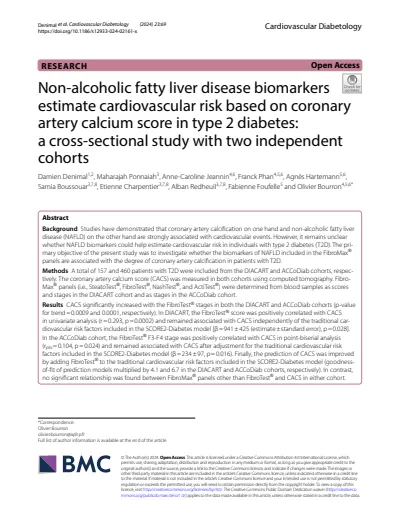
Non-alcoholic fatty liver disease biomarkers estimate cardiovascular risk based on coronary artery calcium score in type 2 diabetes: a cross-sectional study with two independent cohorts.