Optimization and robustness of blood tests for liver fibrosis and cirrhosis.
Abstract
Objectives
To optimize the performance and feasibility of fibrosis blood tests and evaluate their robustness.
Design And Methods
The derivation population included 1056 HCV patients with liver biopsy and blood markers. Validation populations included 984 patients with various viral hepatitis causes, and Fibroscan and/or liver biopsy and/or blood markers.
Results
The bootstrap method validated the markers of the original FibroMeter(2G), but not those of Fibrotest and Hepascore, and provided a hyaluronate-free FibroMeter(3G). AUROCs for significant fibrosis were: FibroMeter(2G): 0.853 vs. FibroMeter(3G): 0.851, p=0.489. Compared to FibroMeter(2G), FibroMeter(3G) had a significantly higher patient rate with predictive values ≥90% for significant fibrosis. Accuracy for fibrosis stage classification was: Fibrotest: 37.9%, FibroMeter(2G): 74.9%, and FibroMeter(3G): 86.9% (p<10(-3)).
Conclusion
The bootstrap method validated FibroMeter(2G) and provided a cheaper and more feasible hyaluronate-free FibroMeter(3G) with comparable performance. Compared to binary diagnosis, fibrosis stage classification increased discrimination, with an increased accuracy to 87% for FibroMeter(3G).
Comparison of liver fibrosis blood tests developed for HCV with new specific tests in HIV/HCV co-infection.
Evaluating the accuracy and increasing the reliable diagnosis rate of blood tests for liver fibrosis in chronic hepatitis C.
Evaluation and improvement of a reliable diagnosis of cirrhosis by blood tests.
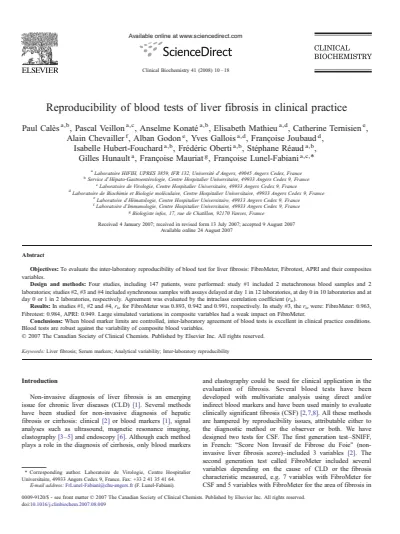
Reproducibility of blood tests of liver fibrosis in clinical practice.
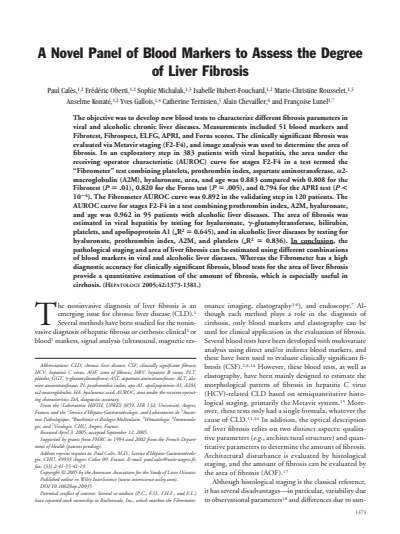
A novel panel of blood markers to assess the degree of liver fibrosis.
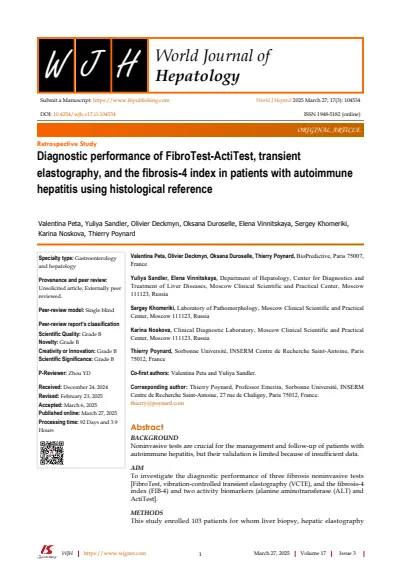
Diagnostic performance of FibroTest-ActiTest, transient elastography, and the fibrosis-4 index in patients with autoimmune hepatitis using histological reference.
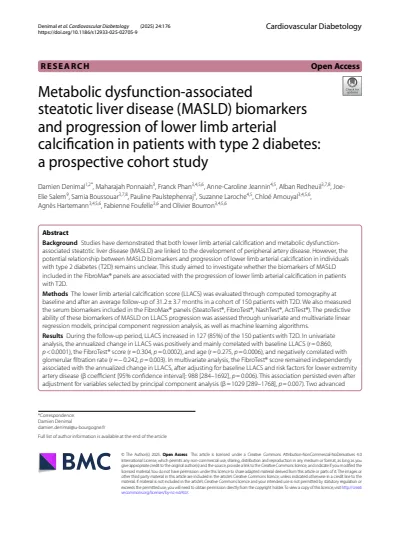
Metabolic dysfunction-associated steatotic liver disease (MASLD) biomarkers and progression of lower limb arterial calcification in patients with type 2 diabetes: a prospective cohort study.
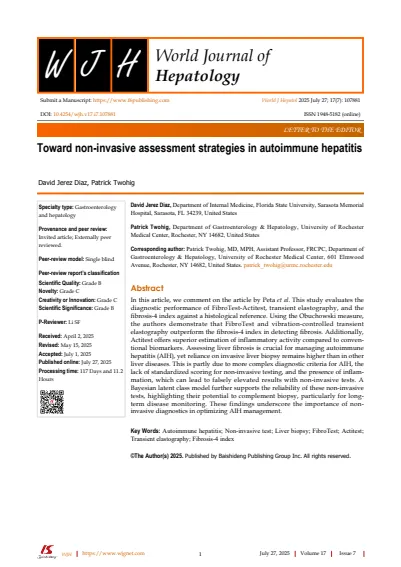
Toward non-invasive assessment strategies in autoimmune hepatitis.
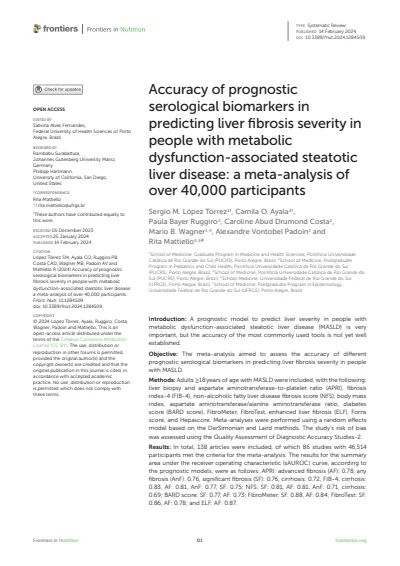
Accuracy of prognostic serological biomarkers in predicting liver fibrosis severity in people with metabolic dysfunction-associated steatotic liver disease: a meta-analysis of over 40,000 participants.
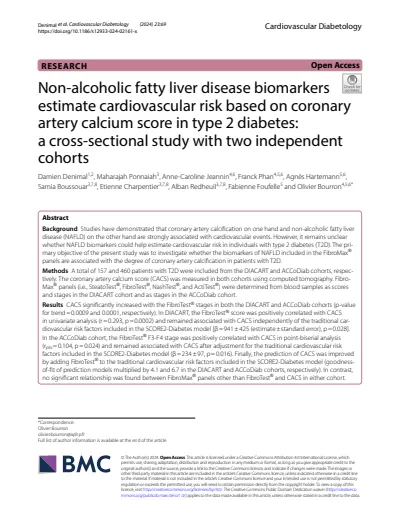
Non-alcoholic fatty liver disease biomarkers estimate cardiovascular risk based on coronary artery calcium score in type 2 diabetes: a cross-sectional study with two independent cohorts.