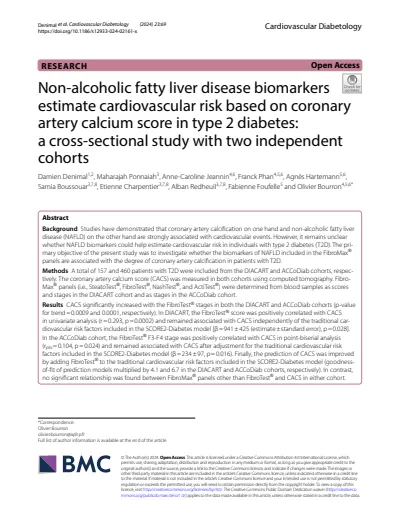
Assessment of allograft fibrosis by transient elastography and noninvasive biomarker scoring systems in liver transplant patients.
Abstract
Background
This prospective, monocentric study was designed to assess the efficacy of transient elastography (TE), biochemical tests, and more complex scores in determining fibrosis stage in 157 patients transplanted for hepatitis C virus (HCV) infection or non-HCV-related liver diseases.
Methods And Results
The optimal TE cutoff values for HCV patients and non-HCV patients were 4.7 and 5.0 kPa for F> or =1, 7.1 and 7.3 kPa for F> or =2, 10.9 kPa and 9.9 kPa for F> or =3, and 17.3 and 12.6 kPa for F=4, respectively. The corresponding area under the receiver operating characteristic (AUROC) curves for F> or =1, F> or =2, F> or =3, and F=4 were 0.95 and 0.86, 0.89 and 0.85, 0.97 and 0.88, and 0.99 and 0.97 for HCV and non-HCV patients, respectively. On the basis of the logistic regression equation, we created a model (FibroTransplant score) to identify advanced fibrosis (F> or =3). The accuracy of this model was tested in a validation group (n=74). AUROCs for diagnosis of F> or =3 in HCV patients and non-HCV patients of the training group were 0.89 and 0.83 (FibroTransplant score), 0.86 and 0.66 (Benlloch score), 0.81 and 0.71 (aspartate aminotransferase-to-platelet ratio index), 0.80 and 0.77 (Hepascore), 0.79 and 0.70 (FibroTest), 0.78 and 0.71 (FIB-4), 0.75 and 0.60 (Forns index), 0.73 and 0.69 (FibroIndex), and 0.70 and 0.59 (Lok score). Among the validation group, AUROCs of the FibroTransplant score for F> or =3 were 0.90 and 0.91, respectively.
Conclusions
TE and the FibroTransplant score can be reliably used for diagnosing advanced fibrosis in transplanted patients.
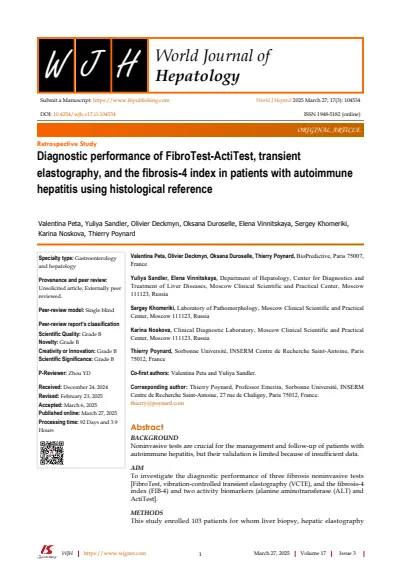
Diagnostic performance of FibroTest-ActiTest, transient elastography, and the fibrosis-4 index in patients with autoimmune hepatitis using histological reference.
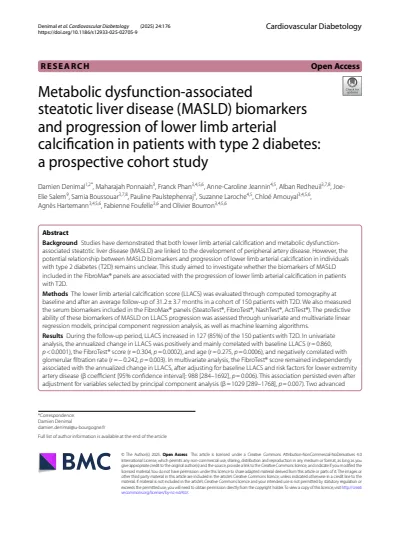
Metabolic dysfunction-associated steatotic liver disease (MASLD) biomarkers and progression of lower limb arterial calcification in patients with type 2 diabetes: a prospective cohort study.
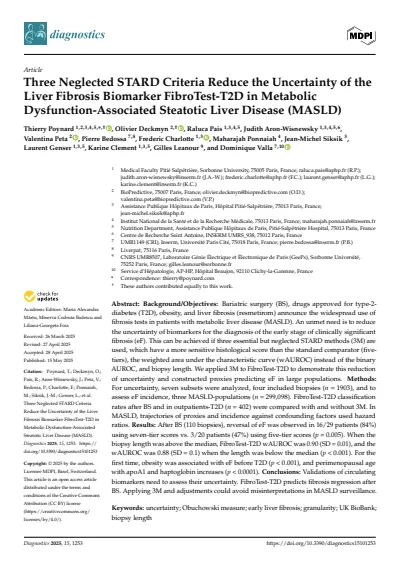
Three Neglected STARD Criteria Reduce the Uncertainty of the Liver Fibrosis Biomarker FibroTest-T2D in Metabolic Dysfunction-Associated Steatotic Liver Disease (MASLD).
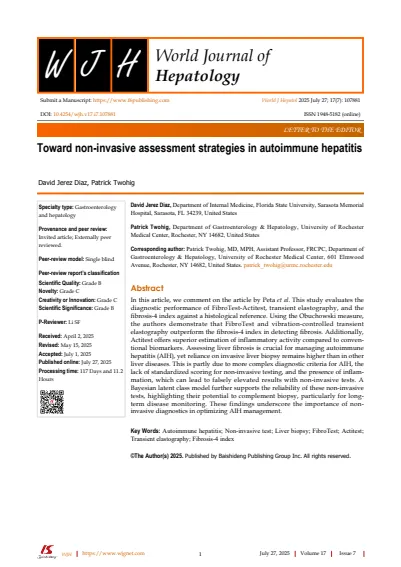
Toward non-invasive assessment strategies in autoimmune hepatitis.
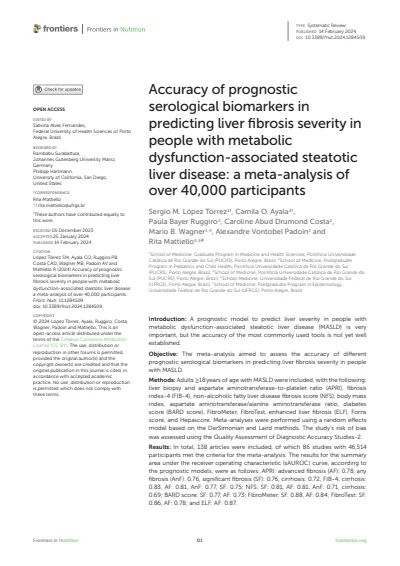
Accuracy of prognostic serological biomarkers in predicting liver fibrosis severity in people with metabolic dysfunction-associated steatotic liver disease: a meta-analysis of over 40,000 participants.