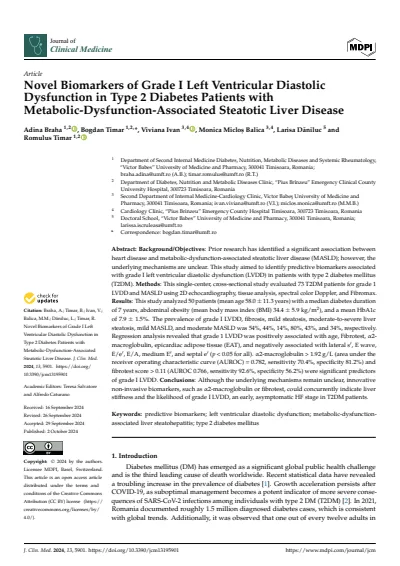
Management of the patient with SVR.
Abstract
In the current era of therapy with direct-acting antiviral (DAAs) drugs, achievement of a sustained virological response (SVR) is achievable in ⩾90% of hepatitis C-infected patients. SVR benefits are well-recognized with reductions in rates of liver complications, hepatocellular carcinoma and mortality. Additional benefits include reduced morbidity related to extrahepatic and systemic manifestations of hepatitis C such as renal, dermatologic, and metabolic complications. However, not all patients will derive all of these benefits and monitoring for progression is necessary, especially in those with more advanced fibrosis. To maximize the health benefits of SVR, counseling patients on best means to maintain good liver health and prevent reinfection are also important.
Keywords — author-chosen Fibrosis regression, Liver-related mortality, Prevention, Sustained virological response
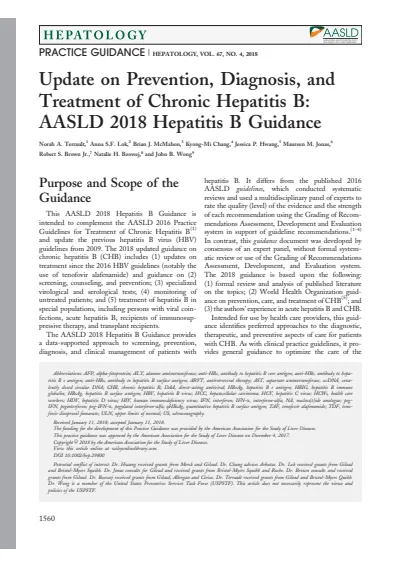
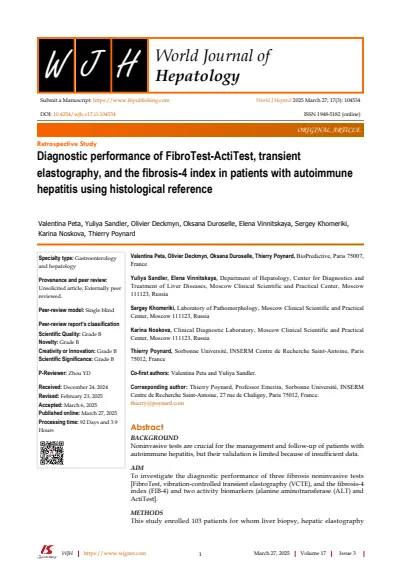
Diagnostic performance of FibroTest-ActiTest, transient elastography, and the fibrosis-4 index in patients with autoimmune hepatitis using histological reference.
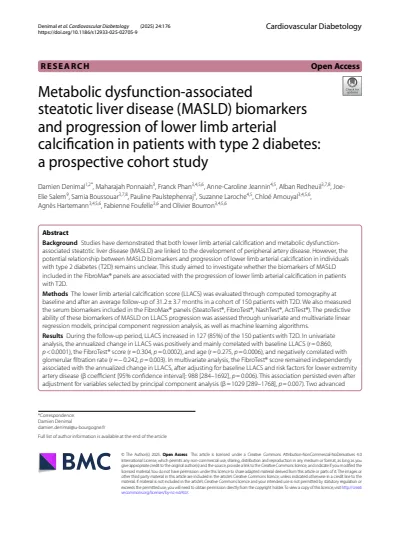
Metabolic dysfunction-associated steatotic liver disease (MASLD) biomarkers and progression of lower limb arterial calcification in patients with type 2 diabetes: a prospective cohort study.
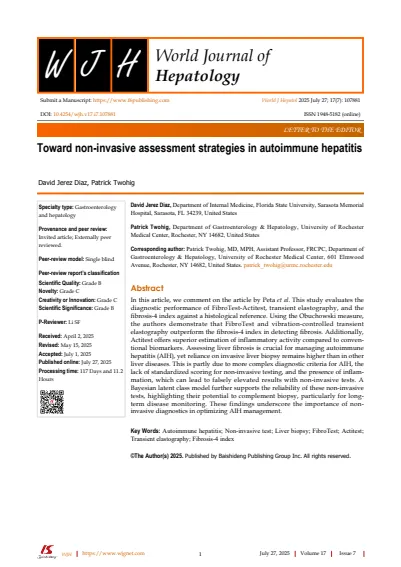
Toward non-invasive assessment strategies in autoimmune hepatitis.
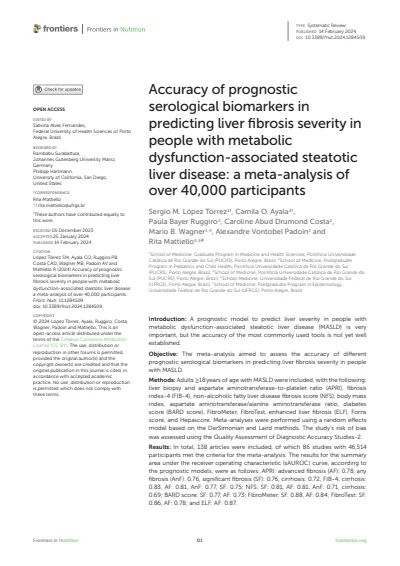
Accuracy of prognostic serological biomarkers in predicting liver fibrosis severity in people with metabolic dysfunction-associated steatotic liver disease: a meta-analysis of over 40,000 participants.
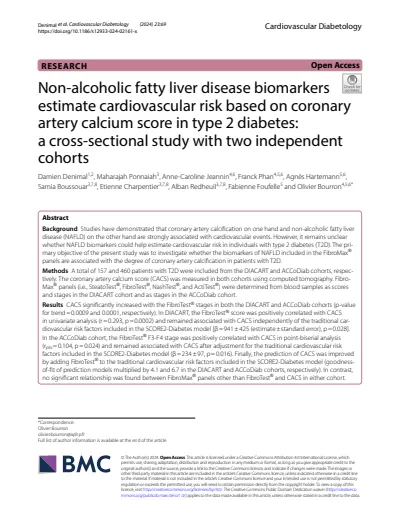
Non-alcoholic fatty liver disease biomarkers estimate cardiovascular risk based on coronary artery calcium score in type 2 diabetes: a cross-sectional study with two independent cohorts.