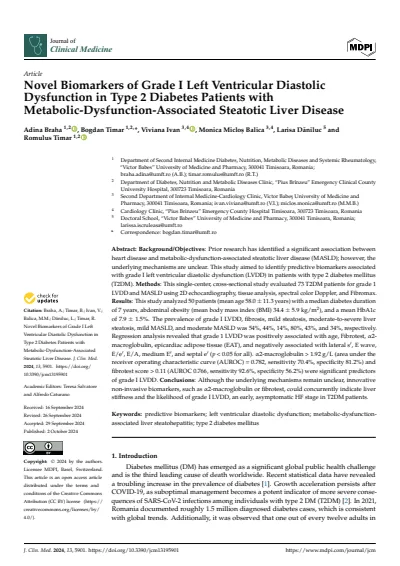
Non-invasive evaluation of liver fibrosis by transient elastography and biochemical markers in elderly inpatients.
Abstract
Aim
The objective of this study was to evaluate liver fibrosis using non-invasive methods in elderly patients.
Methods
In a prospective two-day study, all consecutive patients of geriatric units were examined using transient elastography (FibroScan) and biochemical markers (Hepascore, Aspartate Transaminase (AST) to platelet ratio index [APRI], Forns score, FibroTest). Three groups of patients were included: elderly patients without liver disease (group A, 85.2+/-7.3 years); healthy younger control subjects without liver fibrosis (group B, 46.4+/-15.2 years); and elderly patients with confirmed liver disease (group C, 82.4+/-2.3 years).
Results
FibroScan) results in the elderly patients correlated well with fibrosis surrogates, but were more difficult to obtain than in the younger subjects. Mean liver stiffness was 6.1 kPa (group A) versus 4.9 kPa (group B) and versus 10.2 kPa (group C) (P<0.0001). FibroTest results were 0.5 in group A versus 0.2 in group B, and versus 0.6 in group C (P<0.0001). In group A, statistical analysis showed that diabetes was associated with advanced liver fibrosis (FibroScan) > or = 9.5 kPa). A body mass index greater than 26kg/m2, age greater than 85 years, comorbidity score and polymedication were not associated with fibrosis.
Conclusion
Although liver stiffness may be more difficult to assess in the elderly, FibroScan may nevertheless serve as a new, non-invasive method for detecting liver fibrosis in this population.
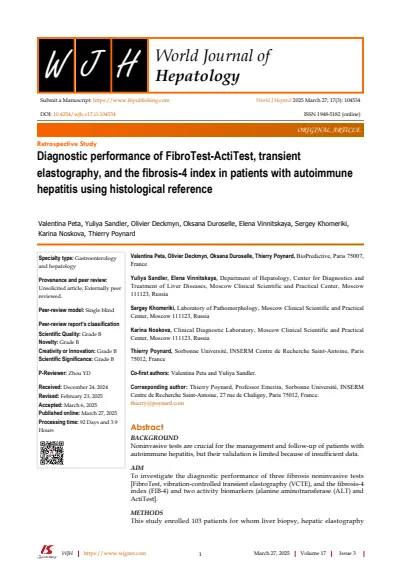
Diagnostic performance of FibroTest-ActiTest, transient elastography, and the fibrosis-4 index in patients with autoimmune hepatitis using histological reference.
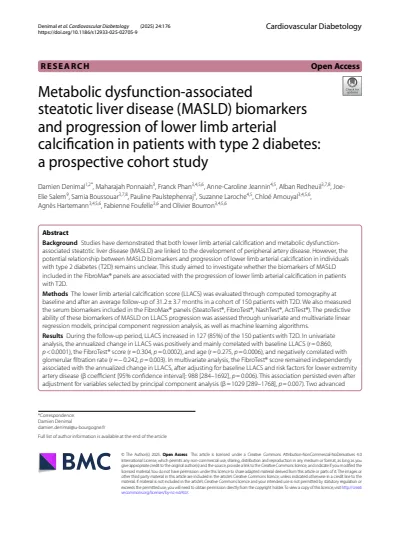
Metabolic dysfunction-associated steatotic liver disease (MASLD) biomarkers and progression of lower limb arterial calcification in patients with type 2 diabetes: a prospective cohort study.
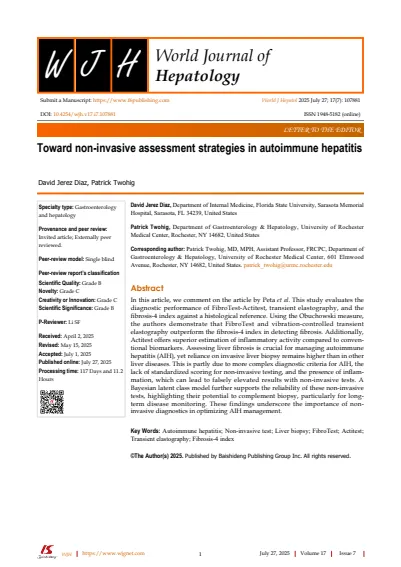
Toward non-invasive assessment strategies in autoimmune hepatitis.
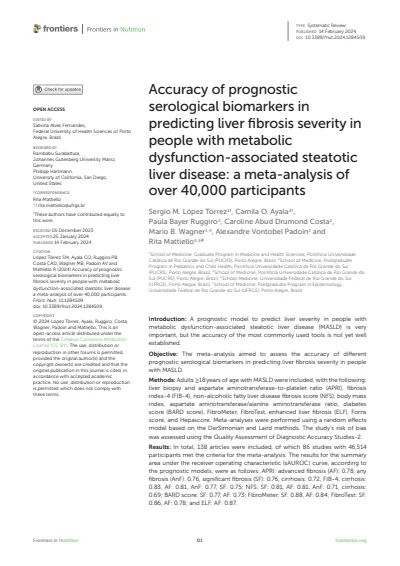
Accuracy of prognostic serological biomarkers in predicting liver fibrosis severity in people with metabolic dysfunction-associated steatotic liver disease: a meta-analysis of over 40,000 participants.
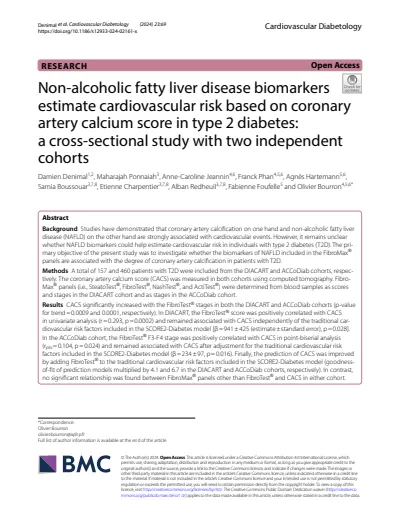
Non-alcoholic fatty liver disease biomarkers estimate cardiovascular risk based on coronary artery calcium score in type 2 diabetes: a cross-sectional study with two independent cohorts.