Study on noninvasive laboratory tests for fibrosis in chronic HBV infection and their evaluation.
Abstract
Background
Noninvasive laboratory tests have been widely used in the diagnosis of liver fibrosis. This study was designed to evaluate the diagnostic value of the four serum markers detected on a JETLIA-962 chemiluminescence analyzer and the FibroTest index for chronic hepatitis B (CHB) related liver fibrosis.
Methods
A JETLIA-962 chemiluminescence analyzer was used to measure the hyaluronic acid (HA), laminin (LN), procollagen III N-terminal peptide (PIIINP), and type IV collagen (CIV) contents in the sera of CHB patients and controls.
Results
In our research, it was found that serum HA, LN, PIIINP, and CIV concentrations and the FibroTest index were correlated with fibrosis stage. The FibroTest index had the largest area under the receiver operating characteristic (ROC) curve for fibrosis and cirrhosis (0.80 and 0.776, respectively). The five indices together were able to exclude fibrosis with a negative likelihood ratio <0.1. The logistic regression equations for diagnosing liver fibrosis and early cirrhosis were separately established.
Conclusions
We found that the JETLIA-962 chemiluminescence analyzer was of great value in diagnosis of liver fibrosis. Combining five indices improved the diagnostic efficiency and reduced the incidences of unnecessary liver biopsies. Two logistic regression equations established may be helpful in diagnosing liver fibrosis and early cirrhosis, which need to be further evaluated.
Diagnostic performance of FibroTest-ActiTest, transient elastography, and the fibrosis-4 index in patients with autoimmune hepatitis using histological reference.
Metabolic dysfunction-associated steatotic liver disease (MASLD) biomarkers and progression of lower limb arterial calcification in patients with type 2 diabetes: a prospective cohort study.
Toward non-invasive assessment strategies in autoimmune hepatitis.
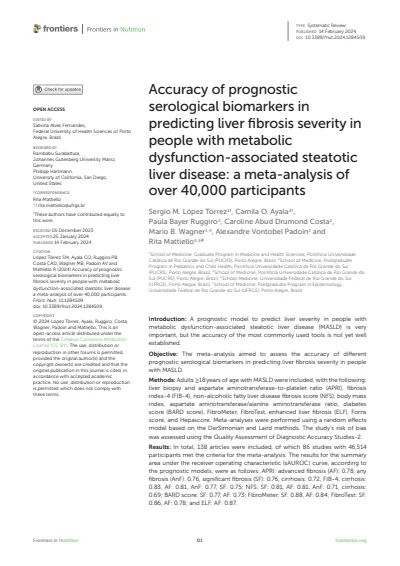
Accuracy of prognostic serological biomarkers in predicting liver fibrosis severity in people with metabolic dysfunction-associated steatotic liver disease: a meta-analysis of over 40,000 participants.
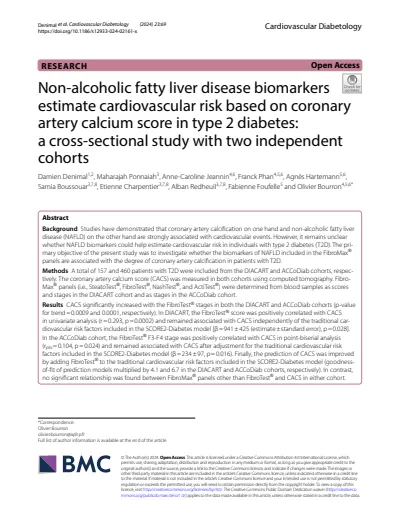
Non-alcoholic fatty liver disease biomarkers estimate cardiovascular risk based on coronary artery calcium score in type 2 diabetes: a cross-sectional study with two independent cohorts.