Modo Imperativo Exemplos
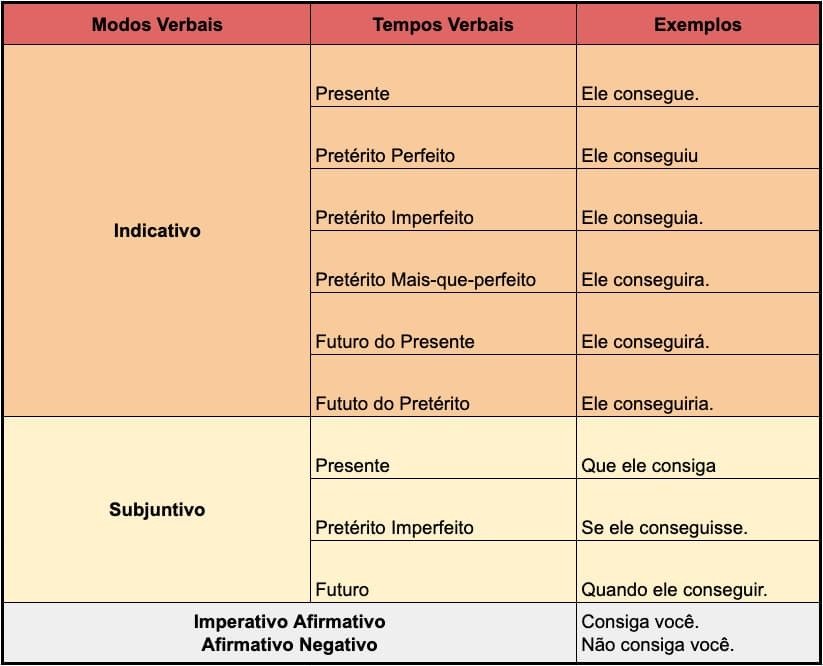
The imperative mode, also known as the imperative mood, is a grammatical mood that expresses commands, requests, or instructions. It's widely used in everyday language and is an essential aspect of communication. Let's explore the imperative mode with examples, its uses, and some tips to help you master it.
What is the Imperative Mode?
The imperative mode is a grammatical mood that gives orders, makes requests, or gives permissions. It's typically formed using the base form of a verb, without a subject. For example, "Run!" or "Please, help me."
Imperative Mode Examples in Brazilian Portuguese
Giving Orders
- Feche a porta! (Close the door!)
- Desligue o fogo! (Turn off the stove!)
Making Requests
- Por favor, passe o sal. (Please, pass the salt.)
- Poderia me ajudar? (Could you help me, please?) - Note: This is an example of a polite request using the conditional tense.
Uses of the Imperative Mode
Giving Instructions
The imperative mode is commonly used in instructions and manuals. For instance, in a recipe, you might see:
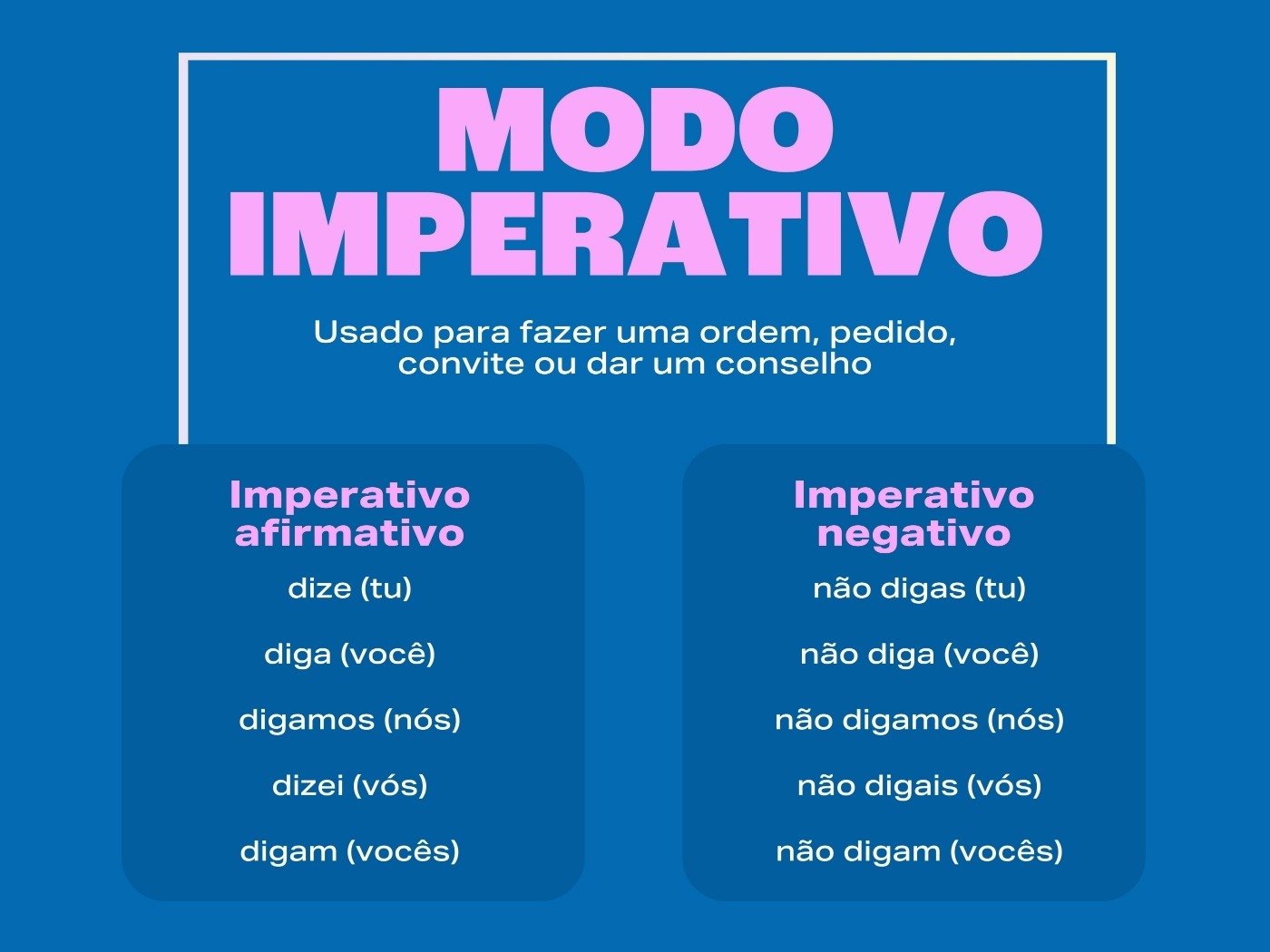
- Misture os ingredientes. (Mix the ingredients.)
Expressing Wishes
You can also use the imperative mode to express wishes or desires. For example:
- Que venha a paz! (May peace come!)
Tips for Using the Imperative Mode
- Use the imperative mode sparingly to avoid sounding bossy or rude.
- When making requests, use the imperative mode with politeness, such as "Por favor" or "Could you...?"
- Be mindful of cultural differences in the use of the imperative mode. What's acceptable in one culture might not be in another.
Summary of Key Points
- The imperative mode is used to give orders, make requests, or express wishes.
- It's typically formed using the base form of a verb, without a subject.
- It has various uses, from giving instructions to expressing desires.
- Politeness is key when using the imperative mode to make requests.
Perguntas frequentes
What's the difference between the imperative mode and the indicative mode?
The imperative mode is used to express commands or wishes, while the indicative mode is used to make statements or assertions about reality. In other words, the imperative mode tells someone to do something, while the indicative mode tells what someone is doing or has done.
Can I use the imperative mode to ask questions?
No, the imperative mode is used to make statements, not to ask questions. To ask questions, you should use the interrogative mode, which typically involves inverting the subject and verb or using interrogative words like "who," "what," "where," "when," "why," and "how."
Is the imperative mode the same as the subjunctive mode?
No, the imperative mode and the subjunctive mode are not the same. The subjunctive mode is used to express doubts, wishes, emotions, or suppositions, while the imperative mode is used to give commands or make requests. However, in some cases, the subjunctive mode can be used in the imperative mode to express a wish, as in "Que venha a paz!" (May peace come!).
Mastering the imperative mode can greatly enhance your communication skills and help you express yourself more effectively. With practice and these helpful tips, you'll be well on your way to becoming an expert in the imperative mode.
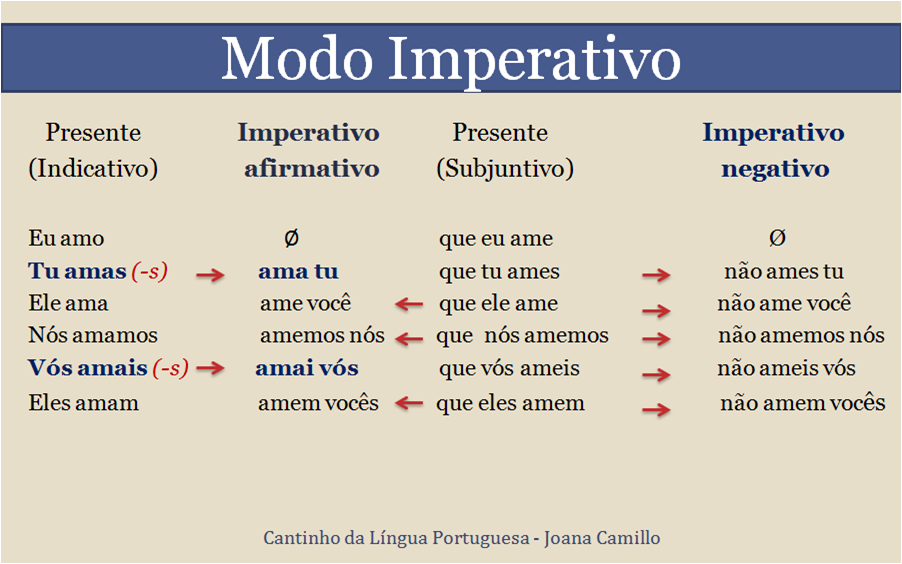
Modo Imperativo - Formação + Conjugação Completa (verbos regulares)
Aprenda a Formação e a Conjugar os Verbos Regulares no Modo Imperativo! Não erre mais!
